
What Is A Modern Kitchen? Definition, Key Features And Design Principles Explained
Imagine walking into a kitchen that feels both welcoming and incredibly functional. Perhaps you’ve visited a friend’s place and admired how everything seems to have its spot, or maybe you’ve seen pictures of stunning kitchens that make you want to re-do your own. This feeling often comes from a well-designed modern kitchen.
In this guide, we’ll explore exactly What Is a Modern Kitchen? We will break down its core features and the design principles that make it so popular.
By the end, you’ll better appreciate how a thoughtfully planned kitchen can transform your home, keeping you engaged longer and making you want to explore more.
Key Takeaways
- Modern kitchens prioritize clean lines and minimalist aesthetics, moving away from ornate details.
- Functionality and efficiency are central to modern kitchen design, with smart storage solutions.
- Open-plan layouts and integrated appliances are common features that enhance flow and space.
- Materials often include stainless steel, glass, natural wood, and high-gloss finishes for a sleek look.
- Smart technology and energy-efficient appliances are increasingly integrated into modern kitchen designs.
- Lighting plays a key role, combining ambient, task, and accent lighting for both utility and mood.
![What Is A Modern Kitchen Definition, Key Features And Design Principles Explained[1]](https://kitchentoolslab.com/wp-content/uploads/2026/05/What_Is_A_Modern_Kitchen__Definition_Key_Features_And_Design_Principles_Explained1.jpg)
Defining the Modern Kitchen
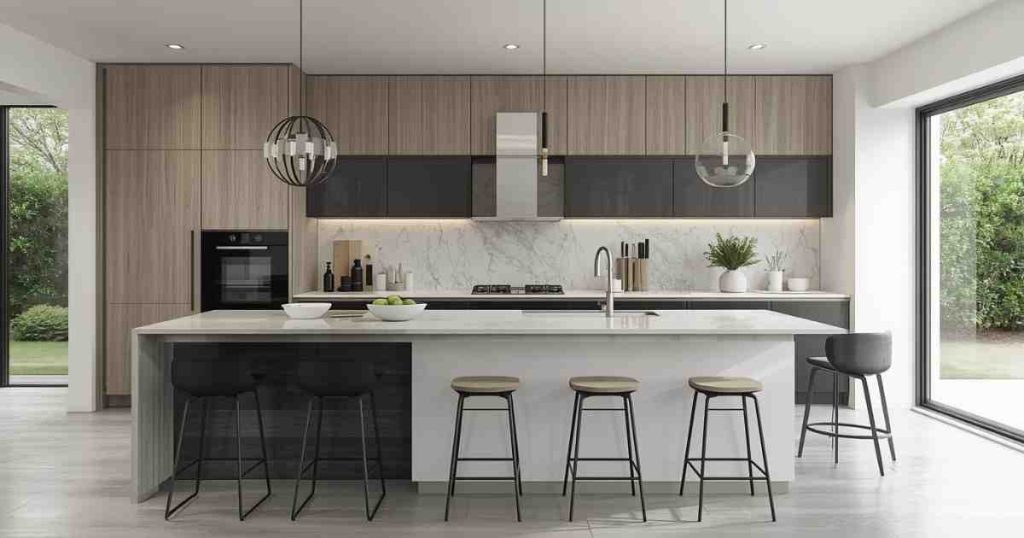
A modern kitchen is more than just a room for cooking; it’s a hub for family life and entertainment. It’s characterized by its sleek, uncluttered appearance and focus on practicality.
Unlike kitchens of the past, which might have featured lots of decorative trim or busy patterns, the modern kitchen embraces simplicity.
Think smooth surfaces, straight lines, and a generally minimalist feel. This style aims to create a space that is both beautiful to look at and a joy to use every day, making cooking and spending time in the kitchen a pleasant experience.
The Evolution of Kitchen Design
Kitchens have changed a lot over time. Early kitchens were purely functional, often small and separate from the rest of the house. As families spent more time at home and cooking became more of a social activity, kitchens began to open up.
The mid-20th century saw the rise of streamlined designs and new materials. The “modern” style we recognize today really took shape then, emphasizing efficiency and a clean, contemporary look.
This evolution was driven by new technologies, changing lifestyles, and a desire for more integrated living spaces within the home.
Core Aesthetic Principles
The look of a modern kitchen is all about clean lines and a lack of fuss. You won’t find many fancy carvings or busy decorative elements here. Instead, designers focus on simple shapes and smooth surfaces.
This creates a calm and orderly environment. The goal is a space that feels open and airy. This aesthetic makes the kitchen feel larger and more inviting.
It’s a style that aims for timelessness, avoiding fleeting trends for a look that stays fresh for years.
Functionality Meets Form
In a modern kitchen, how something works is just as important as how it looks. Every element is chosen for its purpose and how well it fits into the overall design. This means smart storage solutions are key.
Drawers that pull out completely, organizers for utensils, and hidden pantries help keep countertops clear. This focus on function ensures that cooking and cleaning are easy. It makes the kitchen a truly efficient workspace.
The design supports the activities that happen there.
Key Features of Modern Kitchens
Modern kitchens are instantly recognizable by a set of distinct features that contribute to their signature look and feel. These elements work together to create a space that is both aesthetically pleasing and highly practical.
From the materials used to the layout and appliances, every detail is considered to achieve a cohesive and functional design.
Exploring these features helps to understand why this style remains so popular in contemporary homes.
Cabinetry and Storage Solutions
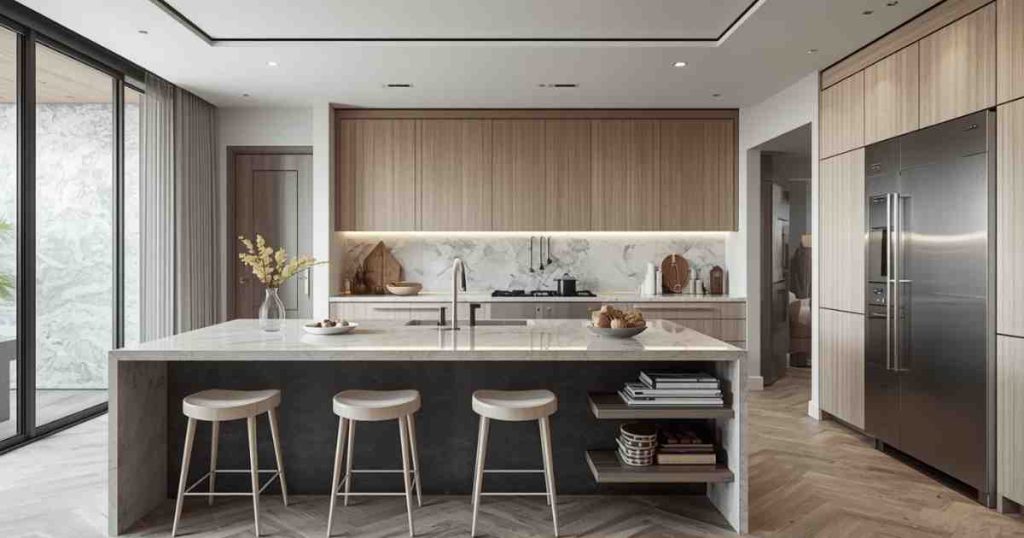
Cabinetry in a modern kitchen typically features flat-front doors and drawers. This design choice is a hallmark of its minimalist aesthetic.
There are usually no ornate handles or hardware, opting instead for sleek, integrated pulls or push-to-open mechanisms.
This keeps the look clean and seamless. The focus is on smooth surfaces that are easy to clean. Inside, clever storage solutions are abundant.
Think deep drawers for pots and pans, pull-out spice racks, and corner cabinet organizers. These features maximize space and keep clutter hidden away. This approach ensures that everything has its place, contributing to the overall orderliness of the kitchen.
For example, a common cabinet innovation is the full-extension drawer slide. This allows a drawer to be pulled out almost completely, giving you easy access to everything stored inside. Without these, the back of a deep drawer can become a forgotten space.
Another popular solution is the use of drawer dividers and organizers. These can be customized for cutlery, cooking utensils, or even spices. They prevent items from shifting and allow for quick identification of what you need.
Countertops and Backsplashes
Countertops in modern kitchens are often made from materials like quartz, granite, or solid surface. These materials are chosen for their durability, ease of cleaning, and sleek appearance. Quartz, in particular, is popular for its consistent patterns and wide range of colors.
Countertops in modern kitchens are often made from materials like quartz, granite, or solid surface.
It’s also very resistant to stains and scratches, making it ideal for a busy kitchen environment. Solid surface materials can be molded and shaped to create seamless, integrated sinks, further enhancing the clean look.
Backsplashes tend to be simple and understated. They might be made of the same material as the countertop for a unified look, or they could feature large format tiles with minimal grout lines.
Glass backsplashes are also a popular choice, offering a reflective surface that can make the kitchen feel brighter and more spacious.
Some modern kitchens opt for no backsplash at all, relying on a well-painted or protected wall, especially if the cooking area is not a primary focus.
Appliance Integration
A defining characteristic of a modern kitchen is the integration of appliances. This means appliances are often built-in or designed to blend seamlessly with the cabinetry. Refrigerators might have panels that match the cabinet fronts, making them virtually invisible.
Dishwashers can also be concealed behind cabinet doors. Ovens and cooktops are frequently flush-mounted into countertops or custom cabinetry units. This creates a smooth, uninterrupted surface that enhances the minimalist aesthetic.
This integration isn’t just about looks. It also improves the flow and usability of the kitchen. When appliances are built-in, they don’t break up the lines of the cabinets or countertops.
This makes the space feel larger and more cohesive. It also makes cleaning easier, as there are fewer crevices for dirt and food particles to accumulate.
The focus is on a streamlined appearance that makes the kitchen feel like a single, well-designed unit rather than a collection of individual appliances.
Lighting Design
Lighting is a critical element in modern kitchen design. It goes beyond simple overhead lights to create layers of illumination that serve different purposes. Ambient lighting provides general illumination for the entire space.
This is often achieved through recessed ceiling lights or stylish pendant lights. Task lighting is focused on work areas like countertops and the sink.
Under-cabinet lighting is a popular choice, providing direct light where food preparation happens without casting shadows.
Accent lighting can be used to highlight architectural features or display items in glass-front cabinets.
The choice of fixtures is also important. Modern lighting fixtures often feature clean, geometric shapes and materials like brushed metal or glass.
Dimmers are frequently used to control the intensity of the light, allowing the mood of the kitchen to be adjusted.
Smart lighting systems that can be controlled via apps or voice commands are also becoming more common, adding a layer of technology and convenience to the modern kitchen experience.
This thoughtful approach to lighting ensures the kitchen is functional for cooking and inviting for socializing.
This thoughtful approach to lighting ensures the kitchen is functional for cooking and inviting for socializing.
This thoughtful approach to lighting ensures the kitchen is functional for cooking and inviting for socializing.
Design Principles of Modern Kitchens
Beyond the specific features, modern kitchens are guided by a set of overarching design principles. These principles ensure that the kitchen is not just visually appealing but also highly functional and a pleasure to use.
They focus on creating a harmonious and efficient space that supports the various activities of a modern household, from cooking to entertaining and family gatherings.
Simplicity and Minimalism
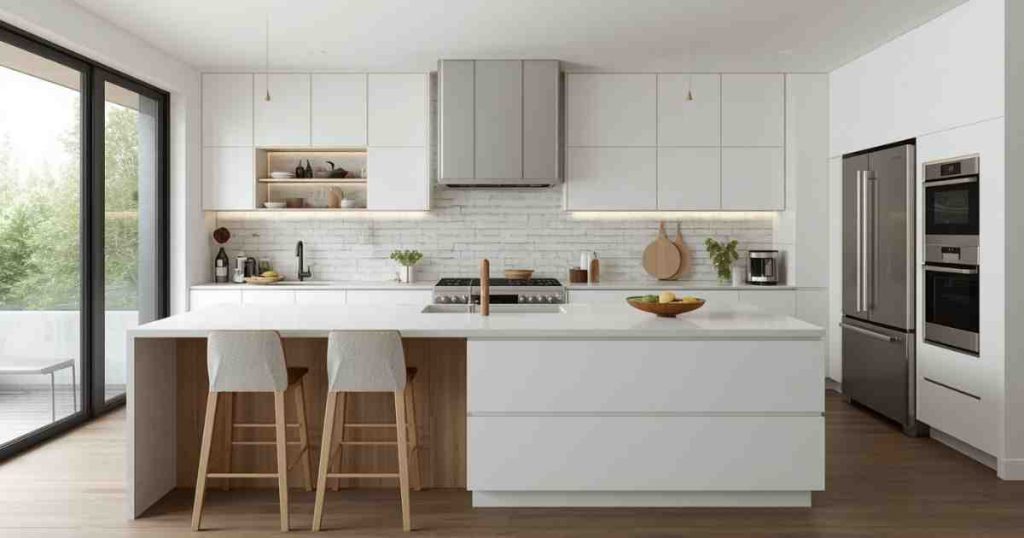
The core of modern kitchen design is simplicity. This means reducing visual clutter and focusing on essential elements. Straight lines, smooth surfaces, and a neutral color palette are common.
Think of a kitchen where everything is put away, and the countertops are mostly clear. This minimalist approach creates a sense of calm and spaciousness. It allows the materials and the layout to speak for themselves.
There’s a deliberate absence of unnecessary ornamentation. This focus on ‘less is more’ makes the kitchen feel sophisticated and serene.
For instance, instead of a decorative tiled backsplash with a busy pattern, a modern kitchen might use a single slab of stone or a large, plain tile. Similarly, cabinet doors are typically flat, without any raised panels or elaborate moldings.
This simplicity extends to the hardware, which is often minimal or integrated into the cabinet design itself.
The overall effect is a clean, uncluttered look that feels timeless and elegant. This principle makes the kitchen a peaceful retreat from a busy world.
Open-Plan Layouts
Modern kitchens are rarely isolated rooms. They are often integrated into open-plan living spaces, connecting seamlessly with dining and living areas. This layout encourages interaction and makes the kitchen a social hub.
It allows people to converse while cooking or for guests to gather without feeling separated from the main activity. The open design also enhances the sense of space and light within the home.
It creates a more fluid and connected living environment, which is highly desirable in contemporary homes.
This integration can be achieved in several ways. Kitchen islands are a popular feature, serving as a central workspace, a casual dining spot, and a visual divider between the kitchen and living areas. Removing unnecessary walls or partitions also helps to create this sense of openness.
The flow between cooking, dining, and relaxing areas becomes smooth and natural. This layout is perfect for families and for those who enjoy entertaining, as it keeps everyone together.
Emphasis on Functionality and Efficiency
Every element in a modern kitchen is designed with function in mind. This means the layout is optimized for workflow.
The typical kitchen work triangle, connecting the sink, refrigerator, and stove, is often enhanced with more detailed zone planning.
For example, there might be a dedicated prep zone near the sink and stove, a cleanup zone around the dishwasher, and a storage zone for food. This thoughtful arrangement makes cooking and cleaning more efficient and less physically demanding.
Smart storage is a key component of this efficiency. Pull-out shelves, deep drawers, and specially designed organizers ensure that every inch of cabinet space is utilized effectively.
This not only makes it easier to find what you need but also helps to maintain the minimalist aesthetic by keeping countertops clear.
Appliances are chosen for their performance and ease of use, further contributing to the kitchen’s efficiency. The entire space is designed to support the tasks performed within it, making it a practical and enjoyable place to work.
Material Choices
The materials used in modern kitchens contribute significantly to their clean and sophisticated appearance. Stainless steel is a very common choice for appliances, countertops, and even sinks, offering a sleek, professional look.
Glass is frequently used for cabinet doors, backsplashes, or decorative elements, adding a touch of elegance and reflecting light.
Natural wood, often in lighter or medium tones, is used for cabinets and flooring, bringing warmth and a connection to nature.
High-gloss finishes are also popular for cabinets and countertops, as they reflect light and contribute to the sleek, modern aesthetic.
These finishes can make a kitchen feel more spacious and contemporary. When choosing materials, durability and ease of maintenance are also important considerations.
Many modern materials are engineered to be resistant to stains, heat, and wear, ensuring the kitchen remains beautiful and functional for years to come. The combination of these materials creates a balanced look that is both stylish and practical.
Material Comparison: Durability and Aesthetics
| Material | Durability | Aesthetics | Maintenance |
|---|---|---|---|
| Quartz | Very High (scratch, stain, heat resistant) | Wide range of colors and patterns, consistent look | Low (easy to clean) |
| Granite | High (scratch and heat resistant, porous if not sealed) | Unique natural patterns, rich colors | Moderate (requires sealing periodically) |
| Stainless Steel | High (resists dents and scratches) | Sleek, modern, professional look | Moderate (can show fingerprints, requires specific cleaners) |
| Solid Surface (e.g., Corian) | Moderate (can scratch or scorch, but repairable) | Seamless, can be molded, matte to semi-gloss finish | Low (easy to clean, minor scratches can be buffed out) |
Color Palettes
Modern kitchen color palettes tend to be neutral and understated. Whites, grays, blacks, and natural wood tones are dominant. This creates a clean and sophisticated backdrop.
White cabinets, for instance, can make a kitchen feel bright and airy. Gray tones offer a sense of warmth and depth. Black can add a dramatic and modern touch, especially when balanced with lighter elements.
Natural wood brings texture and warmth, grounding the space.
Accents of color are used sparingly. These might appear in small appliances, decorative items, or perhaps a single feature like a bold backsplash tile or a unique pendant light. The goal is to create a calm and cohesive environment.
Overly bright or clashing colors are generally avoided. This deliberate choice of a limited color scheme enhances the minimalist aesthetic and ensures the kitchen feels like a peaceful, well-designed space. It’s a style that prioritizes harmony and balance in its visual presentation.
Incorporating Technology and Sustainability
Modern kitchens are increasingly embracing smart technology and sustainable practices. These advancements not only enhance convenience and efficiency but also reflect a growing awareness of environmental impact and resource conservation.
Integrating these elements into kitchen design is becoming a standard expectation for contemporary living.
Smart Appliances and Features
Technology is finding its way into every corner of the home, and the kitchen is no exception. Smart appliances offer advanced features that can simplify tasks and improve efficiency.
Refrigerators might have built-in screens that can display recipes, manage grocery lists, or even order groceries online.
Ovens can be preheated remotely via a smartphone app, saving time and energy. Smart cooktops can offer precise temperature control and integrated ventilation systems.
Beyond major appliances, other smart features are becoming common. Voice-activated assistants can control lighting, play music, or provide cooking timers hands-free.
Smart faucets can dispense pre-measured amounts of water or even adjust temperature with a simple gesture.
Integrated charging stations for devices ensure that phones and tablets are always powered up and accessible during meal preparation or family time. These technologies aim to make kitchen tasks more seamless and enjoyable.
Energy Efficiency and Sustainability
Sustainability is a significant consideration in modern design. This includes choosing energy-efficient appliances, which consume less electricity and water. Look for Energy Star ratings on refrigerators, dishwashers, and ovens.
Low-flow faucets and dual-flush toilets (if applicable to a kitchen with a powder room) also contribute to water conservation.
Materials used in the kitchen are also increasingly sourced sustainably. This might include recycled glass countertops, bamboo cabinetry, or flooring made from reclaimed wood.
Beyond material choices, the design itself can promote sustainability. For instance, maximizing natural light through large windows reduces the need for artificial lighting during the day.
Designing efficient layouts can minimize the amount of energy needed for heating and cooling the space.
Composting and recycling centers are often integrated into cabinet designs, making it easier for households to manage waste responsibly.
These practices reflect a commitment to environmental stewardship while also providing practical benefits.
Sample Scenario: The Tech-Savvy Chef
Consider Sarah, a busy professional who loves to cook but has limited time. Her modern kitchen is equipped with a smart oven that she preheats on her commute home.
Her refrigerator tracks expiration dates and suggests recipes based on ingredients she already has.
When she’s prepping dinner, under-cabinet LED lights provide perfect task lighting, and a voice assistant plays her favorite podcast.
A built-in charging station keeps her tablet handy for recipes without cluttering the counter. This integration of technology makes her cooking experience faster, more organized, and more enjoyable.
Sample Scenario: The Eco-Conscious Family
The Miller family wanted a kitchen that was good for their family and the planet. They chose cabinets made from sustainably sourced bamboo and countertops from recycled glass. Their appliances are all Energy Star certified, significantly lowering their electricity bills.
A pull-out bin system in the island makes sorting recycling and compost easy. Large windows allow plenty of natural light, reducing their reliance on overhead lights during the day. This approach ensures their kitchen is beautiful, functional, and environmentally responsible.
Frequently Asked Questions Of What Is A Modern Kitchen? Definition, Key Features And Design Principles Explained
What is the main difference between a modern kitchen and a traditional kitchen?
The main difference lies in aesthetics and functionality. Modern kitchens feature clean lines, minimalist design, flat-front cabinets, and integrated appliances for a sleek look. Traditional kitchens often have more ornate details, raised panel cabinets, decorative hardware, and a warmer, sometimes more cluttered, feel.
Are modern kitchens always expensive?
While high-end modern kitchens can be costly, the style itself is adaptable to different budgets. The focus on simplicity means that some of the cost can be reduced by choosing simpler materials and less complex designs. Smart storage solutions can be more budget-friendly than elaborate custom cabinetry.
What colors are best for a modern kitchen?
Neutral colors like white, gray, black, and natural wood tones are most common. These create a clean and sophisticated look. Accents of color can be used sparingly for visual interest, but the overall palette is typically restrained.
How important is the layout in a modern kitchen?
Layout is extremely important in a modern kitchen. The emphasis is on functionality and efficiency. Open-plan layouts that connect to other living areas are common, and the placement of the sink, stove, and refrigerator is optimized for a smooth workflow.
Can I update my existing kitchen to look more modern?
Yes, you can update an existing kitchen to have a more modern feel. Simple changes like updating cabinet hardware to sleek, minimalist styles, painting cabinets a neutral color, adding modern lighting fixtures, or installing a clean-lined backsplash can make a significant difference.
Summary
A modern kitchen prioritizes clean design and smart functionality. It uses simple lines, integrated appliances, and efficient storage. Materials are chosen for their sleek look and durability. In the Tech-Savvy Chef scenario, a modern kitchen is equipped with a smart oven that can be preheated remotely.
This style creates a calm, organized, and highly practical space for cooking and living. Embrace these principles to bring contemporary style and ease into your home. As summarized, a modern kitchen prioritizes clean design and smart functionality for a calm space.

![How To Add Warmth To A Modern Kitchen Without Losing The Minimalist Feel[1]](https://kitchentoolslab.com/wp-content/uploads/2026/05/How_To_Add_Warmth_To_A_Modern_Kitchen_Without_Losing_The_Minimalist_Feel1-768x403.jpg)
![What Is A Scullery Kitchen The Hidden Prep Room Making A Comeback[1]](https://kitchentoolslab.com/wp-content/uploads/2026/05/What_Is_A_Scullery_Kitchen__The_Hidden_Prep_Room_Making_A_Comeback1-768x403.jpg)
![Open Concept Modern Kitchen Benefits, Drawbacks, And Design Tips[1]](https://kitchentoolslab.com/wp-content/uploads/2026/05/Open-Concept_Modern_Kitchen__Benefits_Drawbacks_And_Design_Tips1-768x403.jpg)
![Japandi Kitchen Design How To Blend Japanese And Scandinavian Styles[1]](https://kitchentoolslab.com/wp-content/uploads/2026/05/Japandi_Kitchen_Design__How_To_Blend_Japanese_And_Scandinavian_Styles1-768x403.jpg)
![How To Design A Modern Kitchen On A Tight Budget Step By Step Guide[1]](https://kitchentoolslab.com/wp-content/uploads/2026/05/How_To_Design_A_Modern_Kitchen_On_A_Tight_Budget__Step-By-Step_Guide1-768x403.jpg)