Why Homemade Pickles Go Soft, And How Grape Or Oak Leaves Help
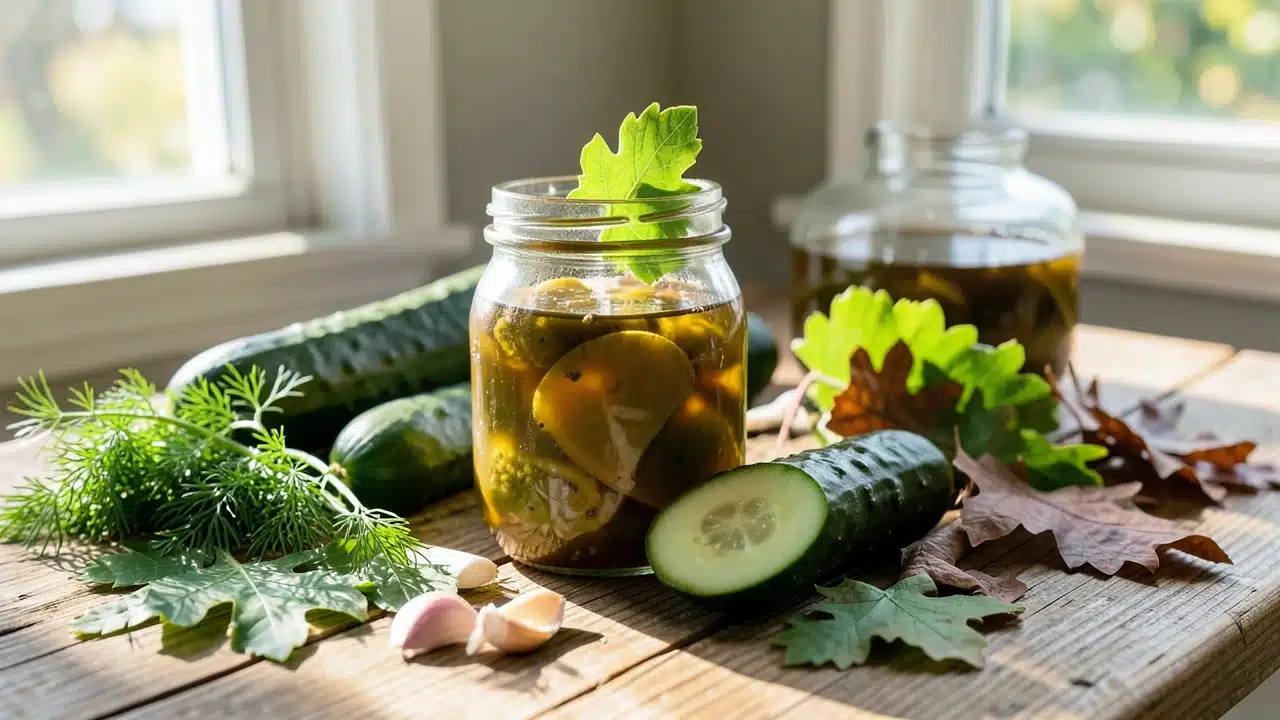
Homemade pickles go soft when cucumbers are overripe, stored too long, fermented too warm, or left with blossom ends that contain softening enzymes. Grape or oak leaves help because their tannins can inhibit enzymes that break down firmness.
They help texture, but fresh cucumbers, trimmed blossom ends, correct salt, and cool fermentation matter more.
There’s nothing quite like a crisp, homemade pickle. But sometimes, they turn out disappointingly soft. You’ve probably wondered Why Homemade Pickles Go Soft, and How Grape or Oak Leaves Help.
This matters because it means you can finally achieve that satisfying crunch you love. We’ll show you what makes pickles lose their firmness and the simple, natural trick that keeps them perfectly crisp, batch after batch, so you can enjoy the best homemade pickles every time.
Key Takeaways
- Homemade pickles can go soft due to enzyme activity and improper brining.
- Grape and oak leaves contain tannins that help preserve pickle crispness.
- Understanding the science behind pickle firmness leads to better results.
- Using fresh, firm cucumbers is the first step to crisp pickles.
- The right brine concentration is crucial for preventing softness.
- Leaves are a natural, effective way to enhance pickle texture.
Understanding Pickle Softness: The Science Behind the Soggy Cucumber
The quest for the perfect crunchy pickle can sometimes lead to a mushy disappointment. This often happens because certain natural processes are working against your crispy goals. Understanding these causes is the first step to fixing them.
Enzyme Action: The Culprit Within
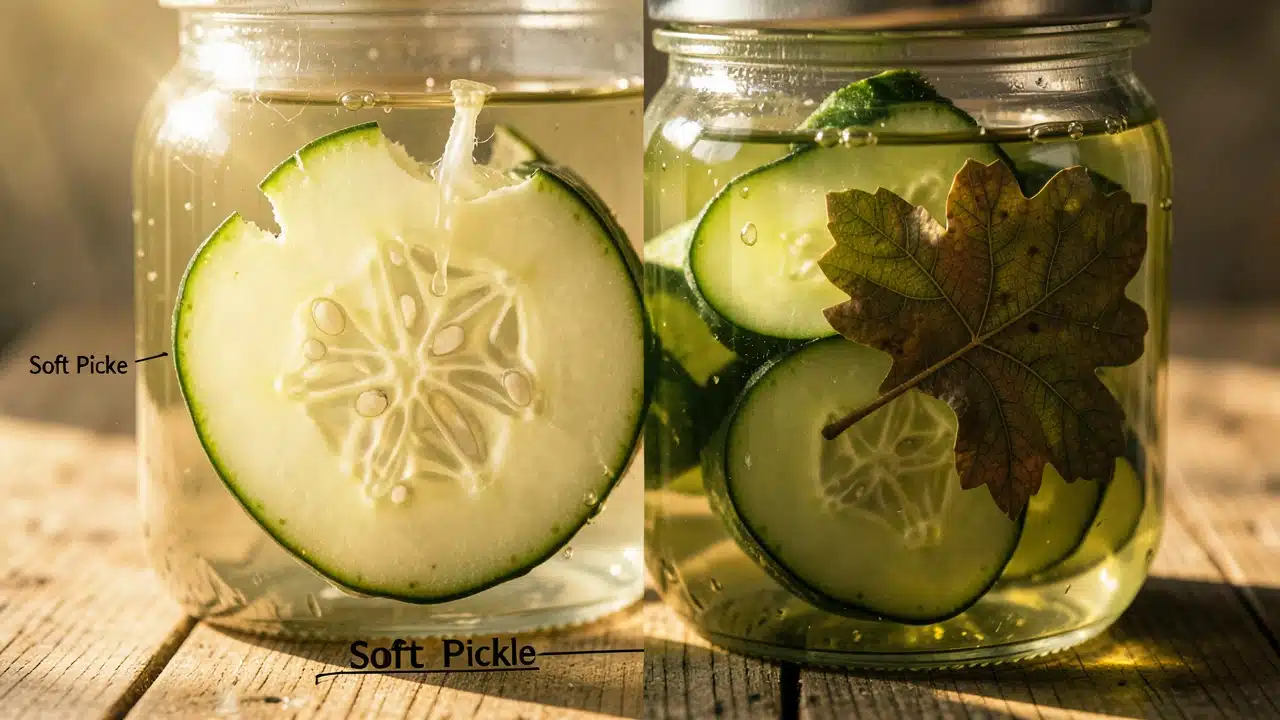
Cucumbers naturally contain enzymes. These enzymes can break down pectin, a substance that helps keep plant cells firm. When pectin breaks down, the cucumber cells lose their structure.
This leads to that dreaded soft texture.
The Role of pH Levels
Pickling relies on creating an acidic environment. This acidity, usually from vinegar or fermentation, helps preserve the pickles and slows down spoilage. If the acidity isn’t high enough, or if it fluctuates, the enzymes can continue their work.
This results in softer pickles.
Microbial Activity and Spoilage
Unwanted bacteria or mold can also contribute to pickle softness. These microorganisms can feed on the cucumber and produce enzymes that soften them. Proper sanitation and the right brine balance help prevent these unwelcome guests.
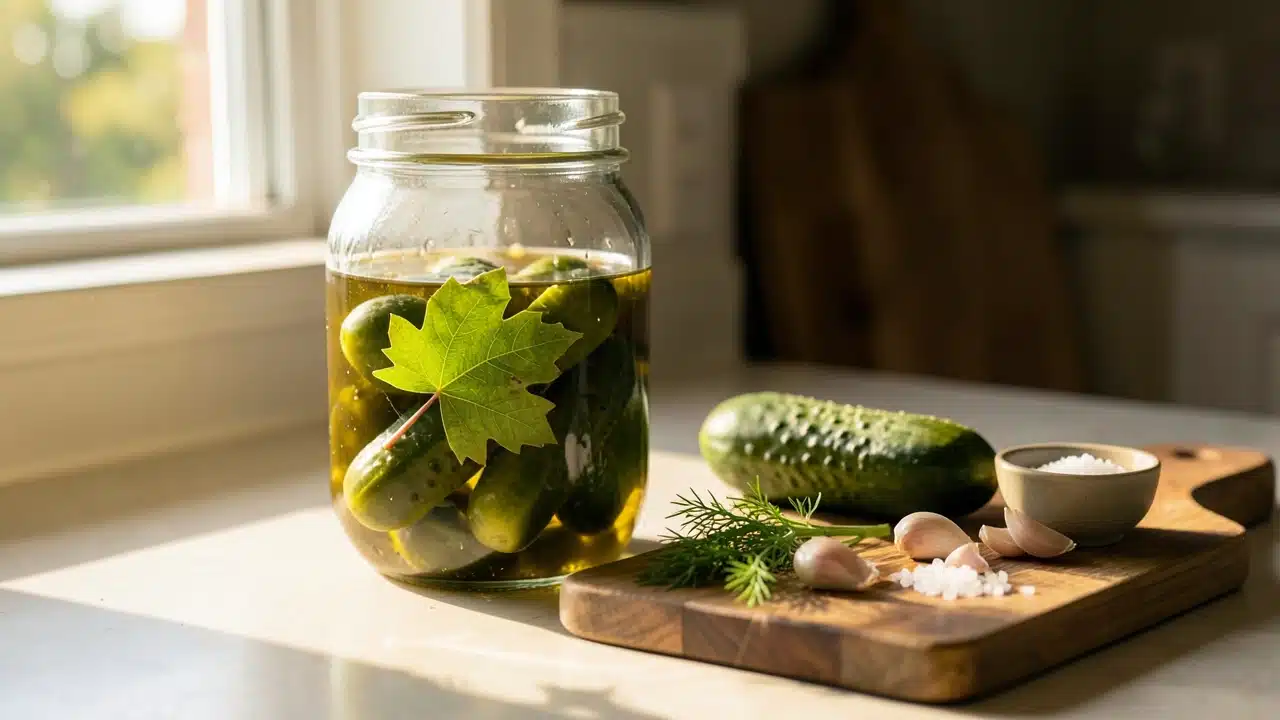
Why Homemade Pickles Go Soft, and How Grape or Oak Leaves Help: The Natural Solution
Many home picklers have discovered a secret weapon for achieving that perfect crunch. It’s a method passed down through generations, using natural ingredients found right in your backyard.
Understanding Why Homemade Pickles Go Soft, and How Grape or Oak Leaves Help can transform your pickling success.
The core reason for pickle softness is the breakdown of the cucumber’s cell structure. This breakdown is often caused by enzymes present in the cucumber itself or by undesirable microbial activity. However, certain leaves, like grape and oak leaves, contain compounds that fight this process.
These leaves are rich in tannins. Tannins are natural compounds found in many plants. They are known for their astringent quality.
In pickling, these tannins act as a natural firming agent. They help to inhibit the enzymes that cause softening and also strengthen the pectin in the cucumber’s cell walls.
So, when you add grape or oak leaves to your pickle jar, you’re essentially introducing a natural preservative that keeps your cucumbers firm. This is a simple yet incredibly effective way to address Why Homemade Pickles Go Soft, and How Grape or Oak Leaves Help.
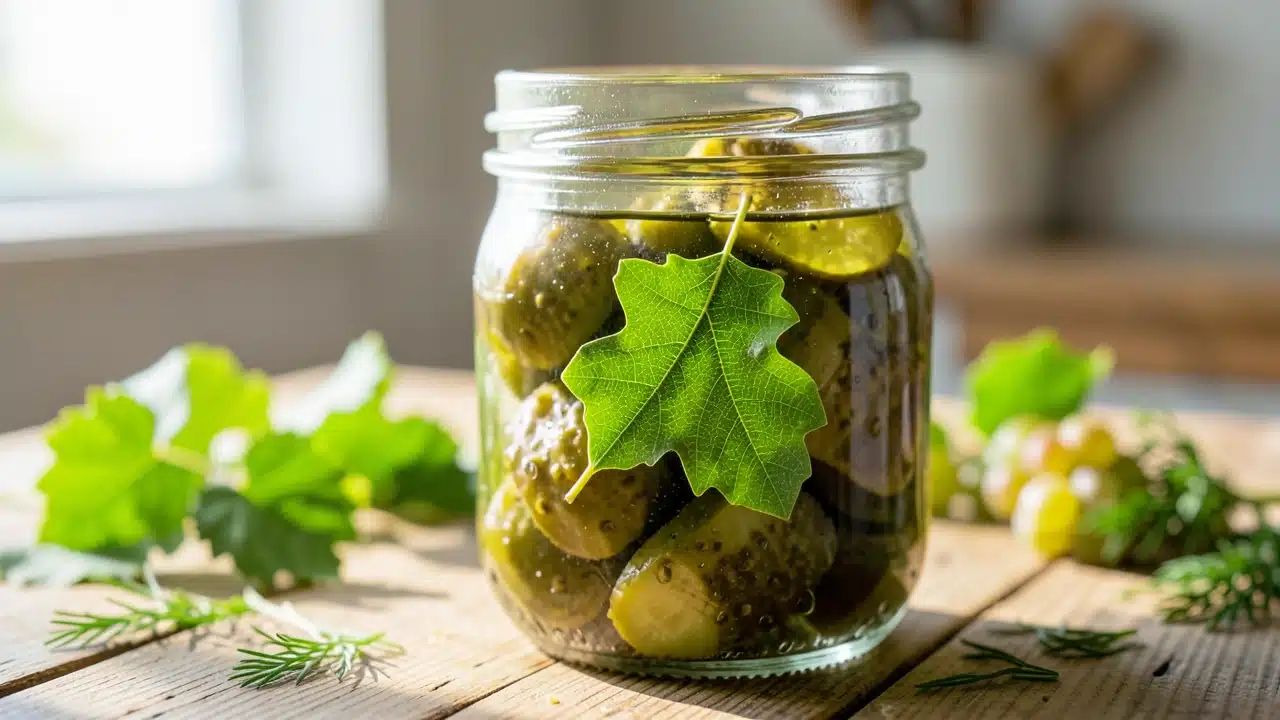
The Science of Tannins: Nature’s Pickle Protector
Tannins are powerful plant compounds. They are also found in tea, wine, and bark. Their ability to bind with proteins and other molecules makes them useful in many applications, including preserving food.
How Tannins Work in Pickles
When you add grape or oak leaves to your pickle brine, the tannins leach out into the liquid. These tannins then interact with the cucumber's pectin. They create a more rigid structure.
This makes the cucumber more resistant to the softening enzymes.
Think of it like reinforcing a wall. The tannins act as extra support, preventing the wall (the cucumber cell) from collapsing. This is a key part of answering Why Homemade Pickles Go Soft, and How Grape or Oak Leaves Help.
Choosing the Right Leaves
Not all leaves are created equal for pickling. You want leaves that are fresh and free from pesticides or other contaminants. Grape leaves are a popular choice because they are readily available and have a good tannin content.
Oak leaves, especially from younger trees, also work well.
It’s important to wash the leaves thoroughly before adding them to your pickles. This removes any dirt or debris. Some people prefer to blanch the leaves briefly, which can help release their tannins more effectively.
Practical Application: Adding Leaves to Your Pickle Jars
Incorporating grape or oak leaves into your pickling process is straightforward. It’s a simple step that can make a big difference in the final texture of your pickles. This directly addresses Why Homemade Pickles Go Soft, and How Grape or Oak Leaves Help.
First, select your cucumbers. Choose fresh, firm cucumbers that are meant for pickling. Avoid any that are bruised or soft to begin with.
Second, prepare your brine. The brine is a mixture of water, vinegar, salt, and any desired spices. The correct salt concentration is important for both flavor and preservation.
Next, wash your chosen leaves thoroughly. Grape leaves or young oak leaves are excellent choices. Make sure they are clean and free of any spray or dirt.
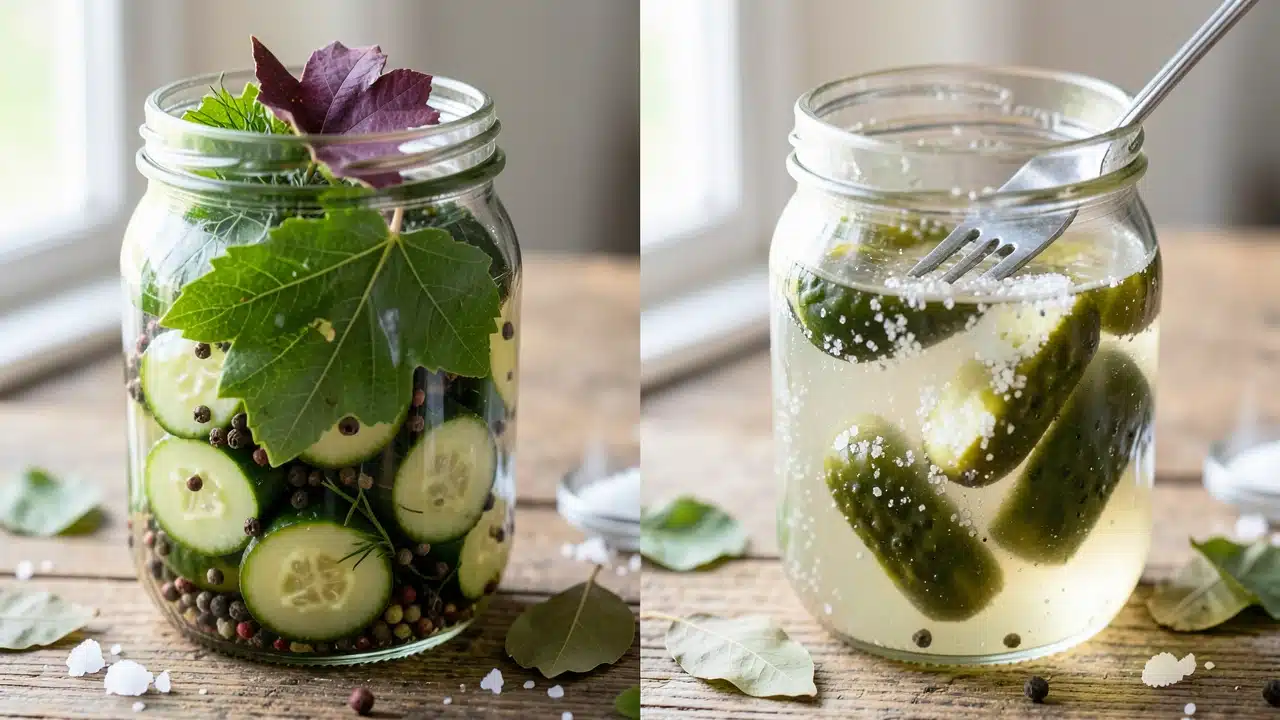
Then, layer the leaves into your canning jars. You can place a few leaves at the bottom of the jar, between layers of cucumbers, or on top. Some picklers like to use a large leaf to line the bottom and top of the jar.
Finally, pack your cucumbers tightly into the jars. Pour the prepared brine over the cucumbers, ensuring they are fully submerged. Seal the jars and allow them to pickle according to your recipe’s instructions.
The tannins from the leaves will gradually infuse the brine and work their magic. This natural method helps prevent the pickles from becoming soft. It’s a classic technique for a reason.
Comparing Natural Firming Agents: Leaves vs. Other Methods
While grape and oak leaves are excellent, other natural ingredients can also help keep pickles crisp. Understanding these options gives you more control over your pickle texture.
This comparison helps clarify Why Homemade Pickles Go Soft, and How Grape or Oak Leaves Help by showing how they fit into the broader picture.
Here’s a look at some common methods:
| Grape/Oak Leaves | Contain tannins that strengthen pectin and inhibit enzymes. | Natural, readily available, effective, adds subtle flavor. | Requires sourcing fresh leaves, may not be available year-round. |
| Dill Flowers (Fresh) | Contain similar compounds to leaves that help firm cucumbers. | Natural, adds dill flavor, effective. | Availability can be seasonal, some people dislike the added flavor. |
| Alum | A mineral that helps tighten cell walls and prevent softening. | Very effective at firming, widely available. | Can impart a metallic taste if too much is used, some people avoid it. |
| Calcium Chloride | A salt that helps bind pectin and maintain cell structure. | Effective, often found in commercial pickle products. | Can be harder to find for home use, may alter brine slightly. |
As you can see, leaves offer a balanced approach. They provide firmness without significantly altering the pickle’s taste, which is a major advantage for many home picklers. This is why understanding Why Homemade Pickles Go Soft, and How Grape or Oak Leaves Help is so valuable.
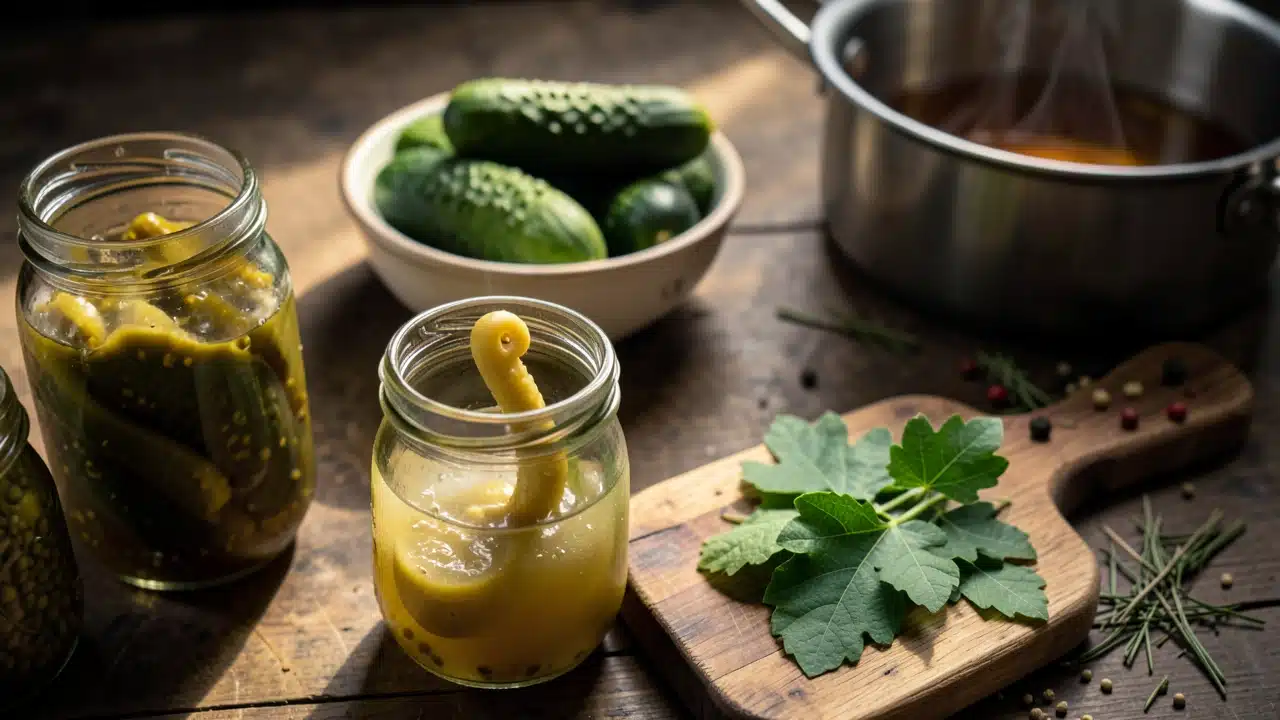
Troubleshooting Common Pickle Problems Beyond Softness
While softness is a common issue, other problems can arise in homemade pickles. Knowing how to address these can ensure your entire batch is a success.
This knowledge complements what we’ve learned about Why Homemade Pickles Go Soft, and How Grape or Oak Leaves Help.
Cloudy Brine
Cloudy brine can be caused by a few things. It might be from starch released by the cucumbers, especially if they are older. It can also be a sign of bacterial spoilage.
If the brine is cloudy but the pickles smell and taste fine, it’s usually harmless. However, if it smells off, discard the batch.
Mushy Pickles Despite Using Leaves
If you’re still experiencing mushy pickles even after using leaves, check a few things. Ensure your leaves were fresh and potent. Also, verify your brine’s acidity and salt concentration.
Sometimes, the cucumbers themselves might be too old or not the right variety for pickling.
Pickles That Aren’t Sour Enough
The sourness comes from the vinegar or fermentation process. If your pickles aren't sour enough, you might need to adjust the vinegar-to-water ratio in your brine. For fermented pickles, ensure the fermentation process occurred in a warm enough environment and for sufficient time.
How to Ensure Crispness Every Time
To guarantee crisp pickles, always start with the freshest, firmest cucumbers. Use a reliable brine recipe with the correct salt and vinegar percentages. And, of course, don’t forget to add your grape or oak leaves to harness their natural firming power.
Mastering Why Homemade Pickles Go Soft, and How Grape or Oak Leaves Help is key.
Frequently Asked Questions Of Why Homemade Pickles Go Soft, And How Grape Or Oak Leaves Help
Question: Do grape leaves really make pickles crisp?
Answer: Yes, grape leaves contain tannins which help strengthen the cucumber’s cell walls and prevent them from becoming soft. This is a well-known natural method for achieving crisp pickles.
Question: Can I use any kind of oak leaf for pickling?
Answer: Younger oak leaves are generally preferred as they tend to have a higher tannin content. Ensure any leaves you use are free from pesticides and washed thoroughly.
Question: What happens if I use too many grape leaves?
Answer: Using too many leaves might impart a slightly bitter or tannic flavor to your pickles. It’s best to follow recipe recommendations or start with a moderate amount, like 1-2 leaves per quart jar.
Question: Why are my fermented pickles going soft, and how can leaves help?
Answer: Fermented pickles can go soft if the lactic acid bacteria don’t establish properly, allowing spoilage bacteria to take over. Adding grape or oak leaves can help by providing tannins that support the desired microbial activity and firm the cucumbers, addressing Why Homemade Pickles Go Soft, and How Grape or Oak Leaves Help.
Question: Are there any alternatives to grape or oak leaves for firming pickles?
Answer: Yes, fresh dill flowers, a small amount of alum, or calcium chloride can also help firm pickles, though leaves are a popular natural choice for their subtle flavor and availability.
Question: How long do the leaves need to be in the pickle jar?
Answer: The leaves can remain in the jar throughout the pickling process and even during storage. Their tannins will continue to help maintain the pickle’s crispness.
Final Thoughts
Achieving perfectly crisp homemade pickles is within reach. By understanding Why Homemade Pickles Go Soft, and How Grape or Oak Leaves Help, you can avoid the common pitfalls. Using a reliable brine recipe is essential for safe and crisp pickles.
Adding a few fresh grape or oak leaves to your jars is a simple, natural way to ensure every batch is satisfyingly crunchy.