Why Your Knife Slides Off Tomatoes: 2 Fixes That Actually Work
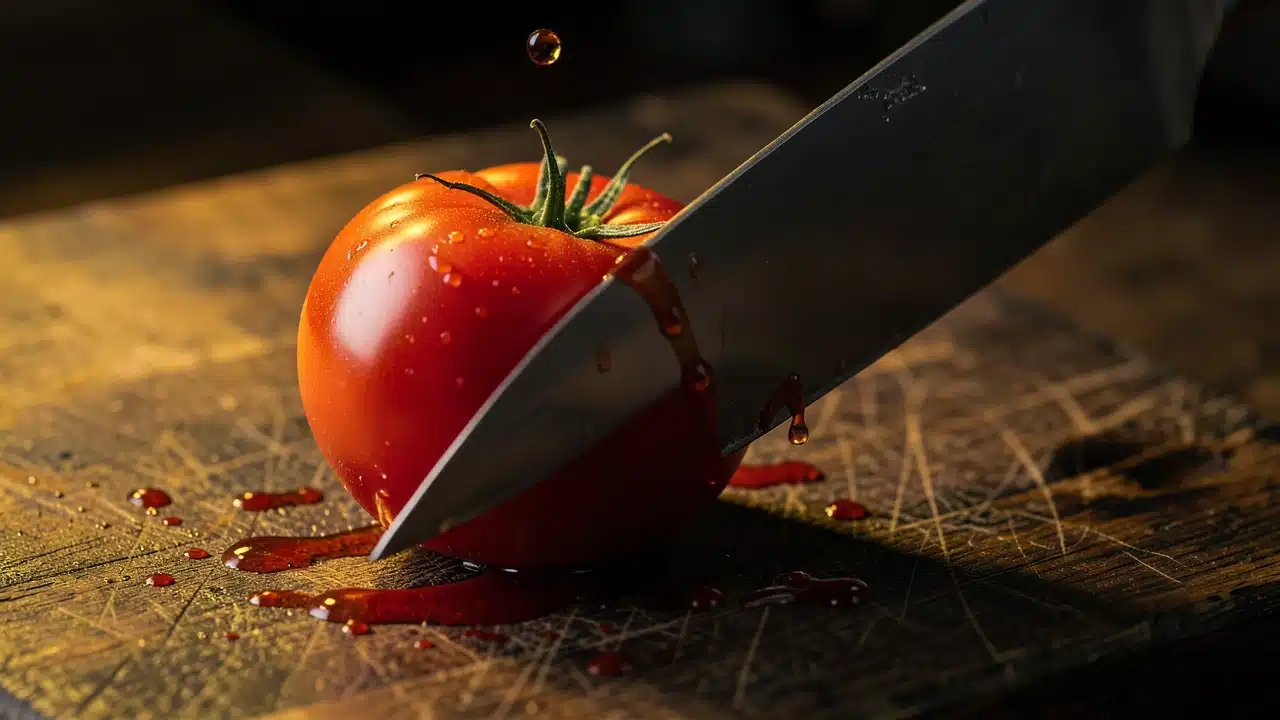
Your knife slides off tomatoes because the blade edge is too dull to pierce the smooth, tight skin cleanly.
Two fixes actually work: sharpen or hone the knife, or use a serrated knife with small teeth that grip the skin. A sharp edge reduces pressure, prevents crushing, and gives cleaner tomato slices.
You’re trying to slice a ripe tomato for your sandwich or salad, but your knife just keeps sliding off the slippery skin. It’s frustrating, right? This common kitchen problem can lead to messy cuts and even minor injuries.
Understanding Why Your Knife Slides Off Tomatoes: 2 Fixes That Actually Work will help you prepare food safely and efficiently.
You’ll gain the confidence to tackle even the juiciest tomatoes with ease, making your cooking prep much smoother and more enjoyable.
Key Takeaways
- Discover why tomato skins are so slippery to cut.
- Learn the simple trick to prevent your knife from sliding off tomatoes.
- Understand how to properly grip and position your knife for slicing.
- Find out how to choose the right knife for the job.
- Get tips for preparing your workspace to avoid slips.
Why Tomatoes Are So Tricky to Slice
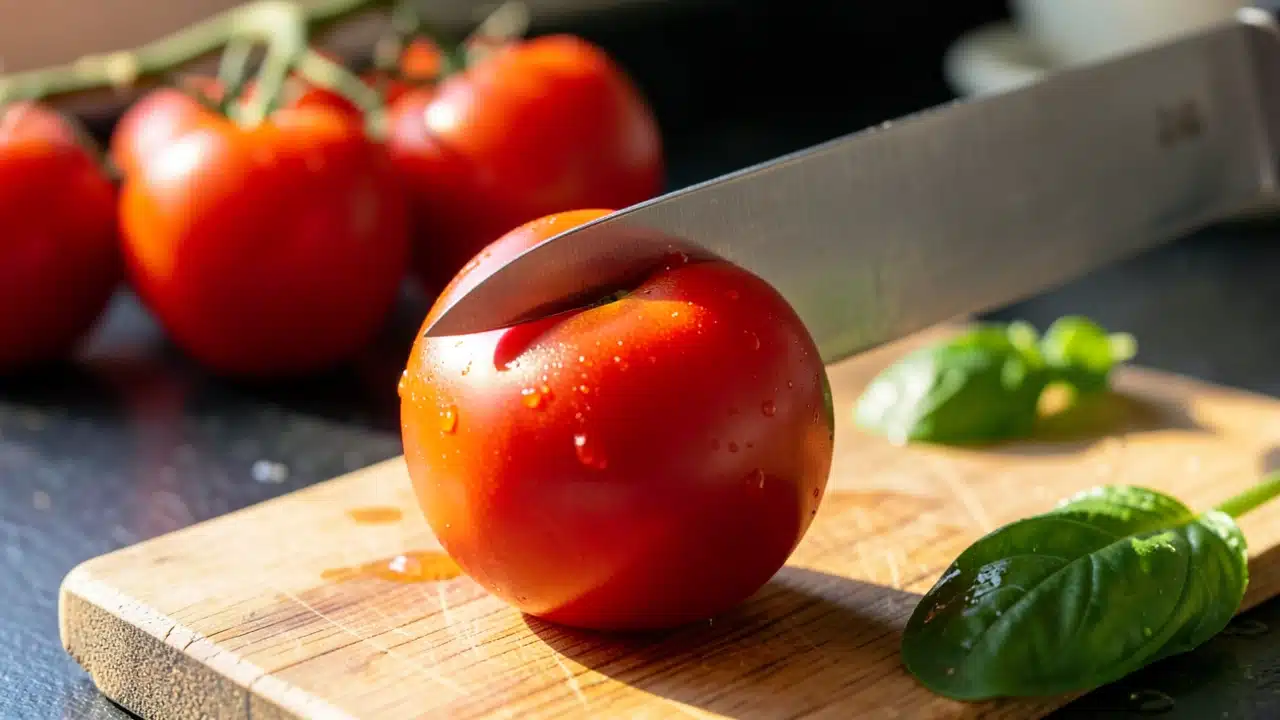
Tomatoes are beautiful and delicious, but their smooth, rounded skin makes them a challenge to cut. This slipperiness comes from a combination of factors. The skin itself is taut and has a waxy coating.
This coating helps the tomato retain moisture and protect itself. When you try to slice into it, the knife edge can easily lose its grip. The juice inside also adds to the slickness.
It’s like trying to cut a wet bar of soap. This is a key reason why understanding Why Your Knife Slides Off Tomatoes: 2 Fixes That Actually Work is so important for kitchen safety.
The shape of a tomato also plays a role. Many tomatoes are round or oval. This means there isn’t a flat surface for the knife to rest on initially.
You have to start the cut at an angle. If that angle is wrong or the knife isn’t sharp enough, it’s a recipe for disaster. A dull knife will also crush the tomato instead of cutting through it cleanly.
This often leads to more juice and a messier surface, making the next cut even harder.
Fix 1: The Simple Slice-Starting Technique
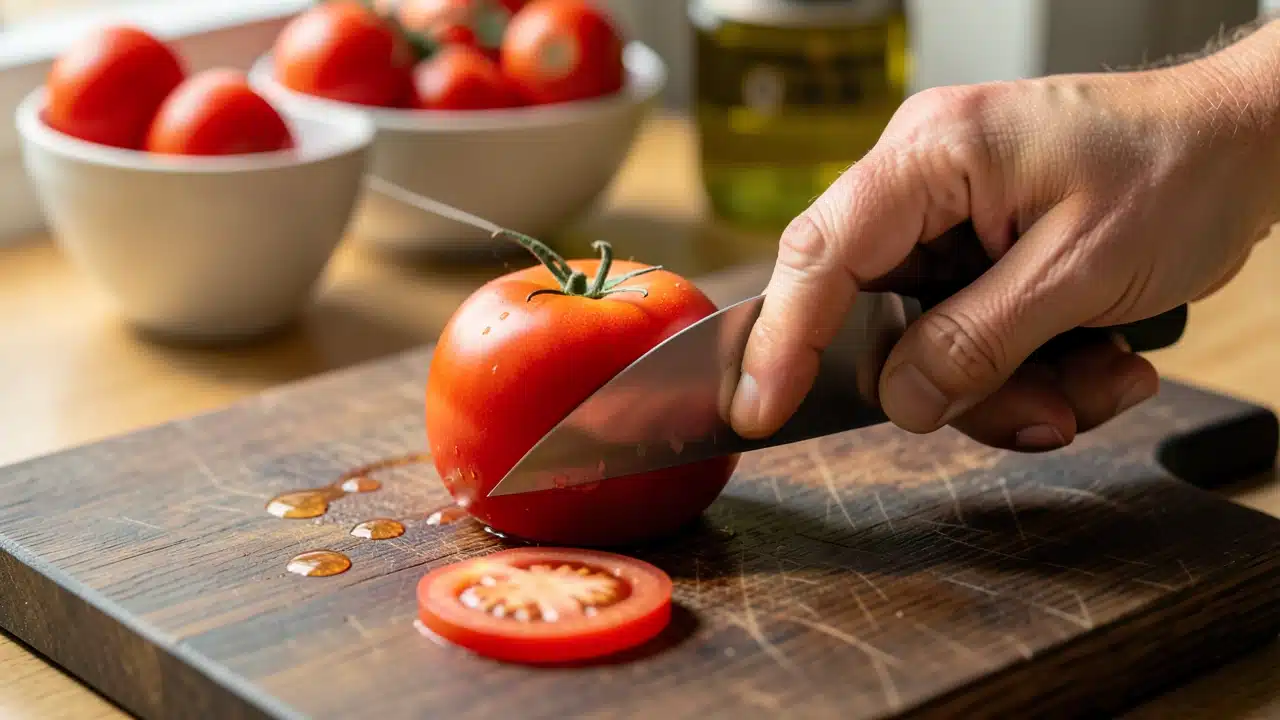
The first effective fix addresses how you start the cut. Many people try to cut straight down onto a round tomato. This is where the knife often slides.
Instead, you need to angle your knife slightly. Imagine you’re trying to shave a thin layer off the top of the tomato. This initial angled cut creates a small, flat surface.
You can then reposition your knife for a clean, straight slice.
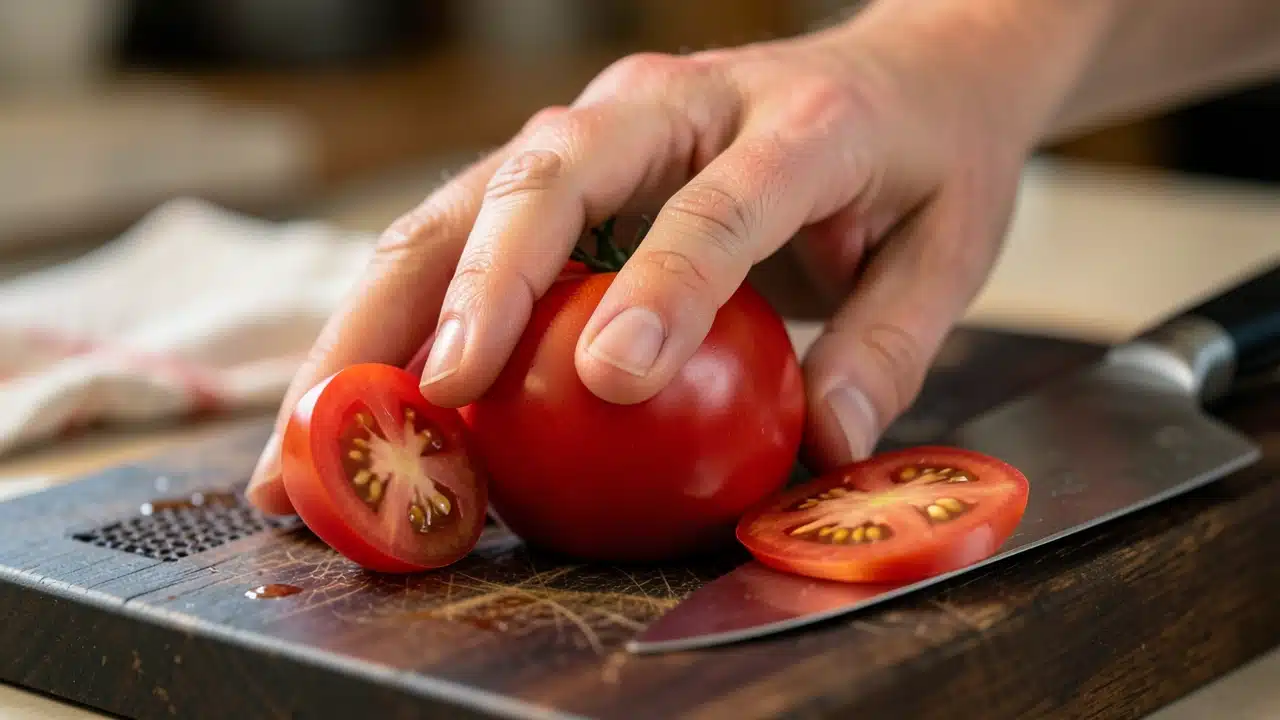
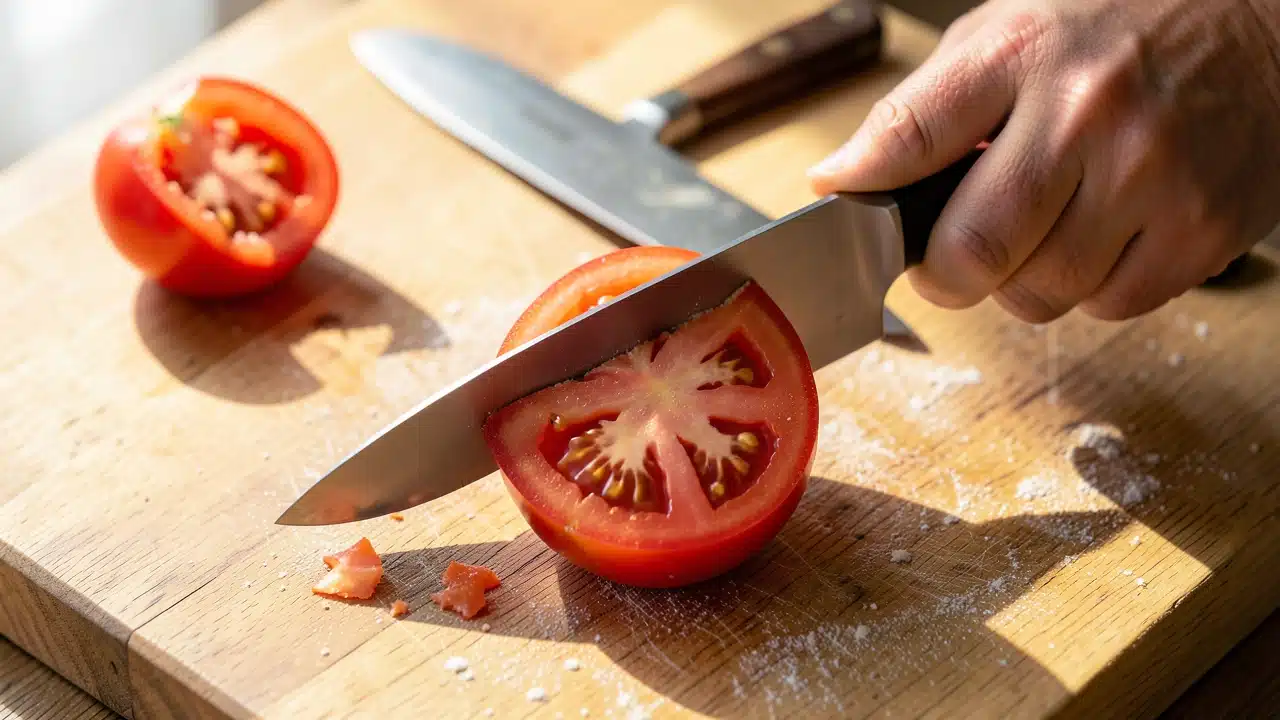
First, hold the tomato steady with your non-dominant hand. Place your fingers in a claw shape to protect them. Position the tip of your knife against the tomato's skin at a slight angle.
Don’t press hard yet. Gently saw back and forth just enough to break the skin. This creates a small divot or flat spot.
Once you have this tiny groove, you can then adjust your knife to a more vertical position to slice through the rest of the tomato.
This technique is fundamental to understanding Why Your Knife Slides Off Tomatoes: 2 Fixes That Actually Work. It’s not about brute force. It’s about using the knife’s sharpness and a smart angle to gain control.
This method works best with ripe, firm tomatoes. Very soft or overripe tomatoes will still be tricky, but this technique gives you a much better starting point. Practicing this a few times will make it feel natural.
Fix 2: Stabilizing the Tomato
The second major fix involves stabilizing the tomato itself. When a tomato rolls or shifts, the knife is bound to slip. You need to create a more stable cutting surface.
This can be done in a couple of simple ways, making Why Your Knife Slides Off Tomatoes: 2 Fixes That Actually Work achievable for anyone.
Second, if you're slicing a tomato in half or into wedges, consider cutting it on a cutting board. Place the tomato on the board and then slice. This seems obvious, but many people hold the tomato in their hand and try to cut.
While this can work for some produce, tomatoes are often too slippery for it. The cutting board provides a flat, stable surface that won’t move.
Another way to stabilize is by using the tomato’s own shape. If you’re cutting slices for a sandwich, you’ll want to cut off the stem end first. This creates a flat surface on one side.
Then, lay that flat side down on your cutting board. Now, when you slice, the knife has a firm base to work against. This is a critical step in mastering Why Your Knife Slides Off Tomatoes: 2 Fixes That Actually Work.
For very large or irregularly shaped tomatoes, you might find it helpful to use a fork to gently hold the tomato in place. Stick the fork into the stem end of the tomato. This gives you a handle to hold onto while you make your slices.
Be careful not to push the fork too deep, as this can make the tomato mushy. This extra grip can prevent the tomato from rolling away.
The Right Knife Makes a Big Difference
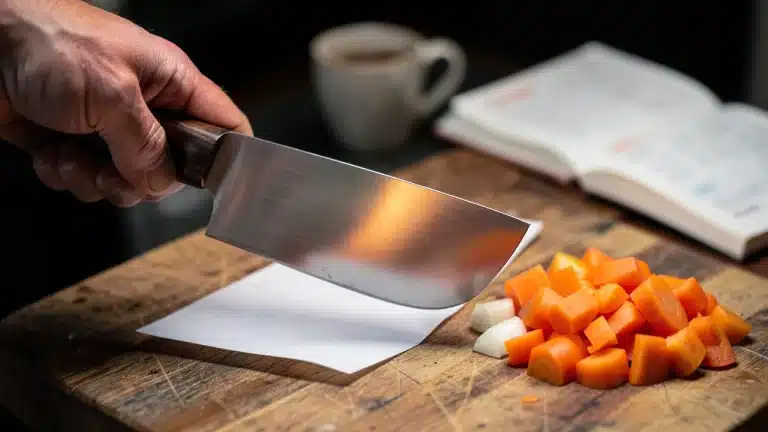
While technique is key, the tool you use matters too. A sharp knife is paramount. A dull knife requires more force.
More force means more pressure, which increases the chance of slipping. A sharp knife cuts with ease. It glides through the tomato skin and flesh with minimal effort.
This is a fundamental part of understanding Why Your Knife Slides Off Tomatoes: 2 Fixes That Actually Work.
For tomatoes, a serrated knife is often recommended. The small teeth on a serrated blade grip the skin of the tomato. They then saw through it without crushing the delicate flesh.
Think of it like a bread knife, but smaller. A chef’s knife can also work, but it needs to be very sharp. If you use a chef’s knife, ensure it has a good point to start the cut and a smooth, sharp edge.
Here’s a quick comparison of knife types for tomatoes:
| Serrated Knife | Grips skin well, saws easily, less crushing. | Can leave small marks, not ideal for fine dicing. |
| Sharp Chef’s Knife | Versatile, clean cuts if very sharp. | Can slip if not perfectly sharp, requires more precision. |
| Paring Knife | Good for small tomatoes or detailed work. | Too small for large tomatoes, can be awkward for many slices. |
Choosing the right knife can significantly improve your success rate. It complements the techniques discussed for Why Your Knife Slides Off Tomatoes: 2 Fixes That Actually Work.
Preparing Your Workspace
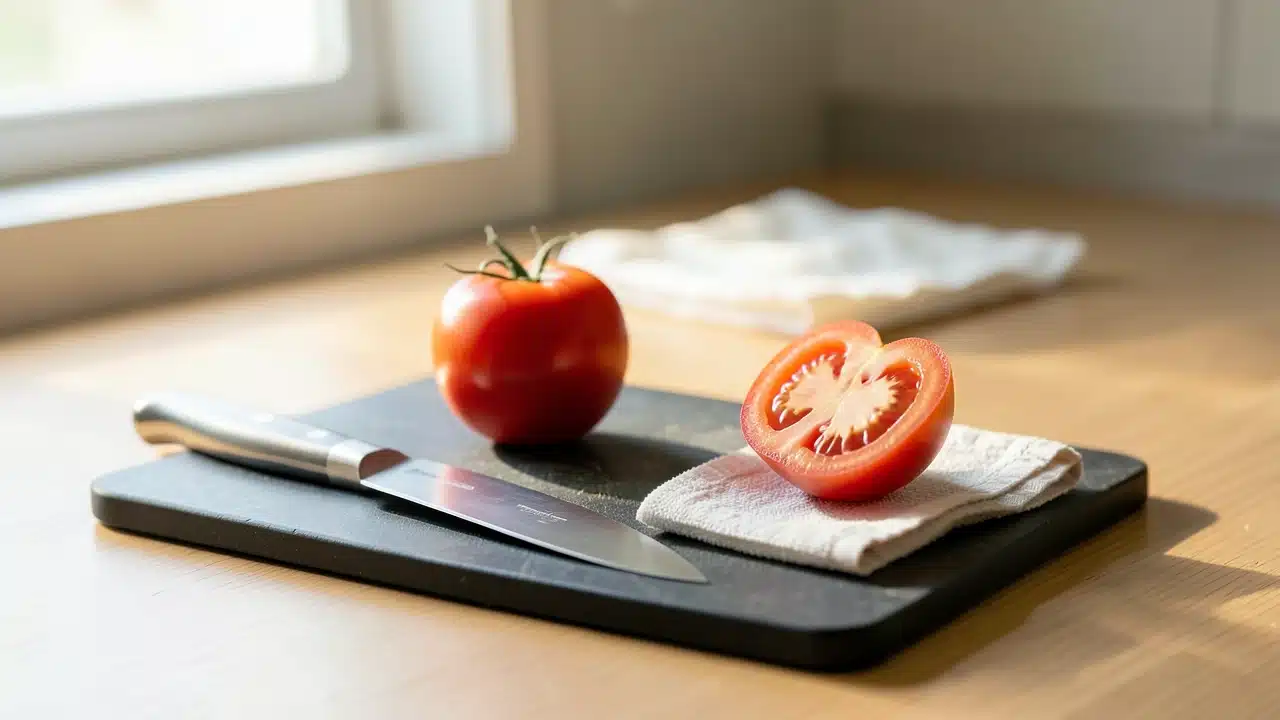
Beyond your grip and your knife, your cutting environment plays a role. A clean, dry cutting board is essential. If your cutting board is wet or oily, it becomes another slippery surface.
Make sure it’s stable on your counter. You can place a damp paper towel under the board to prevent it from sliding around.
Ensure there’s enough space to work. If your cutting board is too small or crowded, you’ll feel rushed. Rushing leads to mistakes.
Give yourself room to move the tomato and the knife safely. This attention to detail is part of why Why Your Knife Slides Off Tomatoes: 2 Fixes That Actually Work is more than just one trick; it's a combination of good habits.
Wipe up any spilled juice or oil immediately. These liquids create hazards. A clean workspace is a safe workspace.
It also makes the whole process more pleasant. You won’t be battling rogue tomato juice while trying to get that perfect slice.
Practicing for Perfect Slices
Like any skill, slicing tomatoes smoothly takes practice. Don’t get discouraged if your first few attempts aren’t perfect. The key is to be mindful of the technique.
Focus on creating that initial small cut to break the skin. Then, use the stability of the cutting board and your knife.
Try different types of tomatoes. Cherry tomatoes are small and can be tricky due to their size. Beefsteak tomatoes are large and juicy, presenting a different challenge.
Roma tomatoes are often firmer and easier to slice. Each type might require a slight adjustment in your approach, but the core principles of Why Your Knife Slides Off Tomatoes: 2 Fixes That Actually Work remain the same.
Pay attention to how your knife feels. If it’s dragging or crushing, it might be time to sharpen it. If the tomato is rolling too much, try repositioning it or using the stem-end down method.
Consistent practice will build your muscle memory. Soon, slicing tomatoes will feel effortless.
Frequently Asked Questions Of Why Your Knife Slides Off Tomatoes: 2 Fixes That Actually Work
Question: Why does my knife keep sliding off tomatoes even when it’s sharp?
Answer: A sharp knife is important, but the main reason is often the smooth, waxy skin of the tomato combined with its round shape. You need a specific technique to break the skin first before slicing straight down.
Question: Is a serrated knife really better for tomatoes?
Answer: Yes, a serrated knife is often better because its teeth grip the tomato’s skin and saw through it. This is much easier than a smooth blade trying to cut through a slippery surface. It’s a key part of Why Your Knife Slides Off Tomatoes: 2 Fixes That Actually Work.
Question: How do I stop the tomato from rolling on the cutting board?
Answer: Cut off the stem end first to create a flat surface. Then, lay that flat side down on the cutting board. This prevents it from rolling.
For extra security, a damp paper towel under the board helps too.
Question: What if my tomatoes are very ripe and soft?
Answer: Very ripe tomatoes are naturally softer and juicier, making them harder to slice cleanly. Use the angled start technique, a very sharp knife (serrated is best), and be gentle. You might accept that the slices won’t be perfectly neat.
Question: Can I slice tomatoes without a cutting board?
Answer: While it’s possible, it’s much harder and less safe. Holding a slippery tomato in your hand while trying to slice it is a common cause of knives slipping. Using a cutting board is highly recommended to understand Why Your Knife Slides Off Tomatoes: 2 Fixes That Actually Work.
Question: How should I hold the tomato when slicing?
Answer: Use your non-dominant hand to hold the tomato steady. Curl your fingers inward like a claw. This protects your fingertips from the knife if it slips.
Place your thumb behind your fingers for extra support.
Final Thoughts
Slicing tomatoes smoothly is all about technique, not just sharpness. By angling your knife to start the cut and stabilizing the tomato on a flat surface, you can prevent slips. Mastering these simple methods ensures safer and easier food preparation.