Why Salt Percentage Controls Lacto-Fermentation: Calculate It
Salt percentage controls lacto-fermentation because it slows spoilage microbes while allowing salt-tolerant lactic acid bacteria to dominate.
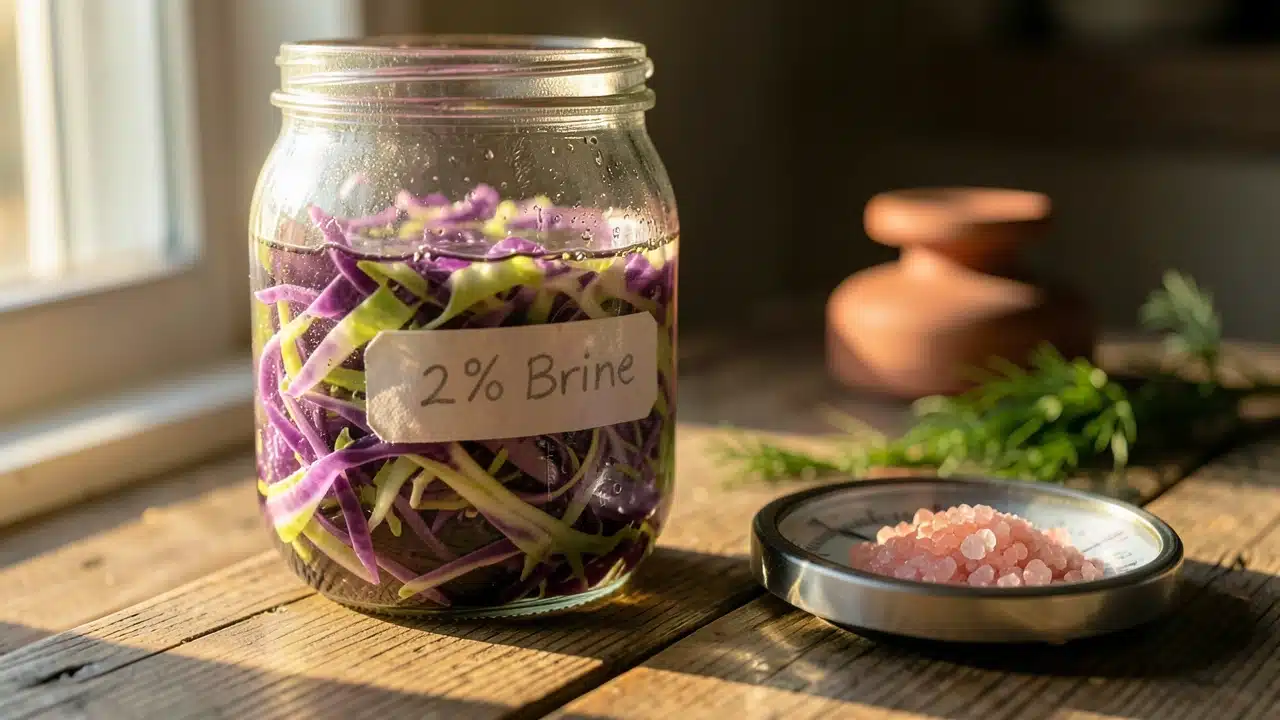
Calculate it by weight: salt grams = total vegetable and water weight × desired salt percentage. For example, 1,000 g × 2.5% = 25 g salt. Most vegetable ferments work around 2–3%.
Making your own fermented foods at home is a rewarding experience, bringing delicious flavors and healthy probiotics to your table.
But getting it just right, especially when it comes to salt, can feel like a puzzle. You want to ensure your ferments are safe, tasty, and successful every time.
Understanding Why Salt Percentage Controls Lacto-Fermentation: Calculate It is the key to unlocking that consistent success.
This knowledge helps you avoid common pitfalls like spoilage or off-flavors, leading to perfectly crisp pickles, tangy sauerkraut, and more.
We’ll break down exactly how salt works its magic and how you can easily figure out the right amount for any recipe.
Key Takeaways
- Salt acts as a guardian, preventing bad microbes from growing while letting good ones thrive.
- The percentage of salt directly impacts the safety and taste of your fermented foods.
- Knowing how to calculate salt percentage ensures consistent and delicious results.
- Different vegetables and desired outcomes might call for slightly different salt levels.
- Proper salt calculation is the most crucial step for successful lacto-fermentation.

Why Salt is the Unsung Hero of Fermentation
Lacto-fermentation is a natural process where beneficial bacteria, called lactic acid bacteria, convert sugars in food into lactic acid.
This acid is what gives fermented foods their tangy flavor and also acts as a preservative. Salt plays a vital role in this process by creating an environment where these good bacteria can flourish while keeping unwanted guests, like mold and spoilage microbes, at bay.
It’s like a selective gatekeeper for your ferment.
Without the right amount of salt, your ferment can become a breeding ground for undesirable organisms. Too little salt, and the wrong microbes might take over, leading to mushy textures, off-flavors, or even spoilage.
Too much salt, and you might slow down or even stop the good bacteria from doing their job, resulting in a flat, uninspired flavor or a ferment that doesn’t develop properly.
Understanding the Science Behind Salt’s Role
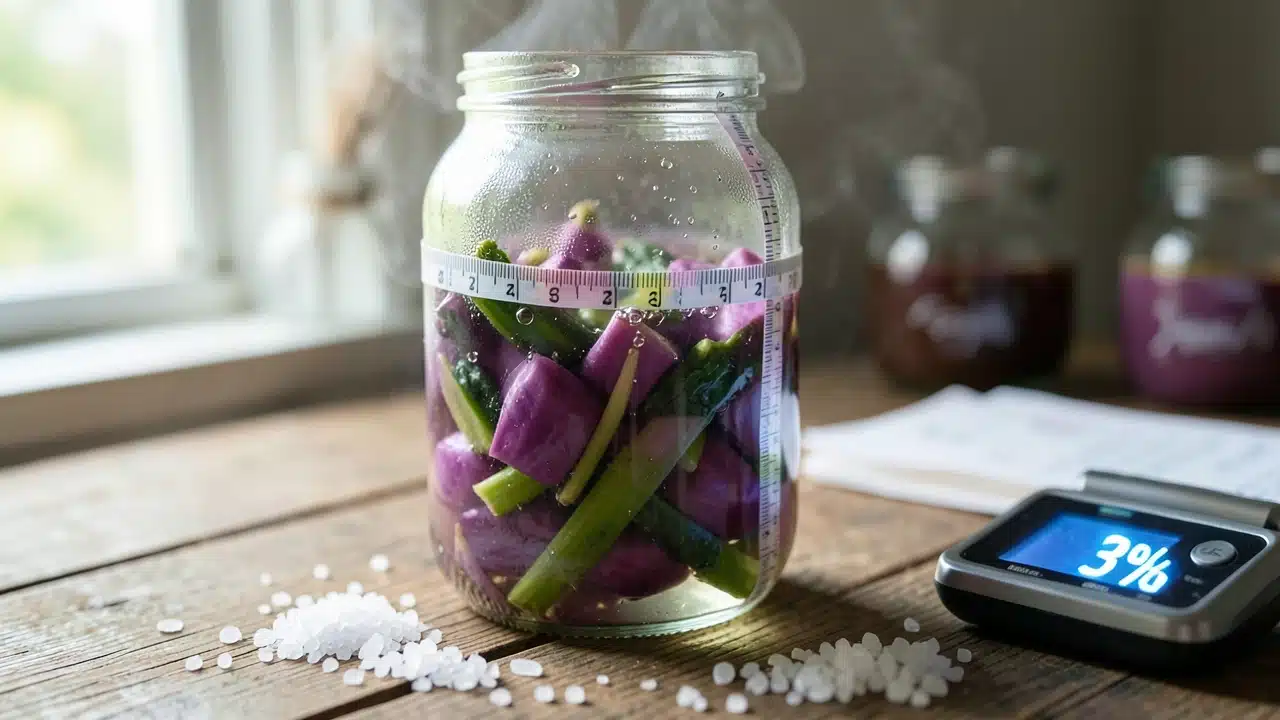
The magic of salt in lacto-fermentation is a balancing act. Salt works in a few key ways to control the fermentation environment. One of the primary mechanisms is through osmosis.
Salt draws water out of the food and out of the cells of microbes.
For the desirable lactic acid bacteria, this dehydration is manageable. They are adapted to these conditions.
However, for many spoilage bacteria and pathogens, the salt concentration becomes too high, inhibiting their growth or killing them outright.
This selective pressure is fundamental to Why Salt Percentage Controls Lacto-Fermentation: Calculate It.
Another crucial aspect is how salt affects the water activity (aw) of the food. Water activity is a measure of unbound water available for microbial growth. By binding water molecules, salt reduces the water activity, making it harder for most microbes to survive and multiply.
Salt also influences the pH of the ferment. As lactic acid bacteria produce lactic acid, the pH drops. Salt helps to maintain a stable environment for this process, allowing the lactic acid bacteria to become the dominant microbial population.
This is a core reason Why Salt Percentage Controls Lacto-Fermentation: Calculate It is so important for safety and quality.
How Different Salt Percentages Affect Ferments
The percentage of salt you use directly influences the speed and outcome of your fermentation. This is a critical point to grasp when learning Why Salt Percentage Controls Lacto-Fermentation: Calculate It.
- Low Salt Percentage (e.g., 1-1.5%): This range is often used for vegetables where you want a quicker ferment and a more pronounced sourness. It allows the lactic acid bacteria to work rapidly. However, it requires more careful monitoring as it can be more susceptible to spoilage if conditions aren’t ideal.
- Medium Salt Percentage (e.g., 1.5-2.5%): This is the most common and versatile range for many vegetables like sauerkraut and kimchi. It provides a good balance, allowing for a robust fermentation while still offering excellent preservation. This range is often considered the sweet spot for understanding Why Salt Percentage Controls Lacto-Fermentation: Calculate It.
- High Salt Percentage (e.g., 2.5-5%): Higher salt levels slow down fermentation significantly. This is often used for longer-term ferments, preserving meats, or in specific recipes where a less aggressive tang is desired. It offers superior preservation but requires patience.
It’s important to note that these are general guidelines. The type of vegetable, its water content, and the ambient temperature can also play a role in how the salt concentration affects the ferment.
Still, the fundamental principle of Why Salt Percentage Controls Lacto-Fermentation: Calculate It remains constant.
Calculating Your Salt Percentage: A Simple Method
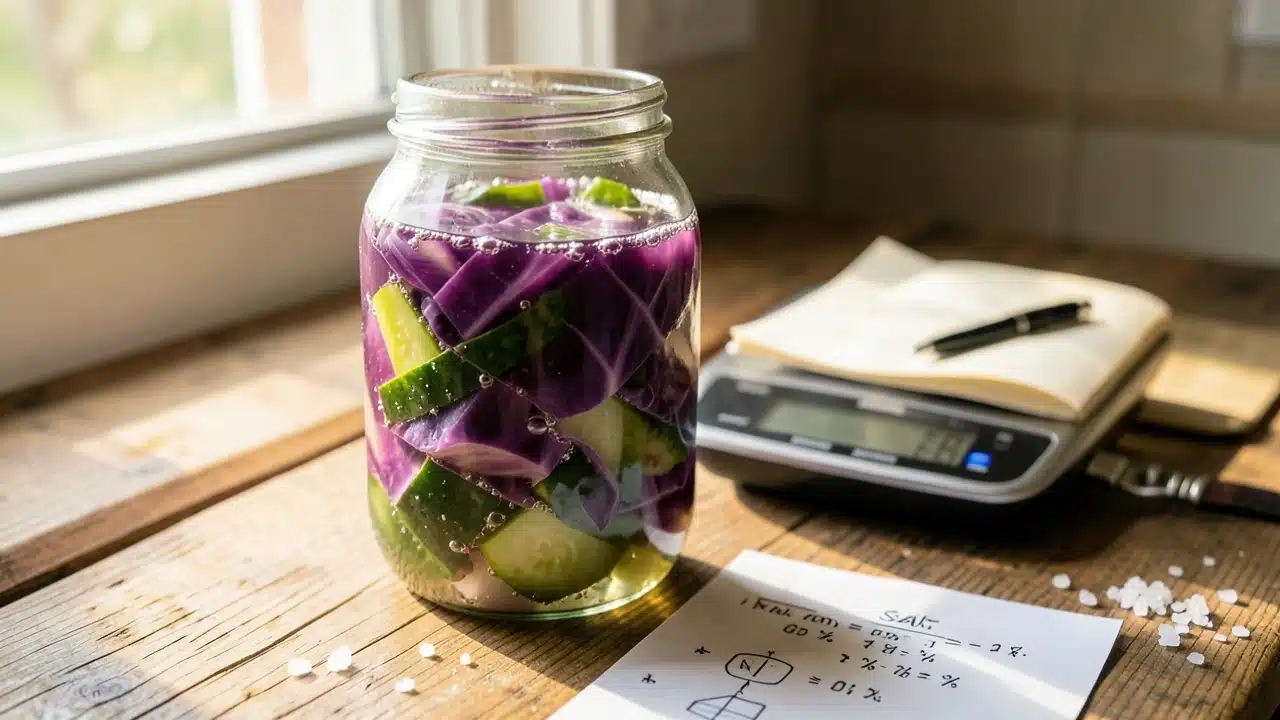
Figuring out the right salt percentage is straightforward once you understand the basic math. The most common way to express salt percentage in fermentation is based on the weight of the vegetables you are using. This is the core of Why Salt Percentage Controls Lacto-Fermentation: Calculate It.
Here’s the simple formula:
Salt Weight (grams) / Vegetable Weight (grams) * 100 = Salt Percentage (%)
Let’s break this down with an example. Suppose you have 1000 grams (1 kilogram) of shredded cabbage for sauerkraut and you want to use a 2% salt brine.
First, determine the desired amount of salt:
1000 grams (vegetable weight) * 0.02 (for 2%) = 20 grams of salt.
So, for 1000 grams of cabbage, you would add 20 grams of salt. This is a practical application of Why Salt Percentage Controls Lacto-Fermentation: Calculate It.
Second, if your recipe gives you the weight of salt and you need to find the percentage:
Let’s say you used 25 grams of salt with 1200 grams of vegetables.
25 grams (salt) / 1200 grams (vegetables) * 100 = 2.08%
This calculation shows you how to verify your salt percentage. It’s essential for understanding Why Salt Percentage Controls Lacto-Fermentation: Calculate It and ensuring your ferments turn out right.
Weighing Your Ingredients is Key
Using a kitchen scale is highly recommended for accurate fermentation. Measuring by volume (like spoons) can be inconsistent due to differences in salt grain size and how tightly it's packed. For reliable results, always weigh both your vegetables and your salt.
This precision is fundamental to mastering Why Salt Percentage Controls Lacto-Fermentation: Calculate It. It removes guesswork and ensures you’re creating the optimal environment for beneficial bacteria.
Choosing the Right Salt for Fermentation
Not all salts are created equal when it comes to fermenting. The type of salt you choose can influence the flavor and the fermentation process itself.
Understanding this adds another layer to Why Salt Percentage Controls Lacto-Fermentation: Calculate It.
- Non-iodized Salt: This is the most important rule. Iodized salt contains additives that can interfere with the beneficial bacteria and sometimes give ferments a metallic taste or cloudiness. Always opt for non-iodized varieties.
- Sea Salt: Unrefined sea salts, like Celtic sea salt or Himalayan pink salt, are excellent choices. They contain trace minerals that can contribute to flavor and a healthy fermentation.
- Pickling Salt or Kosher Salt: These are generally pure salt (sodium chloride) and work very well. Kosher salt can be a bit coarser, so be sure to weigh it for accuracy.
- Avoid: Table salt (which is usually iodized and contains anti-caking agents), and salts with added flavorings or anti-caking agents.
The purity of the salt ensures that the chemical reactions you’re aiming for in lacto-fermentation can occur without interference, directly relating to Why Salt Percentage Controls Lacto-Fermentation: Calculate It.
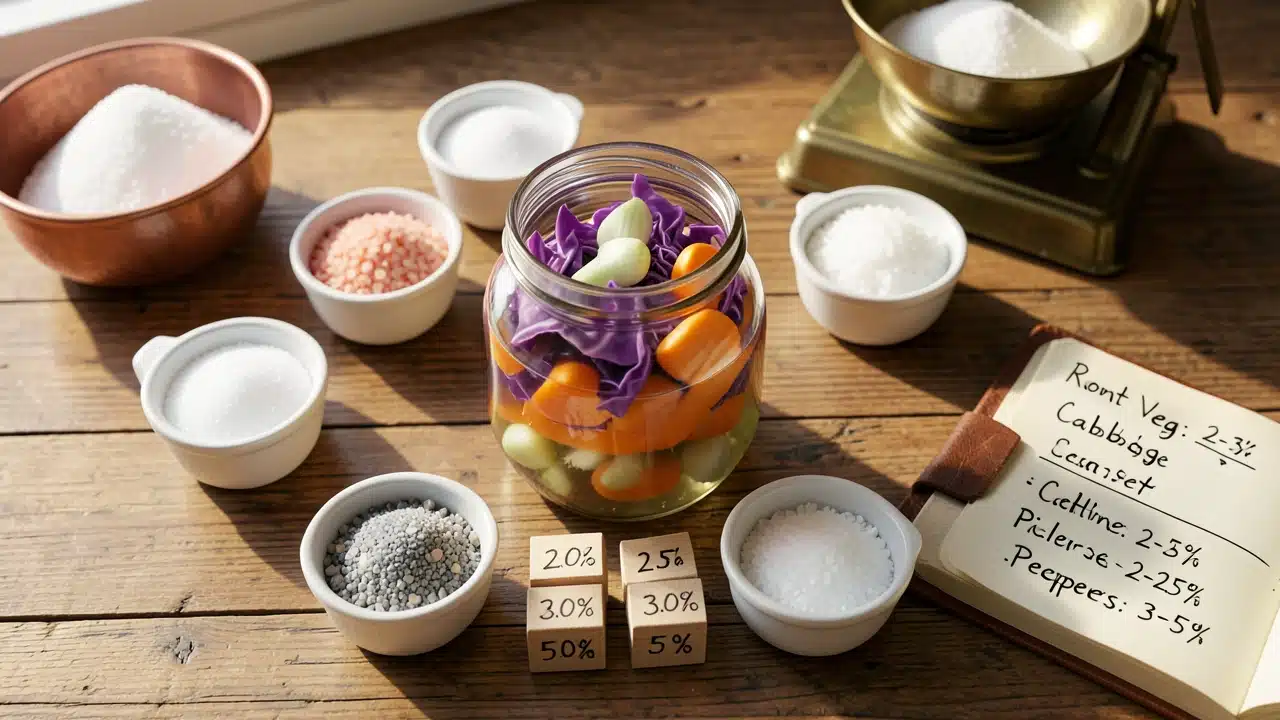
Common Fermentation Salt Percentage Guidelines
While calculating is best, here are some common salt percentage ranges for popular ferments. These are starting points, and you can adjust them based on your preference and experience.
They illustrate the practical application of Why Salt Percentage Controls Lacto-Fermentation: Calculate It.
| Sauerkraut | 1.5% – 2.5% | 2% is a common and reliable starting point. |
| Kimchi | 1.5% – 3% | Can vary based on the specific ingredients and desired tanginess. |
| Pickles (Dill, Bread & Butter) | 2% – 3% | For crisp pickles, a slightly higher salt content can help. |
| Fermented Carrots/Beets | 1.5% – 2.5% | Similar to sauerkraut, adjust for desired flavor. |
| Sourdough Starter | ~1% – 2% of flour weight | This is a different type of fermentation, but salt is still key. |
| Kombucha | 0% – Trace amounts | Kombucha relies on SCOBY and tea, not salt for fermentation. |
| Fermented Hot Sauce | 2% – 5% | Higher salt content helps preserve the peppers and liquid. |
This table shows how different foods benefit from specific salt levels, reinforcing Why Salt Percentage Controls Lacto-Fermentation: Calculate It for each unique ferment.
Troubleshooting Common Fermentation Issues Related to Salt
Sometimes, even with careful calculation, ferments don’t turn out as expected. Often, the issue can be traced back to the salt percentage.
Understanding this connection is key to mastering Why Salt Percentage Controls Lacto-Fermentation: Calculate It.
Issue: Ferment is mushy or slimy.
This can happen if the salt percentage is too low. Without enough salt, spoilage bacteria or enzymes can break down the pectin in vegetables, leading to a soft texture. First, re-evaluate your salt calculation.
Next, ensure you are using enough salt for the amount of vegetables.
Issue: Ferment smells unpleasant or shows mold.
An off-smell or mold is a strong indicator that undesirable microbes have taken over. This is often due to insufficient salt. Then, check your salt percentage.
Finally, make sure your salt is non-iodized and pure.
Issue: Ferment is too salty or doesn’t develop flavor.
If your ferment tastes overwhelmingly salty or lacks the expected tang, you might have used too much salt. While it might be safe, the flavor is compromised. This highlights Why Salt Percentage Controls Lacto-Fermentation: Calculate It is about balance. Understanding the basics of the lacto fermentation process helps you diagnose salty ferments.
In these cases, it’s usually best to discard the batch and start over with a fresh calculation, ensuring you’re using the correct salt percentage.
Accurate measurement is crucial for the success dictated by Why Salt Percentage Controls Lacto-Fermentation: Calculate It.
Beyond Salt: Other Factors Influencing Fermentation
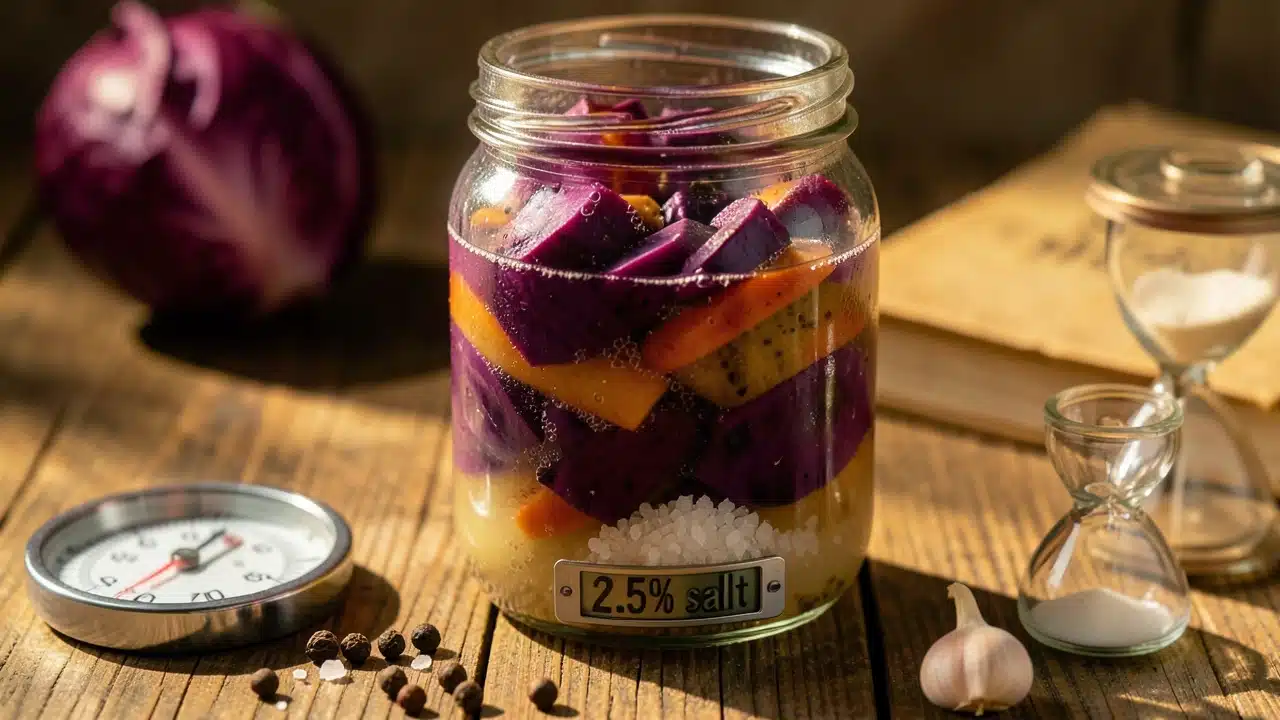
While salt is a primary controller, other elements also play a role in a successful lacto-fermentation. Understanding these helps to see the full picture alongside Why Salt Percentage Controls Lacto-Fermentation: Calculate It. Brine concentration and safety are critical beyond salt, influencing the entire fermentation environment.
- Temperature: Warmer temperatures speed up fermentation, while cooler temperatures slow it down. Ideal temperatures usually range from 60-75°F (15-24°C).
- Anaerobic Environment: Lacto-fermentation thrives in the absence of oxygen. Using airlocks or ensuring vegetables are fully submerged in brine helps create this environment.
- Quality of Ingredients: Fresh, high-quality vegetables will ferment better than older or bruised produce.
- Starter Cultures (Optional): For some ferments, like yogurt or kefir, specific starter cultures are used. For vegetable ferments, the natural yeasts and bacteria on the produce are usually sufficient.
These factors work in concert with salt to ensure a healthy and delicious ferment. The salt percentage acts as the primary regulator, but these elements fine-tune the process.
Frequently Asked Questions Of Why Salt Percentage Controls Lacto-Fermentation: Calculate It
Question: What is the most common salt percentage for vegetable ferments?
Answer: The most common and reliable salt percentage for many vegetable ferments like sauerkraut and kimchi is between 1.5% and 2.5%. This range offers a good balance for safety and flavor development.
Question: Can I use any type of salt for fermentation?
Answer: No, it’s crucial to use non-iodized salt. Iodized salt can hinder the activity of beneficial bacteria and may impart an undesirable flavor to your ferments. Sea salt or pickling salt are excellent choices.
Question: How do I calculate salt percentage if my recipe is in cups?
Answer: It’s best to switch to weighing your ingredients. Cups can vary greatly depending on the salt’s grain size and how packed it is. Using a kitchen scale and the formula (Salt Weight / Vegetable Weight * 100) is the most accurate way to understand Why Salt Percentage Controls Lacto-Fermentation: Calculate It.
Question: What happens if I use too much salt?
Answer: If you use too much salt, you can slow down or even stop the fermentation process. The beneficial bacteria may not be able to grow, resulting in a flat flavor and potentially a ferment that doesn’t develop properly. This shows Why Salt Percentage Controls Lacto-Fermentation: Calculate It is about finding the right balance.
Question: Is a cloudy brine always a bad sign?
Answer: Not necessarily. A cloudy brine often indicates active fermentation and the presence of beneficial bacteria. However, if it’s accompanied by mold or a foul smell, it’s a sign of spoilage.
Question: Does the type of vegetable affect the salt percentage needed?
Answer: Yes, to some extent. Vegetables with higher water content might require slightly adjusted salt levels, but the general percentage range remains a good starting point. Understanding Why Salt Percentage Controls Lacto-Fermentation: Calculate It helps you adapt.
Final Thoughts
Mastering the salt percentage is your secret weapon for successful lacto-fermentation. It’s the key to ensuring your ferments are safe, delicious, and consistently turn out right. By weighing your ingredients and using the simple calculation, you gain control over the process. Following USDA fermentation safety guidelines ensures your ferments are both delicious and safe to eat.
Enjoy creating vibrant, healthy fermented foods with confidence!