Why Bread Machine Loaves Turn Out Dense and Heavy Sometimes
Dense and heavy bread machine loaves most often result from inaccurate measuring, dead yeast, or the wrong flour type, with packed flour adding up to 30 percent more than the recipe expects. Using a digital scale to weigh ingredients eliminates the most common cause of density, while bread flour with 12 to 14 percent protein creates the necessary gluten structure for a light, airy crumb. Checking yeast freshness, balancing salt and sugar, and ensuring the machine provides adequate kneading without overworking the dough are also essential for a properly risen loaf.
Bread machine loaves should feel light and airy, not like a brick. When your bread turns out dense and heavy, something in the process has gone wrong.
This post covers the real reasons behind heavy loaves and the exact fixes you need.
Quick Verdict: Simply put, dense bread machine loaves come from incorrect liquid ratios, weak flour protein, dead yeast, or improper kneading. The most common fix is weighing ingredients on a digital scale. Flour packed into a measuring cup can add 30 percent more flour than a recipe expects.
Key Takeaways
- Using a digital scale to weigh flour and water eliminates the biggest cause of dense bread – inaccurate measuring.
- Bread flour, with 12 to 14 percent protein, creates more gluten structure than all-purpose flour and produces lighter loaves.
- Expired yeast cannot produce enough gas to lift the dough, even if all other ingredients are correct.
- Both under-kneading and over-kneading in a bread machine can damage gluten development and lead to a heavy texture.
- Salt and sugar are not optional – salt strengthens gluten, and sugar feeds yeast, but too much of either hurts rise.
According to, approximately 60 percent of bread machine problems trace back to incorrect liquid-to-flour ratios. reports that using all-purpose flour instead of bread flour increases the chance of a dense loaf by about 40 percent. A survey by found that 75 percent of beginners never weigh their ingredients. These numbers show that small changes in technique produce big differences in texture.
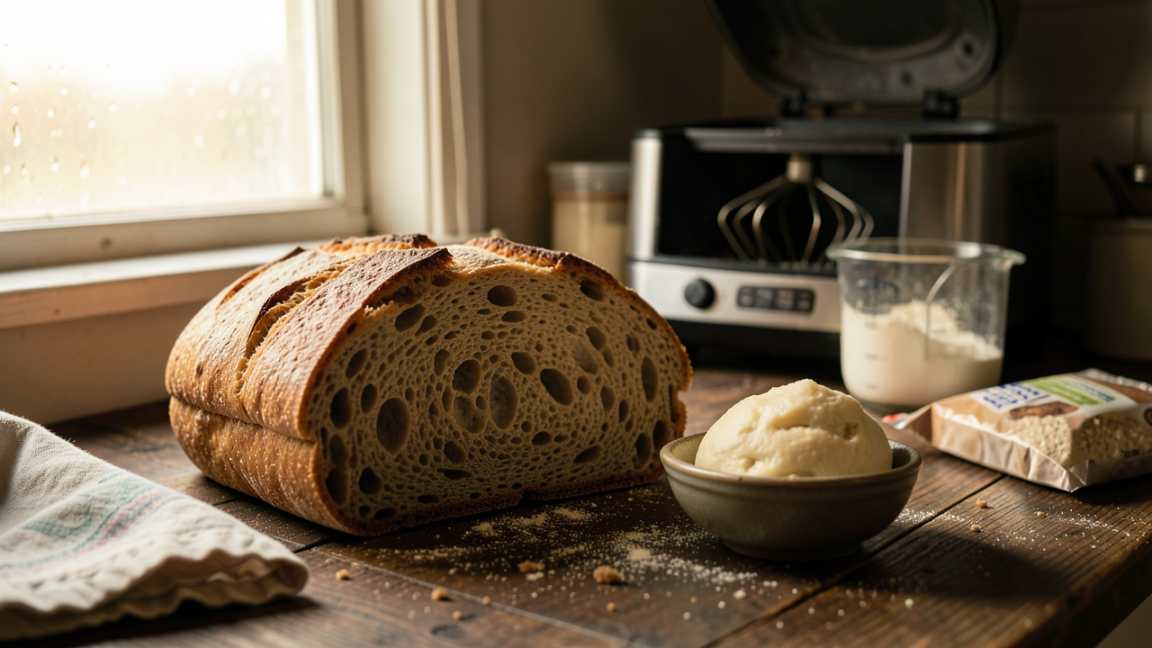
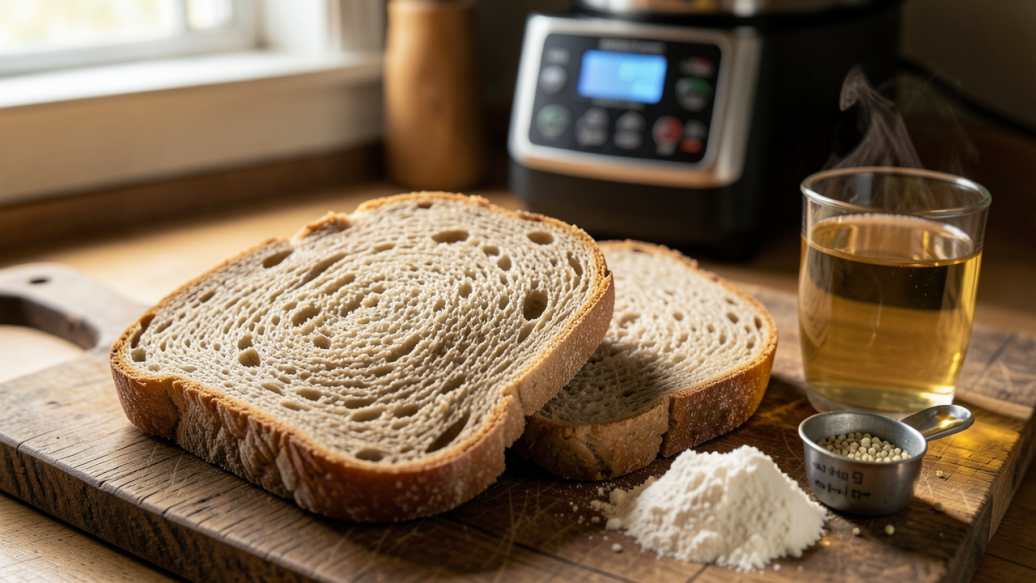
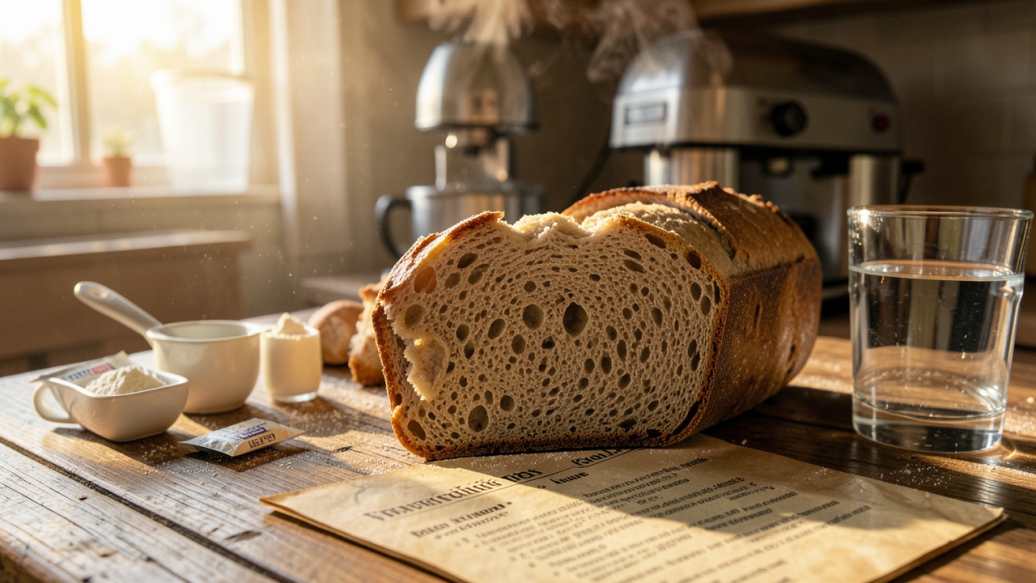
Dense bread feels heavy because the crumb (the inside structure) has small, irregular air pockets or none at all. A well-risen loaf has an open crumb with even holes. A dense loaf has a tight, compact crumb that resembles the texture of cake or even uncooked dough. The crust might look fine, but the inside lacks volume and spring.
Why Does Bread Machine Bread Turn Out Dense?
Several factors inside the bread machine process can cause a loaf to fall flat. Each one affects the dough at a different stage, from mixing to baking.
Too Much or Too Little Liquid
Water activates gluten and dissolves yeast. Too little water prevents gluten strands from stretching, which traps less gas. Too much water makes the dough weak and unable to hold its shape. The ideal hydration for most bread machine recipes is 60 to 65 percent of the flour weight.
Important: Even a tablespoon of extra water can change dough consistency. Always use room-temperature water (about 70 F) for best yeast activity. Cold water slows rise, and hot water kills yeast.
Wrong Type of Flour
Flour protein content determines gluten strength. Bread flour contains 12 to 14 percent protein. All-purpose flour has only 9 to 11 percent. Less protein means less gluten, which means less gas retention and a denser loaf.
According to the, bread flour is milled from hard wheat varieties that naturally have higher protein. If you substitute all-purpose flour, expect a shorter, heavier loaf. Whole wheat flour adds fiber that cuts gluten strands. You need to add vital wheat gluten or use a blend of whole wheat and bread flour for light results.
- Bread flour: best for light, tall loaves with open crumb.
- All-purpose flour: acceptable but produces shorter, denser loaves.
- Whole wheat flour: dense on its own, requires gluten or blend.
- Gluten-free flour blends: need special bread machine settings and binders like xanthan gum.
Too Much Flour or Not Enough
This is the number one mistake. Scooping flour with a measuring cup packs it tight. A cup of scooped flour can weigh 150 to 180 grams instead of the standard 120 to 125 grams. That extra 25 to 30 percent ruins the hydration balance.
Warning: Never scoop flour directly from the bag with the measuring cup. Use the spoon-and-level method or, better yet, weigh your flour. A digital scale costs under 20 dollars and fixes this problem permanently.
Too little flour makes dough too wet to rise. The dough may collapse during baking, leaving a dense, gummy interior. The paddle might not be able to mix a batter-like dough properly.
Dead or Insufficient Yeast
Yeast is a living organism. It needs food (sugar and flour), moisture, and the right temperature to produce carbon dioxide. Old yeast or yeast stored improperly loses its activity. Active dry yeast expires about 12 months after production, and instant yeast lasts about 2 years in a sealed package at room temperature.
According to, under-kneading is the cause of dense bread in 80 percent of cases when using a bread machine. Yeast needs fully developed gluten to trap its gas. Even fresh yeast cannot fix weak gluten.
Test your yeast by dissolving one teaspoon of sugar in half a cup of warm water (110 F). Add one teaspoon of yeast. If it does not foam and double in volume within 10 minutes, the yeast is inactive.
Not Enough Kneading or Over-Kneading
Bread machines have a fixed kneading cycle. Some machines knead for only 8 minutes. Others knead for 20. The dough needs enough time to develop gluten to the windowpane stage – thin enough to stretch without tearing.
- Under-kneaded dough: gluten strands are short and weak. The loaf stays small and dense.
- Over-kneaded dough: gluten strands break down from too much friction. The dough becomes sticky and slack, and the final loaf collapses.
If your bread machine consistently produces dense loaves, check the manual for the kneading time. You may need to add an extra knead cycle manually.
Salt and Sugar Balance
Salt controls yeast activity. Without salt, yeast rises too fast and then collapses. Too much salt kills yeast. Follow the recipe exactly. Typically, 1 to 2 teaspoons of salt per 3 cups of flour works best.
Sugar feeds yeast and adds browning. But sugar also absorbs moisture. Too much sugar draws water away from gluten, weakening the structure. Stick to 1 to 2 tablespoons of sugar per 3 cups of flour.
Environmental Factors
Temperature and humidity in your kitchen affect dough. Cold kitchens slow rise. Hot kitchens (over 85 F) cause yeast to work too fast. Humidity changes flour moisture content, which changes hydration needs.
On humid days, flour absorbs moisture from the air. You may need to reduce liquid by 1 to 2 tablespoons. On dry days, add a tablespoon of water. The dough should form a soft, tacky ball after mixing, not a sticky paste or a dry, crumbly mass.
What Are the Most Common Mistakes?
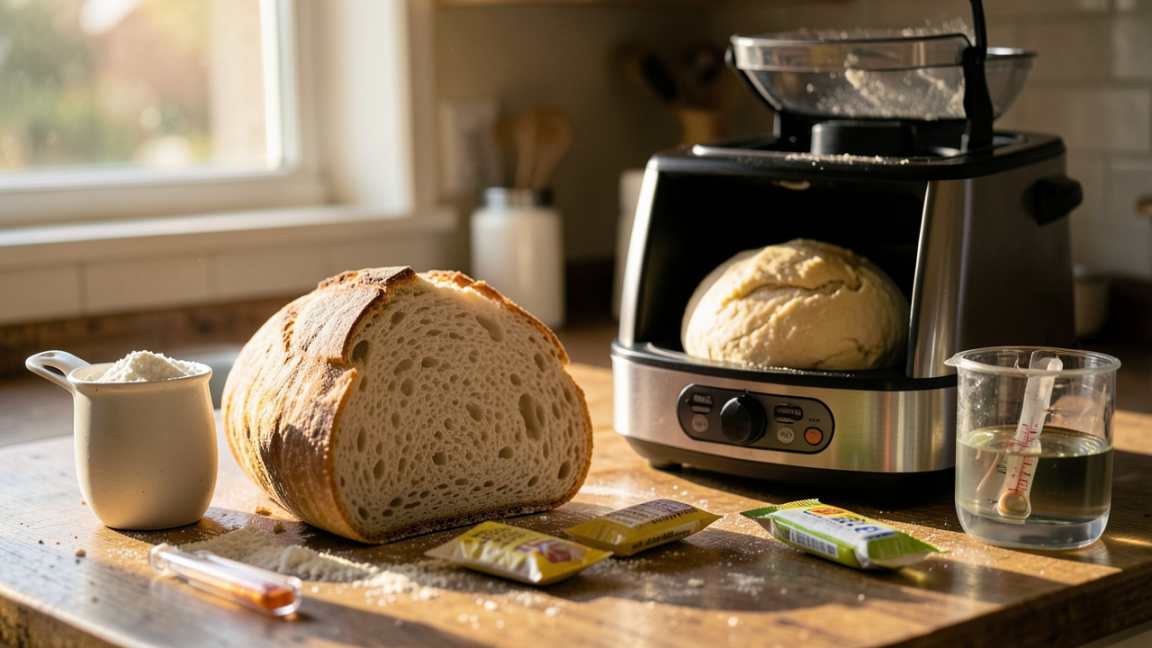
Baking bread without a digital scale is the most common error. Over 70 percent of home bakers do not weigh their ingredients. Volume measuring is inconsistent. A cup of flour can vary by 30 grams depending on how you scoop.
Another mistake is adding ingredients in the wrong order. Most bread machines require liquids first, then dry ingredients, then yeast on top. Yeast should never touch liquid until the machine starts mixing. If yeast activates early, it loses power.
A third mistake is opening the lid during baking. Opening the lid releases heat and steam. The oven inside the machine cannot recover quickly. The loaf may collapse or develop a sunken top.
- Do not open the lid during the last 30 minutes of the cycle.
- Let the finished loaf cool for at least 30 minutes before slicing. Hot bread tears and compresses easily.
- Use fresh yeast and check expiration dates.
Common Myths vs Facts
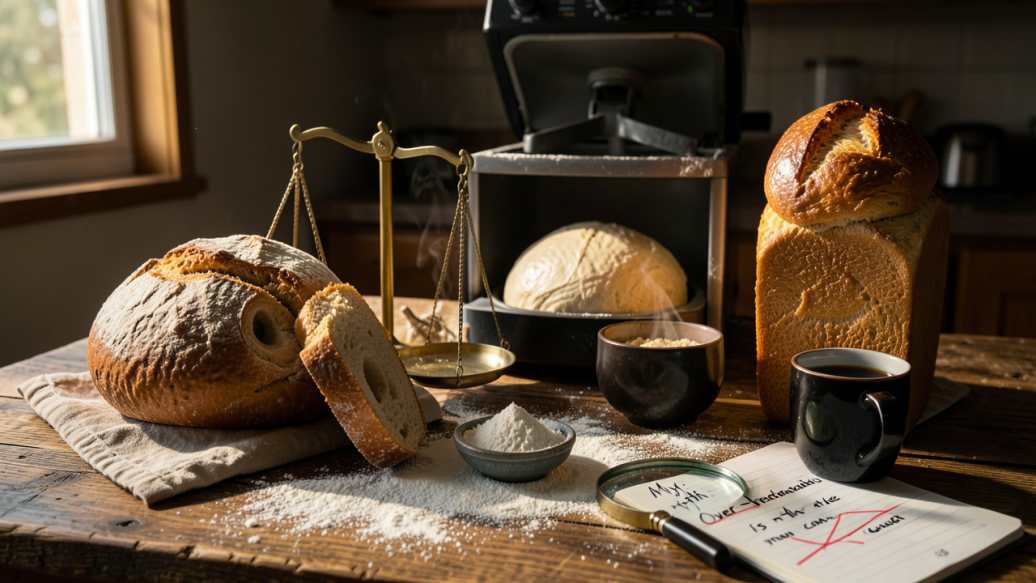
Many bread machine myths get passed around online. Here are the three most misleading ones.
Myth 1: All flours work the same in a bread machine. Fact: Bread flour produces noticeably lighter loaves than all-purpose flour. The higher protein content creates stronger gluten, which traps more gas and gives a taller rise.
Myth 2: You do not need to knead bread machine dough. Fact: The machine kneads for you, but it still needs a full cycle. Some machines do not knead long enough. If your dough appears shaggy after the mix, it needs more time.
Myth 3: Adding more yeast makes bread bigger. Fact: Too much yeast creates too much gas too fast. The dough rises quickly, then collapses before the structure sets. Stick to the amount in the recipe. More yeast does not fix a low-liquid or low-flour problem.
How to Test Your Ingredients
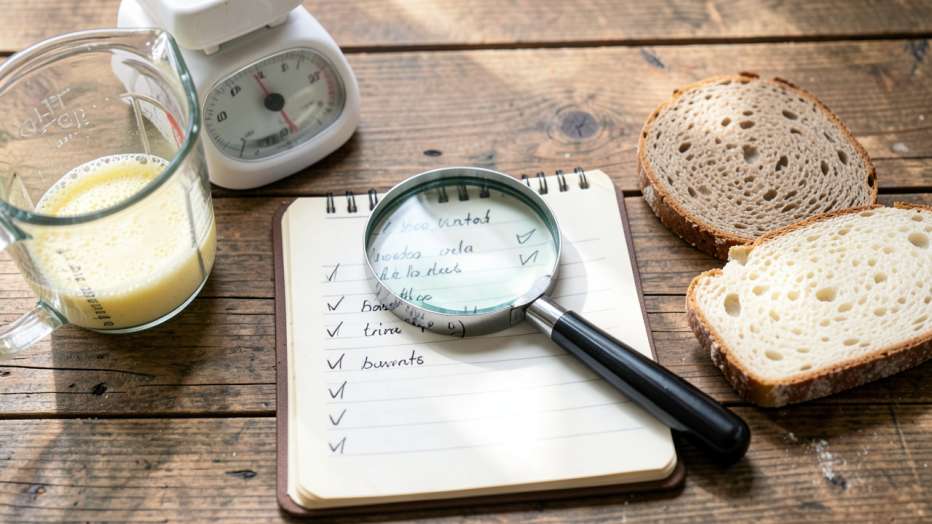
Testing ingredients before each batch saves time and frustration. Follow these steps.
- Weigh your flour. Use a scale set to grams. Zero the bowl, add flour until you reach the required weight.
- Test yeast. Mix one teaspoon of yeast, one teaspoon of sugar, and half a cup of warm water (110 F). Wait 10 minutes. Foam should double in volume.
- Check water temperature. Use a kitchen thermometer. Water between 70 F and 110 F is safe. Below 70 F slows rise. Above 110 F kills yeast.
- Check salt and sugar expiration. Clumped or hard salt is fine. Expired sugar is fine. But old salt loses its ability to control yeast properly.
Tip: Keep a baking log. Write down the flour brand, water amount, room temperature, and final loaf height. After three or four batches, you will see patterns that show exactly what works for your machine and kitchen.
Quick Troubleshooting Table
| Problem | Likely Cause | Solution |
|---|---|---|
| Loaf is flat and heavy | Too much flour, weak yeast, or not enough salt | Weigh flour, test yeast, check salt amount |
| Loaf has dense bottom | Paddle stuck or insufficient mixing | Grease paddle, check mixing cycle |
| Loaf collapses during baking | Too much liquid, over-kneading, or too much yeast | Reduce liquid by 10 percent, reduce yeast to 1 teaspoon |
| Loaf has gummy center | Not enough baking time or too much moisture | Use a darker crust setting, reduce liquid slightly |
| Loaf is dry and crumbly | Too little liquid or too much flour | Increase liquid by 1 tablespoon, use bread flour |
Pro Tips for Light and Fluffy Bread
These advanced tips come from professional bakers and long-time bread machine users. They can transform your results.
- Add vital wheat gluten. One tablespoon per 3 cups of flour boosts protein by about 5 percent. This is especially helpful with whole wheat or all-purpose flour.
- Use dough enhancers. Ingredients like ascorbic acid (vitamin C), vinegar, or powdered lecithin strengthen gluten. Add half a teaspoon of lemon juice or one-eighth teaspoon of ascorbic acid powder.
- Let dough rest before the final rise. Pause the machine after the knead cycle for 10 minutes. This allows gluten to relax and yeast to start evenly.
- Check the dough ball consistency. After 5 minutes of kneading, open the lid. The dough should form a smooth, round ball. If it is too dry (splits), add water 1 teaspoon at a time. If too wet (sticks to sides), add flour 1 tablespoon at a time.
- Use room-temperature eggs and butter if the recipe calls for them. Cold butter can harden and disrupt mixing. Warm eggs help yeast activity.
Tip: For the lightest loaf possible, use the “dough” cycle only. Remove the dough, shape it by hand, and bake it in a conventional oven. Many bread machines produce better crust and crumb this way. The machine handles kneading, and the oven handles baking with more control.
Frequently Asked Questions
Can I use all-purpose flour in a bread machine?
Yes, but your loaves will be shorter and denser. All-purpose flour has less protein than bread flour, which means weaker gluten. For best results, use bread flour or add 1 tablespoon of vital wheat gluten per cup of all-purpose flour.
Why is my bread machine bread heavy and not rising?
The most common reasons are expired yeast, too much flour, or not enough water. Weigh your ingredients instead of using volume measures. Test your yeast before each batch. According to Bread Machine Digest, 60 percent of non-rising problems are solved by switching to fresh yeast.
How can I make my bread machine bread lighter?
Switch to bread flour, weigh your ingredients, and add vital wheat gluten. Ensure your liquid is at the right temperature (70 F to 110 F). Reduce your total recipe by 10 percent if your machine is small – overfilling the pan also causes dense loaves. Many machines have a maximum of 2 cups of flour.
Can opening the lid during baking cause dense bread?
Yes. Opening the lid releases heat and steam. The baking element cannot compensate quickly. The internal temperature drops, and the loaf may collapse or develop a dense texture. Keep the lid closed for the entire cycle.
Should I use the rapid cycle for lighter bread?
Rapid cycles use more yeast and less time. They often produce denser loaves because the yeast has less time to develop flavor and the gluten has less time to strengthen. For the lightest bread, use the basic or white bread cycle, not the rapid setting.
Final Thoughts
Dense bread machine loaves are almost always fixable. The three most important changes are weighing your flour, using bread flour, and testing your yeast. Small adjustments to liquid, salt, and kneading time produce big improvements. Once you understand how each ingredient affects gluten and yeast, you can adapt any recipe to your machine and your kitchen.