Why Homemade Yogurt Turns Out Too Runny to Set Properly
Homemade yogurt turns out too runny when milk is not heated to the proper 180–190°F to denature whey proteins, incubation is too short or too cool, or the milk contains too little protein. The fix requires heating milk to that target range, cooling it to 110–115°F before adding starter, and maintaining a stable 110°F incubation for 8–12 hours. Using whole milk or boosting protein with dry milk powder ensures a thick, spoonable set without needing special equipment.
You followed a simple yogurt recipe but ended up with a thin, watery mess instead of a thick, creamy spoonable set. This guide breaks down the real science and common errors behind homemade yogurt turns out runny so you can fix it for good.
Tip: Simply put, runny homemade yogurt is usually caused by one of three things: heating the milk to the wrong temperature, an incubation period that is too short or too cold, or using milk with too little protein. Fixing these variables will give you a thick, consistent set every time.
Key Takeaways
- Heating milk to 180-190°F (82-88°C) denatures whey proteins, which is required for a thick yogurt gel.
- Cooling the milk to exactly 110-115°F (43-46°C) before adding the starter protects the live bacteria from dying.
- An incubation period of 8-12 hours at a stable 110°F is necessary for a firm set.
- Using whole milk or adding dry milk powder increases the protein content and improves the final thickness.
- If your yogurt is still runny, straining it through a cheesecloth or nut milk bag turns it into thick Greek-style yogurt.
What Temperature Should You Heat Milk To?
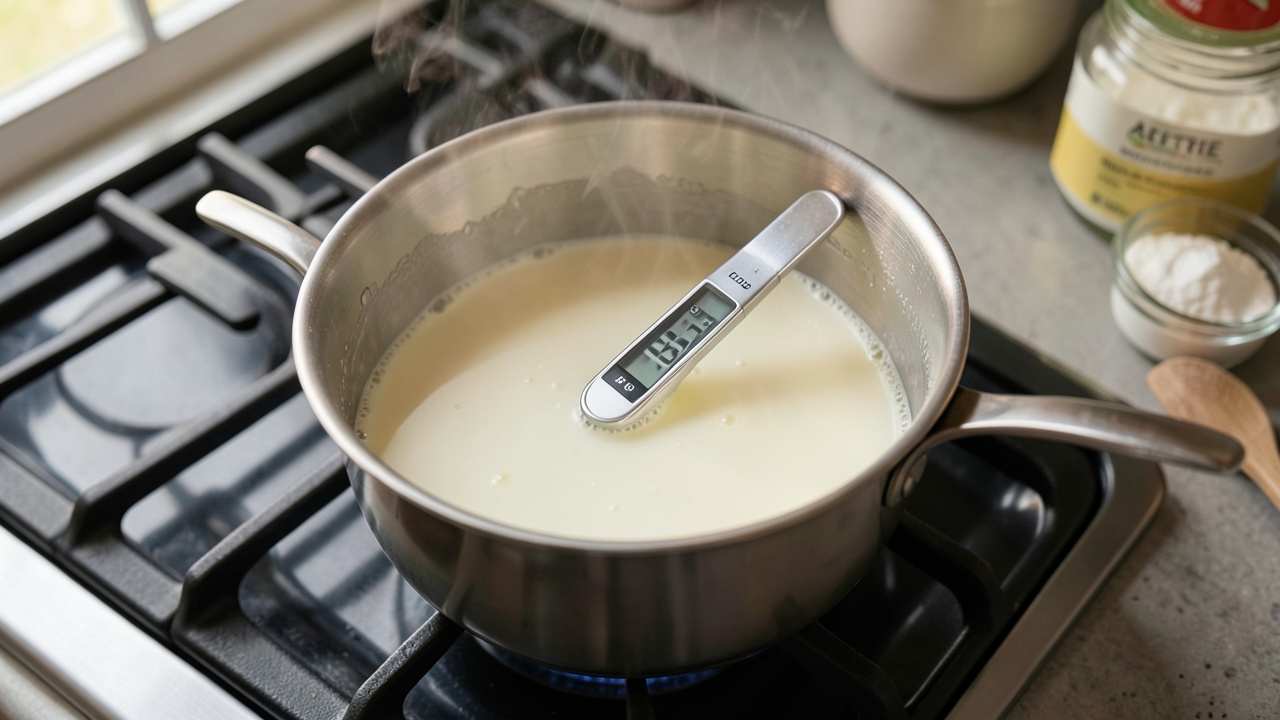
The most common reason for runny yogurt is incorrect milk heating. You must heat the milk to 180-190°F (82-88°C) and hold it there for 10 minutes.
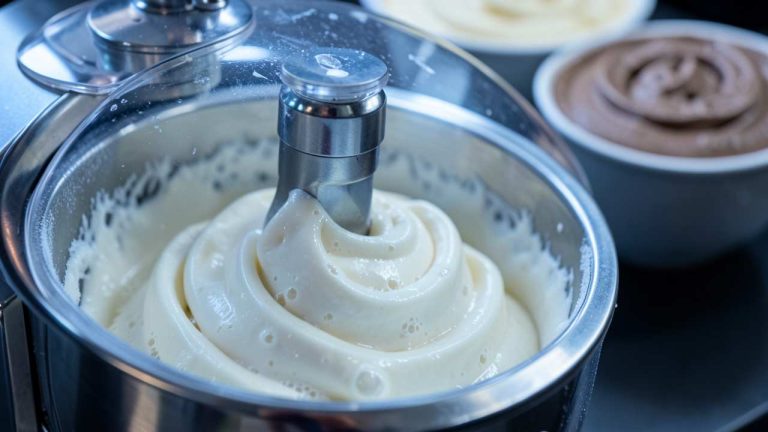
This step changes the structure of the milk proteins. Milk contains two main types of protein: casein and whey. In raw milk, these proteins float independently. Heating causes the whey proteins to unfold and bind to the casein proteins. This creates a strong protein network that traps liquid and forms a thick gel.
According to, heating milk to 190°F for 10 minutes denatures over 90% of the whey proteins. This level of denaturation is essential for a thick set. If you do not heat the milk enough, the whey proteins stay unbound. The gel that forms is weak and cannot hold its shape.
Warning: Heating milk above 200°F causes aggressive boiling. This can break down the casein structure and lead to a grainy, separated texture. Use a thermometer to maintain the exact temperature range.
How Does Incubation Time Affect Yogurt Thickness?
After heating, you must cool the milk down to 110-115°F (43-46°C) before adding the starter culture. This is the ideal temperature for the bacteria Lactobacillus bulgaricus and Streptococcus thermophilus to thrive.
These bacteria feed on the sugar in milk called lactose. They convert it into lactic acid. The rising acid level causes the casein micelles in the milk to coagulate and form a solid gel. This process is called fermentation.
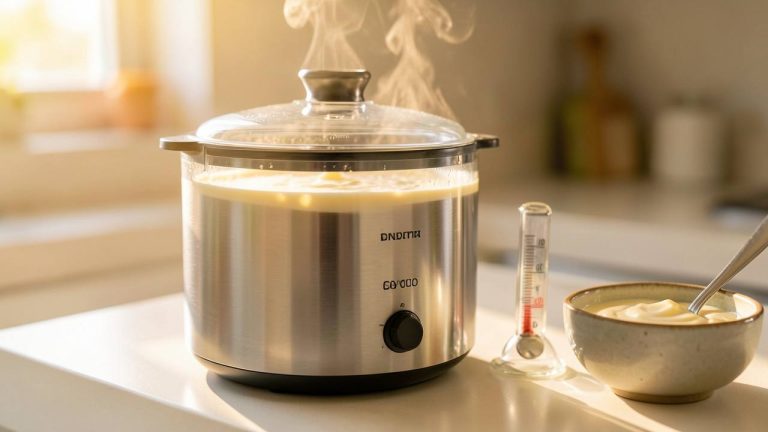
The reports that a stable incubation temperature of 110°F (43°C) is optimal for the symbiotic relationship between these two bacteria. If the temperature drops below 100°F, the bacteria slow down. This leads to a longer fermentation time and a weaker, runnier set.
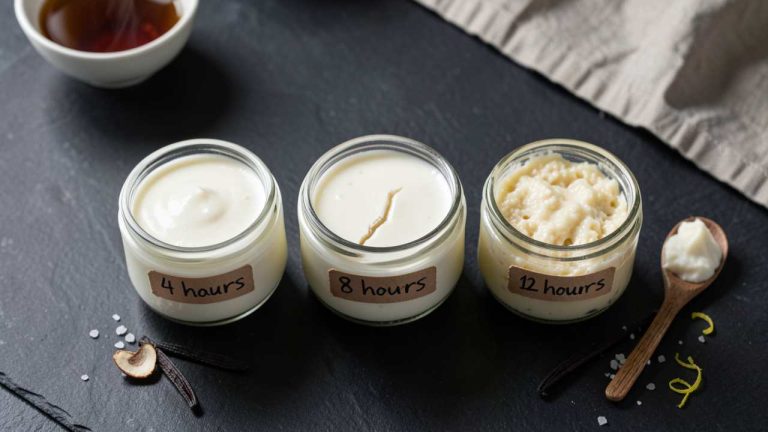
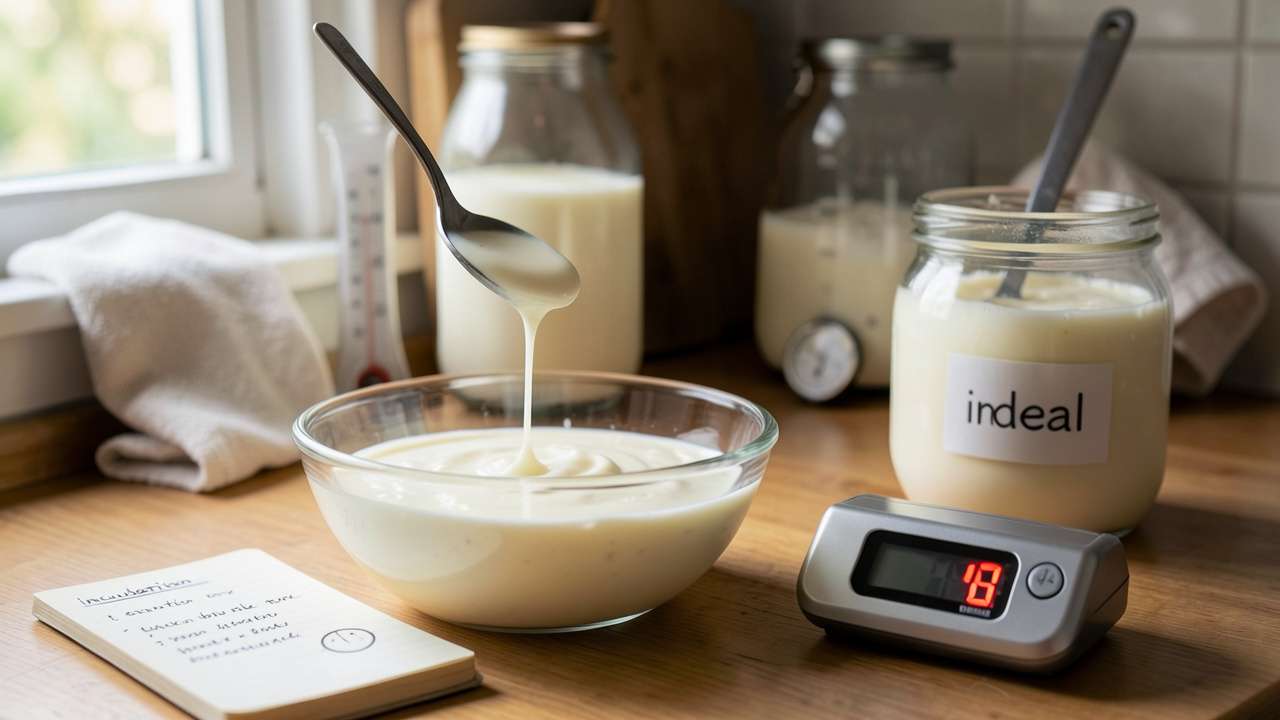
Incubation must last between 8 and 12 hours. A shorter time produces a milder, thinner yogurt. A longer time produces a tangier, thicker yogurt. If you stop incubation too early, the gel has not formed enough to hold its shape.
- Heat milk to 180-190°F for 10 minutes.
- Cool the milk quickly to 110-115°F in an ice bath.
- Whisk in 2 tablespoons of plain yogurt with live cultures.
- Hold the mixture at a steady 110°F for 8-12 hours.
- Refrigerate for at least 4 hours before serving to set the gel.
How Does the Type of Milk Affect Yogurt Thickness?
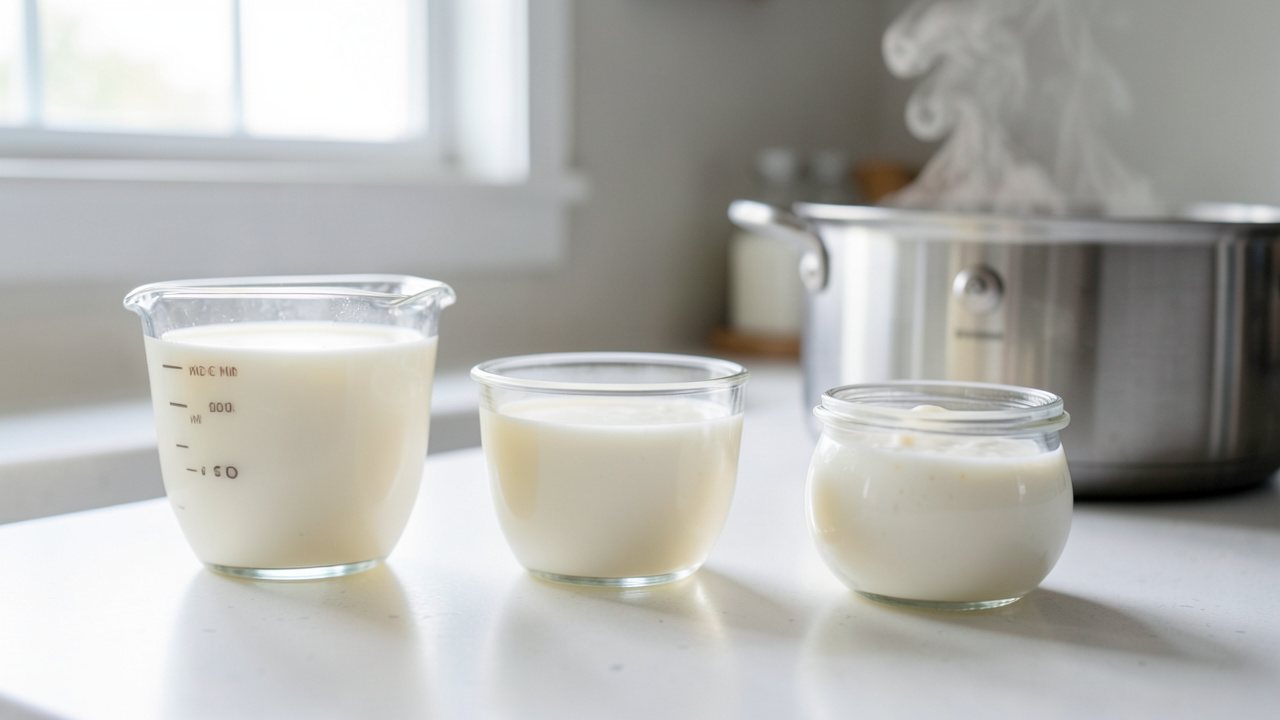
The protein and fat content of your milk directly affects the final consistency. According to the, standard whole milk contains about 3.3% protein. This is usually enough for a decent set, but not always for a very thick yogurt.
If you want a reliably thick yogurt, increase the protein concentration. The easiest way to do this is to add dry milk powder. Add 1/4 cup of non-fat milk powder per quart of milk. This boosts the total protein to around 4.5%. The extra protein strengthens the gel and reduces whey separation.
- Whole milk (3.25% fat): Provides a creamy, rich texture with moderate thickness.
- Skim milk (0% fat): Creates a thinner, leaner yogurt unless fortified with milk powder.
- 2% milk: A middle ground, but still benefits from added protein.
- UHT milk (Ultra-High Temperature): Already heated to 280°F. It has denatured whey proteins, so it often makes thick yogurt without extra work.
- Goat milk: Has a smaller fat globule size. It makes a thinner, tangier yogurt.
Important: Raw milk can be used for yogurt, but you must heat it yourself. Do not skip the heating step. Unheated raw milk will not set into a thick yogurt.
What Are the Signs of a Good Yogurt Culture?
A healthy, active starter culture is vital. You can buy a freeze-dried starter or use 2 tablespoons of plain store-bought yogurt as a starter. The store-bought yogurt must say “contains live and active cultures” on the label.
Your own homemade yogurt can be used as a starter for the next batch. However, the cultures can weaken after several generations. If your yogurt starts to get runny after 3-4 batches, it is time to buy a fresh starter.
Contamination is another hidden cause of thin yogurt. If your equipment is not clean, wild bacteria can outcompete the yogurt cultures. These wild bacteria produce a different type of lactic acid, leading to a slimy or runny texture.
Common Yogurt Setting Mistakes and Fixes
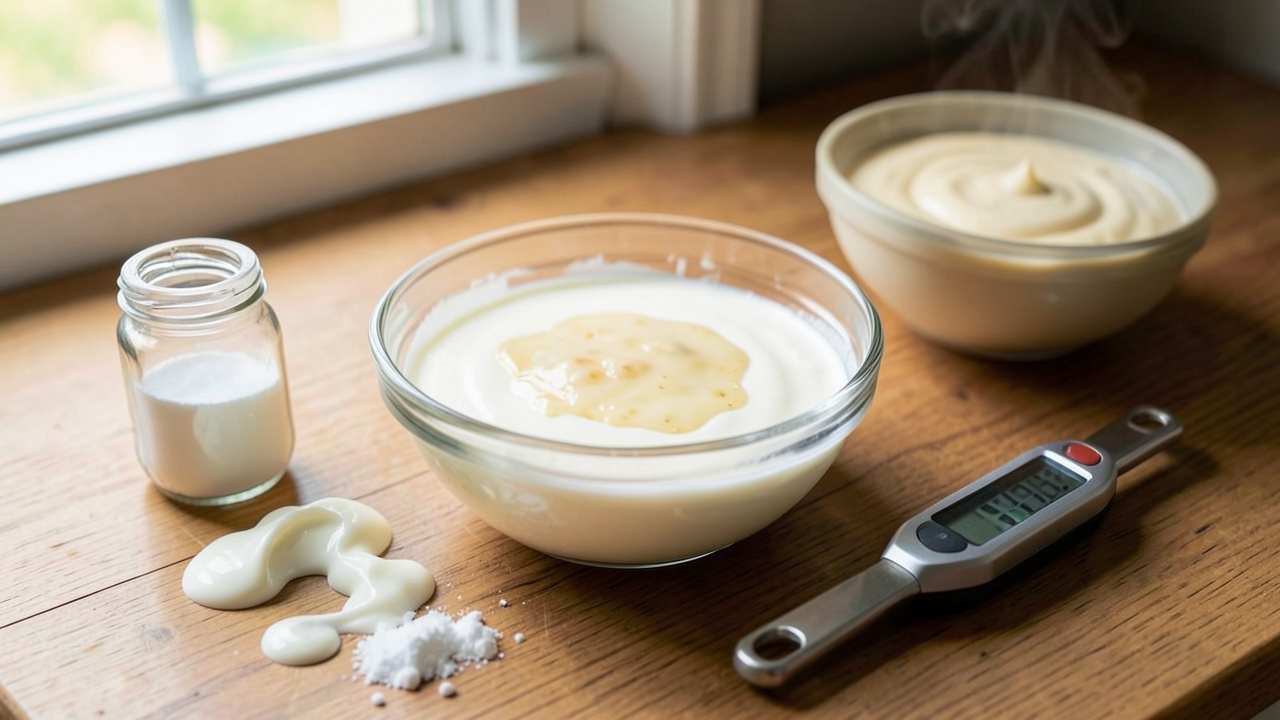
| Mistake | Result | Fix |
|---|---|---|
| Insufficient heating | Very thin, no set | Heat to 180-190°F for 10 minutes |
| Starter added to hot milk | No change after 12 hours | Cool milk to 110°F before adding starter |
| Inconsistent incubation temp | Thin, watery, slow set | Use Instant Pot or oven with a pilot light |
| Low protein milk | Thin, no body | Add 1/4 cup dry milk powder per quart |
| Dirty equipment | Bad smell, slimy texture | Sterilize jars and utensils with boiling water |
Common Myths vs Facts
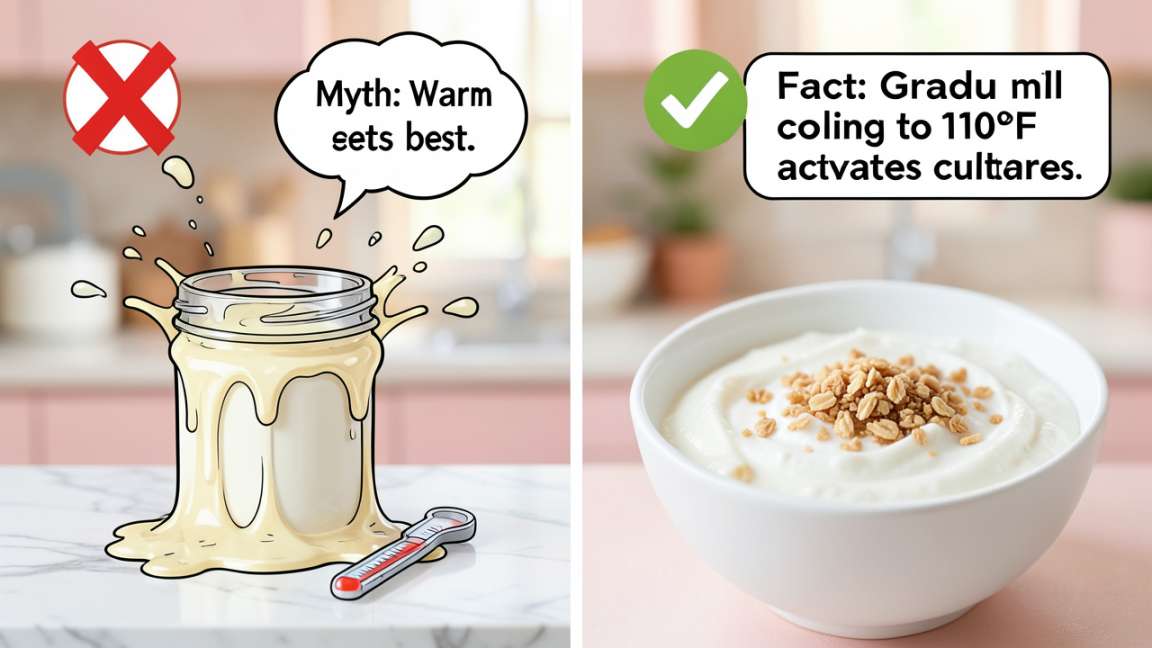
Myth 1: You must use whole milk for thick yogurt.
Fact: Skim or 2% milk can make thick yogurt if you boost the protein content. Adding milk powder or straining the finished yogurt gives you a thick result without the fat.
Myth 2: Longer incubation always makes thicker yogurt.
Fact: Incubation up to 12 hours increases thickness. After that, the curd starts to shrink and squeeze out whey. This leads to separation and a thinner final product.
Myth 3: You need a yogurt maker to get good results.
Fact: Many home cooks make thick yogurt in an Instant Pot, a slow cooker, or even a warm oven with just the light on. A consistent 110°F temperature is what matters, not the specific device.
How to Fix Runny Yogurt After It Is Made
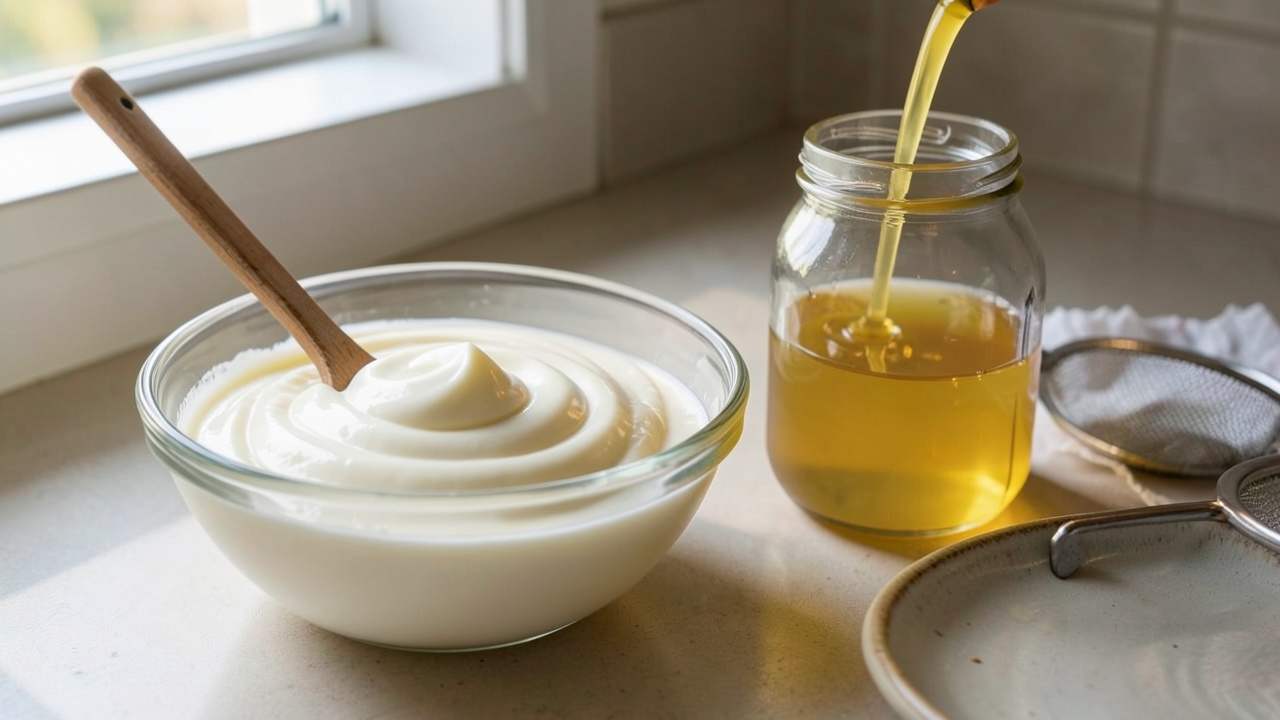
If your yogurt has already finished incubating and is still runny, do not throw it away. You can still save it with a simple method called straining. The NPD Group notes that many home cooks find straining their yogurt turns a failed batch into a delicious success.
Line a fine-mesh strainer with a cheesecloth or a clean kitchen towel. Place the strainer over a large bowl. Pour the runny yogurt into the cloth. Let it drain in the refrigerator for 2 to 8 hours. The liquid that drips out is whey. You can use whey in baking or smoothies. What remains in the cloth is thick, creamy Greek-style yogurt.
- Strain for 2 hours for a lightly thickened yogurt.
- Strain for 4 hours for a standard Greek yogurt consistency.
- Strain for 8 hours or overnight for a very thick, labneh-style cheese.
Frequently Asked Questions
Why is my homemade yogurt runny after 12 hours of incubation?
If the temperature dropped below 100°F during incubation, the bacteria stop working properly. They will not produce enough acid to set the gel. Use a thermometer to check your incubator temperature next time.
Can I reuse my own runny yogurt as a starter for the next batch?
You can, but it is not recommended. Runny yogurt may have a weak or imbalanced culture. It is better to buy a fresh starter from the store to reset your culture strength.
Does stirring during incubation ruin the set?
Yes, stirring breaks the fragile protein network that is forming. You should not disturb the yogurt for at least 8 hours. Keep the container completely still during incubation.
Why is there liquid on top of my yogurt?
That liquid is whey. It is a normal part of yogurt making. You can stir it back in for a thinner texture or pour it off for a thicker one. Too much whey means the yogurt fermented slightly too long or too warm.
What is the best milk for guaranteed thick yogurt?
Whole UHT milk or whole milk fortified with 1/4 cup of dry milk powder gives the most consistent thick results. These options provide the highest total solids, which create a strong protein gel.
Final Thoughts
Runny yogurt usually comes down to one of three simple problems: the milk was not hot enough, the incubation temperature was wrong, or the milk lacked protein. Use a thermometer to control the heat and incubation time. Add milk powder to boost the protein content for a foolproof thick set every time.