Why Pizza Stones Matter More Than Oven Temperature Settings
A pizza stone matters more than oven temperature settings because it transfers intense, steady heat directly to the dough through conduction, unlike ambient oven air that only bakes from above. The stone's thermal mass allows its surface to reach 550°F to 700°F even when the oven dial reads 500°F, ensuring the crust cooks evenly from the bottom. This means a properly preheated stone at a lower oven temperature consistently produces a better crust than the highest oven setting without a stone.
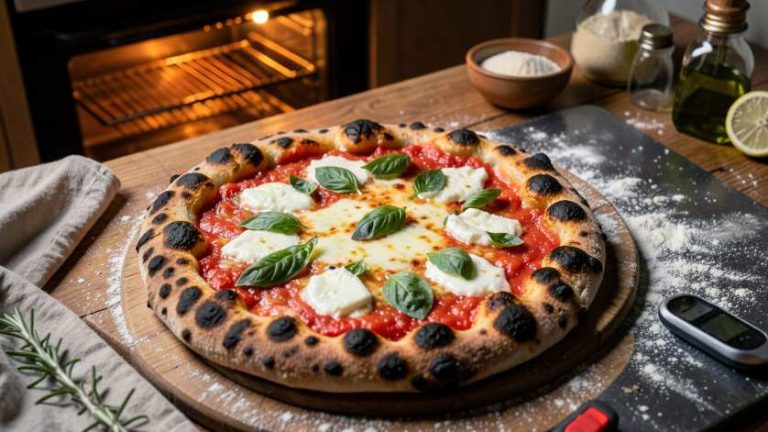
You set your oven to 500°F, wait for the beep, and slide your pizza in. Yet the crust still comes out soft and pale. This guide explains why your pizza stones matter more than the number on your oven dial.
Quick Verdict: A pizza stone stores heat and transfers it directly to your dough through conduction. Oven temperature only measures the air around your pizza. The stone’s thermal mass provides steady, intense heat that bakes the crust evenly. Without a stone, your pizza cooks from the top down and the bottom stays underdone.
Key Takeaways
- A pizza stone absorbs and radiates heat, creating a surface temperature that exceeds the air temperature inside your oven.
- Oven temperature settings only measure ambient air heat, which does not directly bake the underside of your pizza dough.
- Properly preheated stones reach surface temperatures of 550°F to 700°F, even when the oven dial reads 500°F.
- The thermal mass of a stone keeps the heat steady when you open the oven door to load your pizza.
- You can get a better crust at 450°F with a good stone than at 550°F without one.
What Is a Pizza Stone?
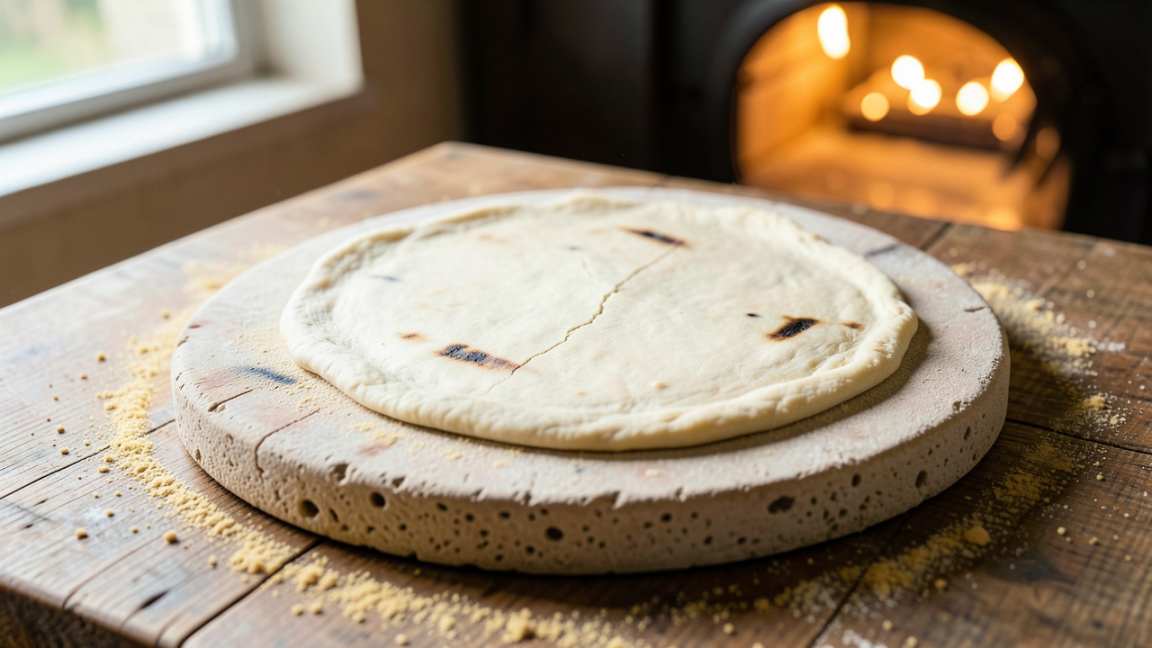
A pizza stone is a flat slab made from ceramic, cordierite, or soapstone. You place it inside your oven and preheat it for at least 45 minutes. The stone absorbs heat from the oven and stores it. When you place cold dough on the hot surface, the stone transfers that stored heat directly into the crust.
The stone works through three types of heat transfer. Conduction happens when the dough touches the hot surface. Radiation comes from the stone’s surface and heats the dough from below. Convection from the oven air heats the top of your pizza.
Important: According to, a properly preheated pizza stone reaches a surface temperature 75°F to 125°F higher than the oven’s ambient air temperature. This difference is what creates the crispy bottom crust.
The material of the stone affects how well it holds heat. Cordierite is the most common material. It resists thermal shock and heats evenly. Ceramic stones cost less but can crack under sudden temperature changes. Soapstone is the most expensive option and takes the longest to heat, but it holds temperature better than any other material.
How Does a Pizza Stone Work?
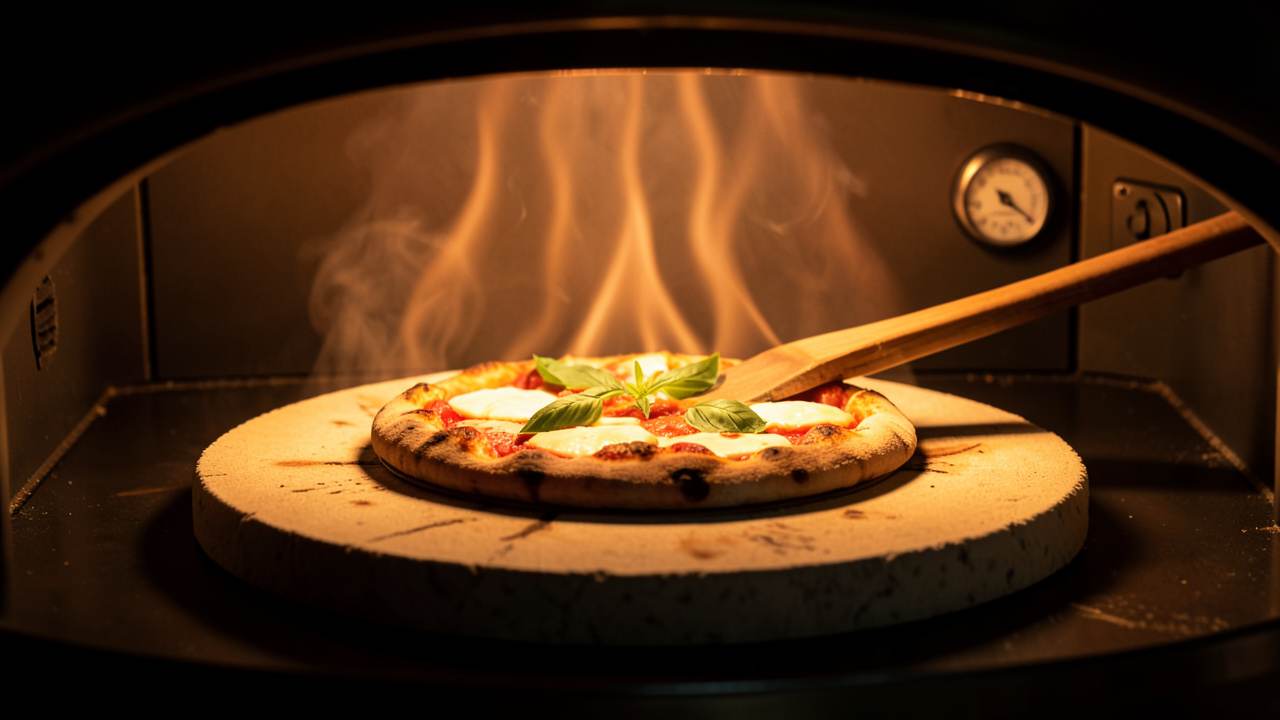
The science behind a pizza stone is simple. The stone acts as a thermal battery. It pulls heat from the oven and stores it in its dense material. When you open the door to load your pizza, the oven air instantly cools down. The stone does not cool down. It keeps radiating heat at full power.
According to, a pizza stone has about 50 times more thermal mass than the air inside your oven. This means the stone holds 50 times more heat energy than the air surrounding it. That stored energy is what bakes your crust.
When you place dough on a 550°F stone, several things happen instantly:
- Moisture in the dough turns to steam and pushes outward, creating air pockets in the crust.
- The starch on the bottom of the dough begins to brown and crisp through the Maillard reaction.
- The heat from the stone travels upward through the dough, cooking the interior before the toppings burn.
Warning: If you place dough on a cold or underheated stone, the crust stays raw and gummy. The toppings will overcook before the bottom sets. Always preheat your stone for a minimum of 45 minutes.
Why Heat Distribution Beats High Temperature
Oven temperature settings measure one thing only – the temperature of the air inside the baking chamber. That hot air does cook the top of your pizza. But it does almost nothing to the bottom of the dough.
Think about how air behaves. Hot air rises. The top of your oven is always hotter than the bottom. Most home ovens have a temperature difference of 50°F to 80°F from top to bottom. Your pizza sits on the lowest rack. The air there is the coolest air in the whole oven.
A pizza stone fixes this problem. The stone creates a hot surface at the bottom of the oven. That surface matches or exceeds the temperature at the top of the oven. Now your pizza bakes evenly from both sides.
Here is a comparison of what happens with and without a stone:
| Factor | With Pizza Stone | Without Pizza Stone |
|---|---|---|
| Bottom crust temperature | 550°F – 700°F | 350°F – 400°F |
| Crust texture | Crispy, browned, with airy crumb | Soft, pale, sometimes gummy |
| Heat recovery after door open | Instant – stone holds heat | Slow – air reheats gradually |
| Baking time needed | 6 – 8 minutes | 12 – 15 minutes |
| Topping doneness vs crust doneness | Finish at the same time | Toppings burn before crust sets |
Common Myths vs Facts About Pizza Stones
Many home cooks misunderstand how pizza stones work. Here are the most common misconceptions and the real facts.
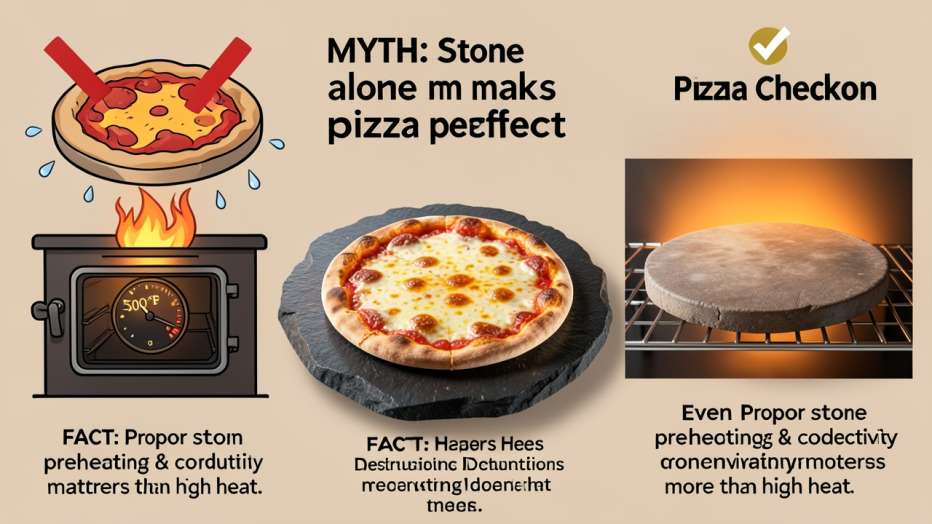
Myth 1: You need the highest oven temperature setting possible
Many people think you must crank the oven to its maximum setting. The truth is that a good stone at 450°F produces a better result than a baking sheet at 550°F. According to, the stone’s surface temperature matters more than the oven’s ambient air temperature. A stone at 450°F still delivers intense conductive heat to the dough.
Myth 2: All pizza stones work the same way
Cordierite, ceramic, and soapstone stones all behave differently. Cordierite heats fastest and resists cracking. Soapstone holds heat longest but takes over an hour to preheat. Ceramic is the most affordable but can crack if you heat it too quickly. Choose based on your oven and how often you bake.
Myth 3: A pizza stone is only useful for pizza
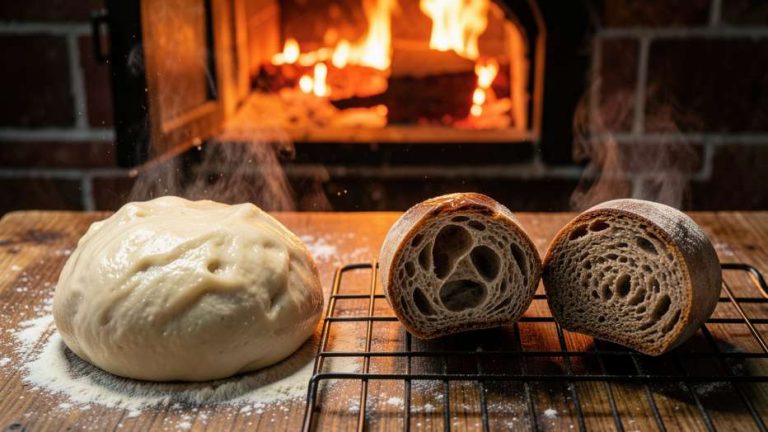
A pizza stone works for many foods. You can bake bread, roast vegetables, cook frozen pizzas, and even reheat leftovers on it. The stone provides even bottom heat for any baked dish. recommends using a stone for all types of bread to improve crust development.
How to Test Your Pizza Stone Temperature
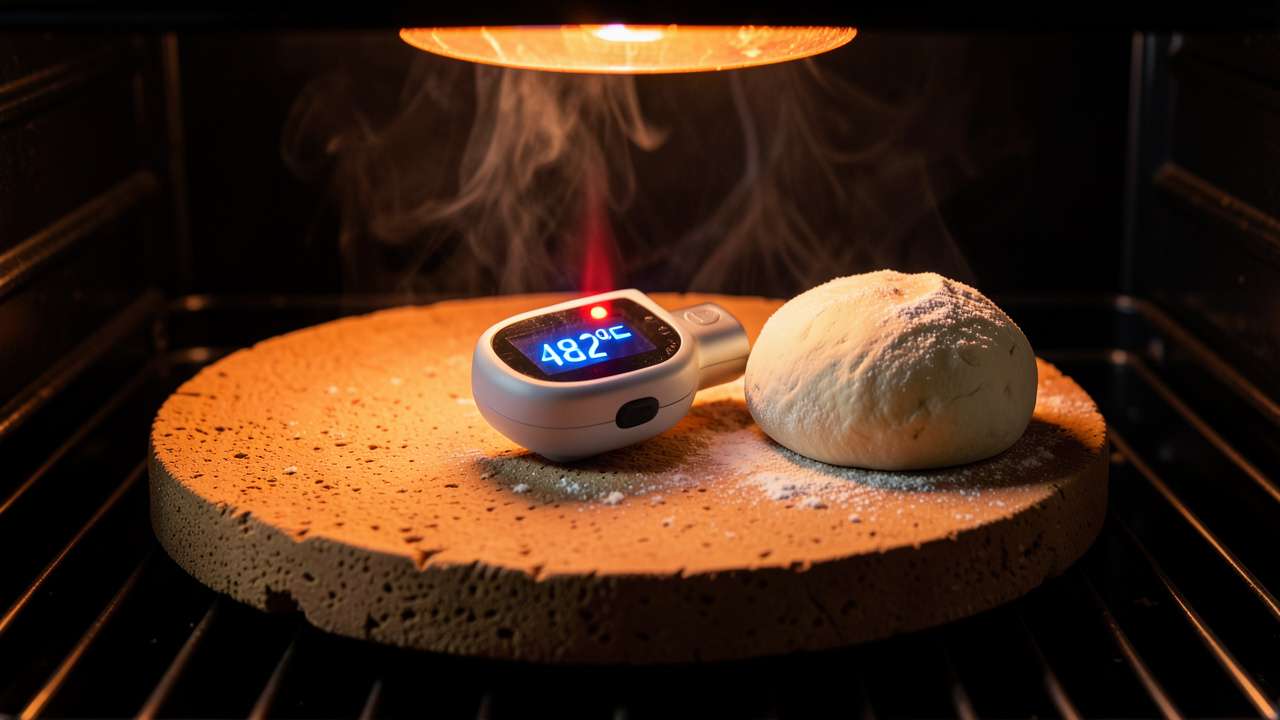
You do not need a special tool to check if your stone is hot enough. Use an infrared thermometer. Point it at the center of the stone after preheating. The reading tells you the exact surface temperature.
If you do not have an infrared thermometer, use the flour test. Sprinkle a pinch of flour on the stone. If it turns brown within 30 seconds, the stone is ready. If the flour stays white, wait 10 more minutes and test again.
Here are the optimal stone temperatures for different pizza styles:
- Neapolitan pizza – 700°F to 800°F (requires a pizza oven or broiler boost). The stone must be extremely hot for that 90-second bake time.
- New York style pizza – 550°F to 600°F. A standard home oven with a stone can reach this range with a 45-minute preheat.
- Thick crust and Sicilian pizza – 450°F to 500°F. A lower temperature lets the thicker dough cook through without burning the outside.
Tip: Place your stone on the middle rack, not the bottom rack. The middle rack gives better airflow around the stone. Bottom rack placement can cause the stone to heat unevenly.
Pizza Stone vs Baking Steel
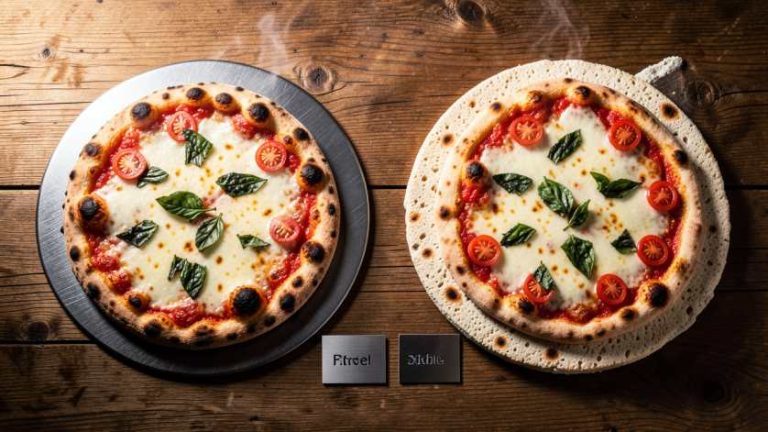
Baking steel is a common alternative to a pizza stone. Steel has higher thermal conductivity than stone. It transfers heat to the dough faster. But steel also cools down faster when you open the door.
| Property | Pizza Stone | Baking Steel |
|---|---|---|
| Thermal conductivity | Low – heats slowly | High – heats quickly |
| Thermal mass | High – holds heat long | Moderate – loses heat faster |
| Preheat time needed | 45 – 60 minutes | 30 – 45 minutes |
| Durability | Can crack with thermal shock | Virtually indestructible |
| Best for | Multiple pizzas, bread, roasting | Single pizzas, ultra-crispy crust |
| Cost | $30 – $80 | $80 – $150 |
Which one should you choose? If you bake multiple pizzas at once or also bake bread, pick a stone. If you want the crispiest possible bottom on a single pizza, pick steel.
Pro Tips for Using a Pizza Stone
- Always preheat your stone for at least 45 minutes. A cold stone makes a gummy crust every time.
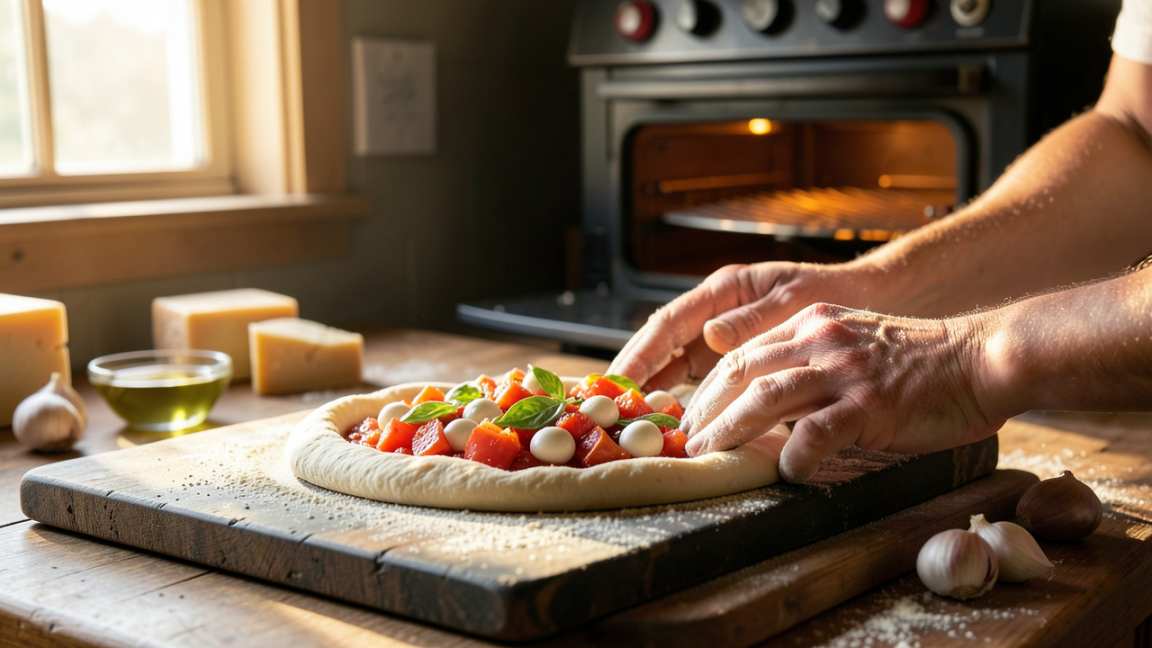
- Use cornmeal or semolina on your peel, not flour. Flour burns on the stone and creates smoke. Cornmeal acts as tiny ball bearings that help the pizza slide off.
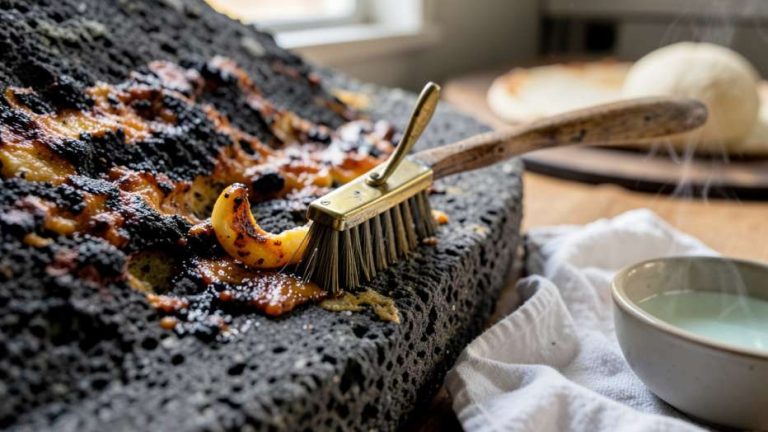
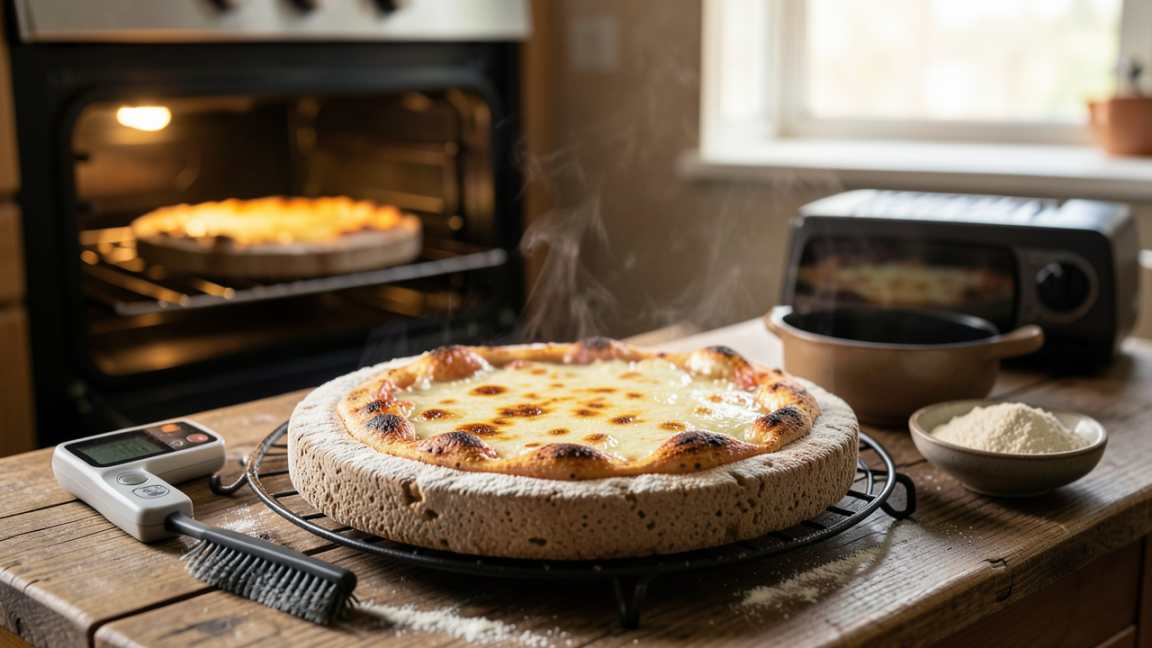
- Never wash your stone with soap. The stone absorbs soap and your next pizza will taste like detergent. Scrub it with hot water and a stiff brush.
- Let the stone cool inside the oven after baking. Taking a hot stone out and placing it on a cold counter can crack it.
- Place your pizza on parchment paper if you are new to using a stone. The paper makes sliding the pizza on and off much easier. Remove the paper after two minutes of baking.
Warning: Do not use a pizza stone under a broiler unless the manufacturer says it is safe. Most cordierite stones can withstand broiler heat, but ceramic stones often crack. Check the product manual before trying high-heat methods.
Resources and Tools
ThermoWorks Thermapen IR – An infrared thermometer that gives instant stone surface temperature readings.
FibraMent Baking Stone – A durable cordierite stone that handles high heat without cracking.
Ooni Pizza Oven – An outdoor oven that reaches 900°F for true Neapolitan pizza at home.
Serious Eats Pizza Lab – A detailed guide on pizza science by Kenji López-Alt with tested recipes and techniques.
King Arthur Baking School – Online courses and recipes for bread and pizza stone baking.
Frequently Asked Questions
Can I use a pizza stone on a gas grill?
Yes, you can use a pizza stone on a gas grill. Place the stone on the grill grates and preheat with the lid closed for 15 minutes. The grill adds smoky flavor and can reach higher temperatures than a home oven.
How long does a pizza stone last?
A good cordierite stone lasts 5 to 10 years with proper care. Ceramic stones last 2 to 4 years before they develop hairline cracks. Soapstone stones can last a lifetime if you handle them carefully.
Do I need to season a new pizza stone?
No, you do not need to season a pizza stone. Unlike cast iron, a stone does not need oil. Just wash it with hot water, dry it completely, and preheat it in the oven before first use.
What thickness should my pizza stone be?
Look for a stone that is at least 3/8 inch thick. Thinner stones heat faster but cool down quickly when you open the door. Thicker stones hold heat better and produce more consistent results.
Can I cut pizza directly on the stone?
You should not cut pizza directly on the stone. A knife or pizza cutter will scratch the surface and leave grooves. Slide the pizza onto a cutting board and slice it there.
Final Thoughts
Your pizza stones determine crust quality more than the number on your oven dial. The stone stores heat and delivers it directly to the dough through conduction. Focus on preheating your stone properly and choosing the right material for your baking style. You will get better pizza at lower oven temperatures with the right stone.