Accessible Kitchen Design: Ada-Compliant Features For Wheelchair Users And Seniors
Getting your kitchen just right for everyone, especially folks who use wheelchairs or are getting older, can feel like a big puzzle. You might wonder where to even start with Accessible Kitchen Design: ADA-Compliant Features for Wheelchair Users and Seniors. It’s totally normal to feel that way!
You might wonder where to even start with Accessible Kitchen Design: ADA-Compliant Features for Wheelchair Users and Seniors.
But don’t worry, we’re going to break it down into simple steps. Let’s get your kitchen working better for you and your loved ones.
Key Takeaways
- You’ll learn about important ADA rules for kitchens.
- We’ll show you how to pick the right counter heights.
- You’ll discover ways to make cabinets easy to reach.
- We’ll explain how to set up appliances for better use.
- You’ll find tips for making sink and faucet areas work well for everyone.
- We’ll cover how to improve lighting and floor space.
Making Kitchens Work for Everyone
Creating a kitchen that’s easy to use for people with different needs is super important. This means thinking about how someone in a wheelchair moves around or how an older person might reach things. We’re talking about making sure everyone can cook, clean, and feel safe in their kitchen.
This involves looking at things like counter heights, cabinet doors, and how much space there is to move. It’s all about making the kitchen a friendly and helpful place for all.
Understanding ADA Guidelines
The Americans with Disabilities Act (ADA) gives us rules to make sure places are usable by people with disabilities. For kitchens, this means specific ideas about how things should be set up. These rules help make sure there’s enough room to get around and that controls and features are easy to reach and use.
Following these guidelines helps build kitchens that are truly accessible.
- Clear Floor Space: The ADA says there needs to be enough open floor space so a wheelchair can turn around easily. This is usually a 60-inch turning circle.
- Reach Ranges: This is about how high or low things should be. For example, controls for appliances or light switches need to be within easy reach from a seated position.
- Operable Parts: Any knobs, handles, or buttons must be easy to grasp and use. This means they shouldn’t need a lot of force or twisting.
- Water and Waste: Sinks need space underneath for a wheelchair to get close. Faucets should also be easy to operate.
These rules aren’t just about following laws; they’re about making real, practical improvements. They help people gain independence and make everyday tasks much simpler. For instance, having a clear path around the kitchen means a person in a wheelchair can get to the fridge, the stove, and the sink without bumping into things or getting stuck.
Why ADA Compliance Matters
Following ADA rules makes a kitchen usable for more people. It’s not just for those with significant mobility issues. Older adults who might have trouble bending or reaching can also benefit greatly.
It makes spaces more welcoming and functional for everyone, promoting independence and dignity.
Practical Application of ADA Rules
Think about a busy family kitchen. If the main counter is too high, it’s tough for anyone shorter to use. If the oven door opens outwards and hits a wall, it’s a problem.
ADA guidelines help prevent these everyday annoyances. They guide designers and homeowners to think about movement, reach, and ease of use in a structured way.
Designing for Different Needs
When we talk about accessible kitchens, we’re really focusing on two main groups: wheelchair users and seniors. While their needs can overlap, there are often specific things to consider for each. We want to ensure that the kitchen supports independence and safety, no matter the user’s physical abilities.
This means looking at everything from the big picture, like layout, to the small details, like handle shapes.
Features for Wheelchair Users
For wheelchair users, the kitchen needs to allow for easy movement and access. This means creating space to maneuver and ensuring that surfaces and controls are at the right height. It’s about making sure the kitchen adapts to them, not the other way around.Countertops and Work Surfaces
Countertop height is a big deal for wheelchair users. The standard height of about 36 inches is often too high for someone sitting in a wheelchair. ADA guidelines suggest a reduced height for at least one work surface.
This is typically around 30 to 34 inches from the floor to the top of the counter. This lower height allows a wheelchair user to get their knees and legs under the counter, making it easier to prepare food or use the counter as a workspace.
It’s also important to have knee clearance under these lower counters. This means the cabinet below should be set back, or a U-shaped support should be used. This creates an open space for the wheelchair user’s legs and knees to fit comfortably.
Without this clearance, the counter would be unusable. The depth of the counter should still be sufficient for preparing food, usually around 24 inches.
Cabinetry and Storage
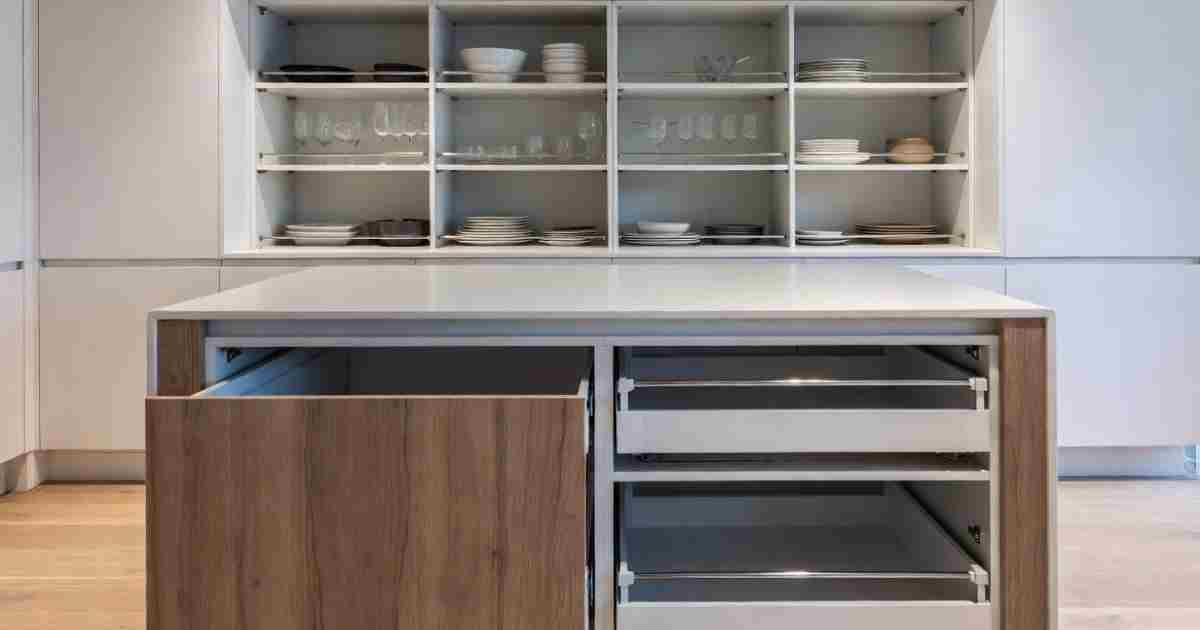
Getting to things in cabinets can be challenging from a seated position. Traditional base cabinets with shelves are hard to reach. Pull-out shelves, drawers, and even pull-down shelving systems are excellent solutions.
Pull-out shelves bring items forward, making them visible and accessible without having to reach deep into the cabinet.
Wall cabinets also need careful consideration. If they are too high, they are out of reach. ADA guidelines often suggest that the bottom of wall cabinets should be at least 15 inches from the countertop.
This provides clearance for larger appliances or simply makes reaching items on the shelves easier. For upper storage, consider pull-down shelves that bring the contents of the cabinet down to a reachable height.
Appliance Selection and Placement
Appliance controls are key. Side-by-side refrigerators are often preferred over top-freezer models because both compartments are more accessible. The freezer compartment, especially in a top-freezer model, can be very difficult to reach for someone seated.
Look for refrigerators with controls that are easy to use, perhaps on the outside of the door.
For ovens, a range with a smooth cooktop and front controls is often best. Wall ovens with a pull-out broiler or a side-hinged door can also improve accessibility. The microwave should be placed at a height that is easy to reach.
This might mean mounting it above the range with a proper ventilation system or placing it on a lower shelf or in a dedicated microwave cabinet.
- Scenario: Sarah’s Kitchen Update Sarah uses a wheelchair and found her old kitchen difficult. She wanted to be more independent.
- She worked with a designer to lower her main counter to 32 inches and added knee clearance.
- She
- Her microwave was moved from a high shelf to a counter-height cabinet so she could easily access it.
- This made a huge difference in her ability to prepare meals and feel comfortable in her own kitchen.
Features for Seniors
Seniors often face challenges like reduced mobility, decreased strength, and potential vision or balance issues. Accessible kitchen design for seniors focuses on making tasks easier and safer. This can mean simpler controls, better lighting, and avoiding hazards.
Enhanced Lighting
Good lighting is critical for seniors. Vision can decline with age, making it harder to see tasks clearly or avoid obstacles. Ample, well-placed lighting helps prevent accidents and makes cooking more enjoyable.
This includes task lighting under cabinets to illuminate countertops and general overhead lighting that is bright and even.
Consider task lighting installed under wall cabinets. This shines directly on the work surface, reducing shadows and making it easier to chop vegetables or read recipes. Motion-sensor lights can also be helpful for pathways or inside pantries, turning on automatically when someone enters.
Easy-to-Use Controls and Fixtures
Seniors may have difficulty with small knobs or handles that require a strong grip. Lever-style handles for faucets are much easier to operate than traditional round knobs. They can be turned on and off with just a gentle push of the hand, wrist, or even elbow.
This is also helpful for anyone with arthritis.
For appliances, look for controls that are large, clearly marked, and easy to push or turn. Digital displays with large numbers are also beneficial for those with vision impairment. Avoid appliances with too many small buttons or touch screens that can be difficult to operate accurately.
Flooring and Safety
The kitchen floor is a safety concern for seniors. Non-slip flooring is essential to prevent falls. Materials like textured tile, vinyl, or cork can provide good traction, even when wet.
Avoid highly polished surfaces or loose rugs that can cause tripping hazards.
Maintaining a clear path through the kitchen is also important for stability. Ensure there are no cluttered areas or objects that could cause someone to trip. Wider doorways can also make it easier for seniors who use walkers or canes to move between rooms.
Storage Solutions for Seniors
Reaching high shelves or bending down to low cabinets can be difficult and risky. Storage solutions like lazy Susans, pull-out shelves, and lower cabinet designs help. These bring items to a more accessible height, reducing strain and the risk of dropping things.
Open shelving at a comfortable height can also be a good option for frequently used items. This allows for easy visual access and retrieval. For items stored in deep cabinets, consider using bins or trays that can be pulled out easily, bringing everything to the front.
- Example: Mr. Henderson’s Kitchen Makeover Mr. Henderson found reaching for pots in his lower cabinets painful due to arthritis.
- He had his kitchen cabinets fitted with full-extension drawers, so all pots and pans slide out easily.
- He also had his kitchen faucet
- New under-cabinet lighting brightened his workspace, making it safer to cook.
- These changes made his kitchen much more comfortable and less tiring to use daily.
Practical Layout and Space Considerations
The layout of your kitchen plays a huge role in how easy and safe it is to use. For accessible kitchens, we need to think about movement, reach, and how everything fits together. It’s about creating a space that flows well and has enough room for everyone.
Optimizing the Work Triangle
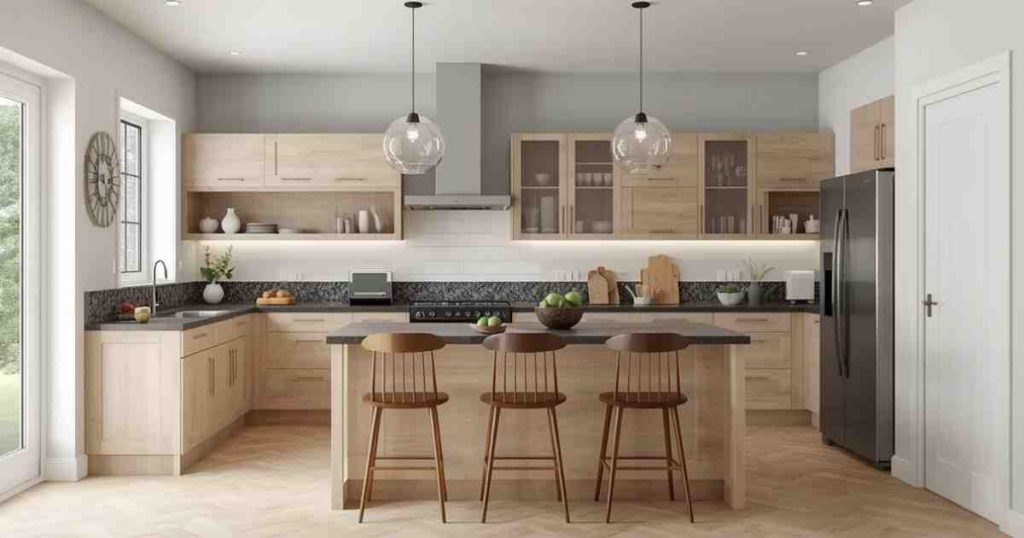
The “work triangle” connects the sink, refrigerator, and stove. In an accessible kitchen, this triangle needs to be efficient and provide enough space to move between each point. The distances should be comfortable, and there should be no obstructions.
Sometimes, a more linear layout or a galley kitchen can work well for accessibility, as it keeps everything in close proximity but requires careful planning to ensure adequate clearance.
For wheelchair users, the space between appliances is critical. There needs to be enough room to maneuver a wheelchair. A U-shaped kitchen can offer good accessibility if the base of the “U” is wide enough.
An L-shaped kitchen can also be a good option, providing ample counter space and clear pathways.
Clearance and Turning Space
This is a cornerstone of accessible design. There must be enough open floor space. For a wheelchair, a 60-inch diameter circle is the standard for turning.
This means pathways between counters and appliances should be at least 36 inches wide, with wider areas for turning. This ensures a person can move freely and safely without feeling cramped.
Consider the clearances around appliances that open. A refrigerator door should not block a main pathway. An oven door, when fully open, should not impede access to other parts of the kitchen.
This often means placing appliances with doors that open outwards or side-hinged doors in positions where they won’t create a hazard.
Countertop and Sink Design
We’ve touched on counter heights, but the overall design is important too. Having a dedicated lower section of countertop is essential for wheelchair users. This section should have ample knee clearance and be free of obstructions underneath.
The sink area is another key point. The sink should be shallow enough to allow a wheelchair user to get close. A single-bowl sink is often more practical than a double-bowl sink, as it provides a larger open workspace.
The faucet should be easy to operate, with a lever handle. Make sure there’s enough space around the sink for utensils and cleaning supplies.
- Consideration: Is the space wide enough for a wheelchair to pass easily?
- Check: Can someone reach the main cooking and cleaning areas without strain?
- Action: Ensure appliances don’t block essential pathways when opened.
- Benefit: A well-planned layout promotes independence and reduces the risk of accidents.
Statistics show that improving kitchen accessibility can significantly boost a person’s quality of life. A 2021 survey found that 78% of individuals aged 65 and older reported wanting to “age in place,” meaning they prefer to stay in their own homes as they get older. Accessible kitchen design is a key component of making this possible.
Appliance Integration
Integrating appliances seamlessly is crucial. Built-in appliances can offer a cleaner look and better functionality. For example, a built-in microwave at counter height is much more accessible than one placed on top of the refrigerator.
Smooth-top electric cooktops are often preferred over gas for safety and ease of cleaning, and they provide a continuous surface.
Consider the controls for each appliance. They should be easy to see and operate. This might mean front-mounted controls for ranges or touch controls with clear displays for dishwashers and ovens.
The goal is to make every interaction with the kitchen equipment straightforward and safe.
- Scenario: The Open Plan Kitchen A family wanted a kitchen that worked for their grandmother who used a walker.
- They chose an L-shaped layout that kept the cooking zone efficient.
- They ensured a minimum walkway of 40 inches between the main counter and the island.
- They installed pull-out shelves in the lower cabinets and an induction cooktop with front controls.
- This design allowed Grandma to comfortably participate in meal prep and be part of family gatherings in the kitchen.
Putting It All Together: Tips and Best Practices
Designing an accessible kitchen isn’t about making it look like a hospital room. It’s about thoughtful choices that blend safety, comfort, and style. By focusing on a few key areas, you can transform a regular kitchen into a space that works wonderfully for everyone.
Choosing the Right Materials
The materials you choose can make a big difference. For countertops, materials like laminate, solid surface, or quartz are good choices. They are durable, easy to clean, and can be shaped to create accessible features.
Avoid materials that are too porous or easily stained.
Flooring is another important material choice. As mentioned before, non-slip flooring is key. Vinyl or linoleum are practical and cost-effective options that offer good grip and are easy to maintain.
Tile can also work, but opt for tiles with a textured surface and consider smaller grout lines to prevent tripping.
Hardware and Handles
The type of hardware on cabinets and drawers is more important than you might think. Lever handles are excellent for faucets and for opening cabinet doors or drawers. Loop pulls or D-shaped handles are also easier to grasp than small knobs.
Avoid handles that require a tight pinch or twist motion.
For cabinet doors, consider using push-to-open mechanisms or touch latches. These can eliminate the need for a handle altogether, creating a cleaner look and making them easier to operate by simply pressing the door.
Smart Storage Solutions
Smart storage is all about making items easy to find and retrieve. This includes deep drawers that pull out completely, lazy Susans in corner cabinets, and pull-down shelves for upper cabinets. Think about where you store things.
Frequently used items should be in the most accessible locations.
For items that are difficult to lift, like heavy pots or small appliances, consider storing them in lower cabinets or drawers where they can be easily slid out. Vertical dividers in drawers can help organize utensils and tools, making them easier to see and grab.
| Feature | Benefit | Considerations |
|---|---|---|
| Pull-out Shelves | Easily brings items forward; improves visibility. | Ensure they are sturdy enough for heavy items. |
| Lever Faucet Handles | Easy to operate with minimal force. | Check for smooth operation and comfortable grip. |
| Lowered Countertop Section | Provides workspace for wheelchair users. | Ensure adequate knee clearance and proper height. |
| Non-Slip Flooring | Reduces risk of falls. | Choose materials with good traction even when wet. |
According to a report on aging in place, over 88% of seniors want to remain in their homes for as long as possible. Accessible kitchen design is a vital part of meeting this demand, allowing individuals to maintain their independence and comfort.
Visual Appeal and Functionality
Accessible design doesn’t mean sacrificing style. Modern accessible kitchens can be beautiful and functional. The key is to integrate features seamlessly so they look like they belong. Choosing non-slip flooring is an important safety feature in accessible kitchens as recommended by government guidelines.
For instance, pull-out shelves can be hidden behind attractive cabinet fronts.
Good lighting, as we discussed, is both functional and enhances the look of the kitchen. Task lighting can highlight beautiful countertops, and well-placed accent lighting can create a warm and inviting atmosphere. The goal is a space that feels welcoming, safe, and a pleasure to use.
Frequently Asked Questions Of Accessible Kitchen Design: Ada-Compliant Features For Wheelchair Users And Seniors
What is the minimum clear floor space needed for a wheelchair in a kitchen?
The ADA recommends a 60-inch diameter clear floor space for a wheelchair to turn around easily. This space should be free of obstructions.
How high should accessible countertops be?
For wheelchair users, a comfortable working height for countertops is typically between 30 and 34 inches from the floor to the top of the surface. There must also be knee clearance underneath.
What kind of faucet handles are best for seniors?
Lever-style faucet handles are highly recommended. They are easier to operate than round knobs and can be used with minimal hand strength or dexterity.
Should I have all my cabinets be accessible?
It’s best to have at least one accessible work area with lowered counters and pull-out storage. For upper cabinets, consider pull-down shelves or storing frequently used items on lower shelves.
What is the most important safety feature for an accessible kitchen floor?
The most important safety feature is non-slip flooring. This helps prevent falls, especially in areas prone to moisture like near the sink.
Conclusion
Creating an Accessible Kitchen Design: ADA-Compliant Features for Wheelchair Users and Seniors is about making practical choices. You can achieve a kitchen that is safe, easy to use, and comfortable for everyone. Focus on clear paths, reachable storage, and simple controls.
Your kitchen can become a place of independence and joy.

![What Is Kitchen Ergonomics How Good Design Reduces Fatigue And Injury[1]](https://kitchentoolslab.com/wp-content/uploads/2026/05/What_Is_Kitchen_Ergonomics__How_Good_Design_Reduces_Fatigue_And_Injury1-768x403.jpg)
![How To Design A Kitchen For Tall People Counter Heights, Cabinet Reach, And More[1]](https://kitchentoolslab.com/wp-content/uploads/2026/05/How_To_Design_A_Kitchen_For_Tall_People__Counter_Heights_Cabinet_Reach_And_More1-768x448.jpg)
![Kitchen Work Zones How To Organize Your Kitchen Into Functional Areas[1]](https://kitchentoolslab.com/wp-content/uploads/2026/05/Kitchen_Work_Zones__How_To_Organize_Your_Kitchen_Into_Functional_Areas1-768x448.jpg)
![The Kitchen Work Triangle Explained Is It Still Relevant[1]](https://kitchentoolslab.com/wp-content/uploads/2026/05/The_Kitchen_Work_Triangle_Explained__Is_It_Still_Relevant1-768x403.jpg)