Brine Ratio Guide: Pickles, Kraut, And Curtido Salt Percents
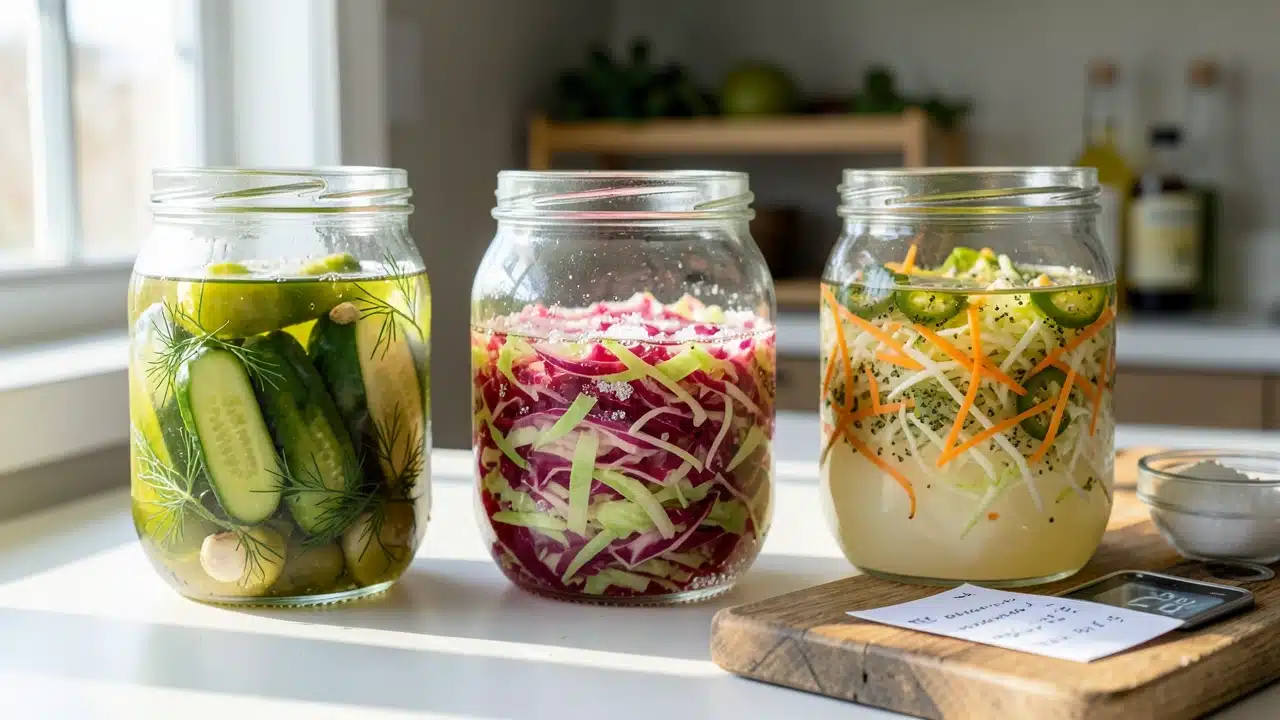
A brine ratio guide for pickles, kraut, and curtido should use weight, not spoons. For cucumber pickles, use about 2–3% salt brine by water weight; for sauerkraut, use about 2–2.5% salt by cabbage weight; for curtido, use roughly 2% of total vegetable weight. Keep vegetables submerged during fermentation.
Making your own pickles, sauerkraut, or curtido at home can be really rewarding. You get amazing flavors and healthy probiotics. But getting the salt just right is super important for taste and safety.
Too little salt and things can go bad; too much and they might taste odd. That’s why understanding the right salt levels is key.
This Brine Ratio Guide: Pickles, Kraut, and Curtido Salt Percents will help you nail it every time, giving you delicious, safely fermented foods and the confidence to try new recipes.
Key Takeaways
- Knowing the correct salt percentage is vital for safe and tasty fermentation.
- Different fermented foods like pickles, kraut, and curtido require specific salt ratios.
- Salt controls microbial activity, helping good bacteria thrive while stopping spoilage.
- Using a simple brine ratio guide ensures consistent results for your ferments.
- Understanding salt percentages helps you adjust recipes for flavor and texture.
- This guide provides clear percentages for popular fermented foods.
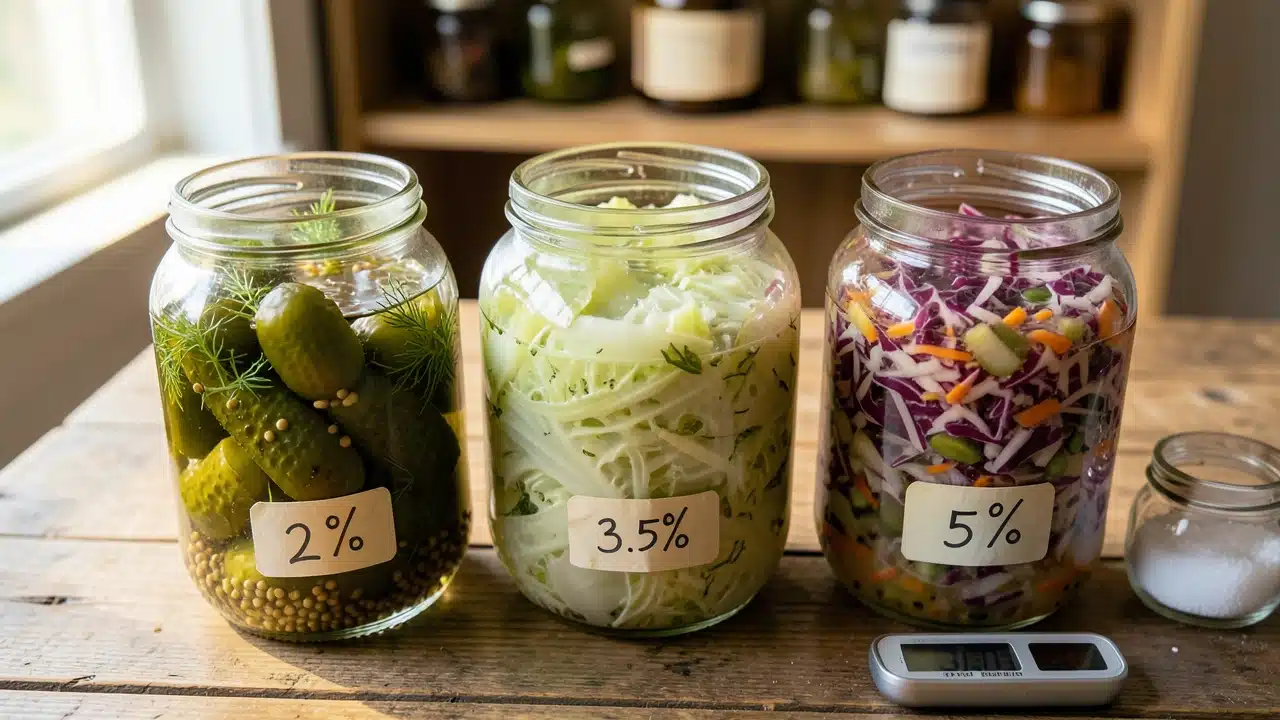
Why Salt Matters in Fermentation
Salt is your best friend when you’re fermenting. It doesn’t just make things taste good; it does some serious work. Salt helps draw water out of vegetables.
This creates a brine. This brine is a safe space for the good bacteria we want. These good bacteria eat sugars in the vegetables.
They make lactic acid. Lactic acid is what makes fermented foods tangy and helps preserve them. It also stops the bad bacteria from growing.
These bad ones can make you sick or ruin your ferment.
Getting the salt right is key to a successful ferment. It’s not just about flavor. It’s about creating the right environment.
The correct salt level ensures that the beneficial lactic acid bacteria can do their job. These bacteria are naturally present on the vegetables. They are also in the air.
They multiply in the salty brine. They produce acid. This acid lowers the pH of the ferment.
A lower pH makes it hard for harmful microbes to survive. This is the core of safe fermentation.
When you follow a good Brine Ratio Guide: Pickles, Kraut, and Curtido Salt Percents, you are essentially setting up your ferment for success.
It’s like giving your good bacteria the perfect home. This home has the right conditions to thrive and do their important work.
Without enough salt, the bad guys can take over. Without too much salt, the good bacteria might struggle, and your food might not ferment properly or taste as good.
Understanding Brine Percentages
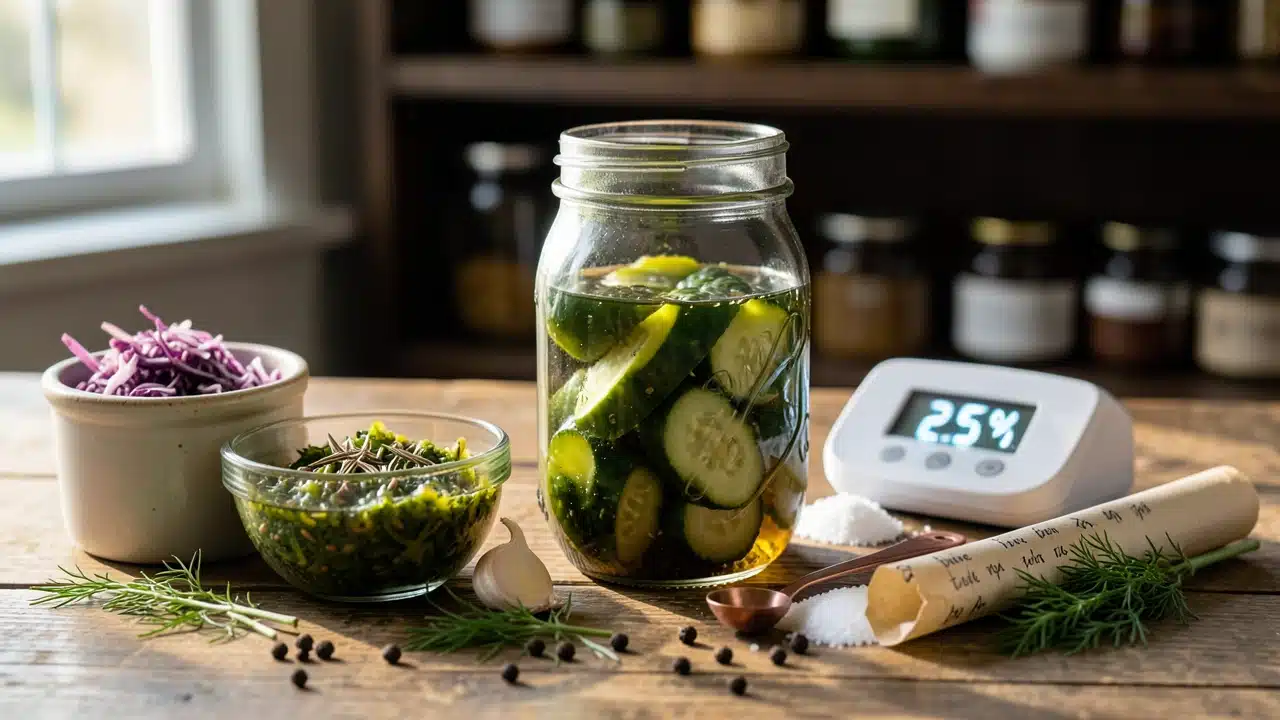
When we talk about salt percentages for ferments, we usually mean the weight of salt compared to the weight of water. This is called weight-by-weight (w/w). It’s the most accurate way to measure.
For example, a 2% brine means you use 20 grams of salt for every 1000 grams (1 kilogram) of water. This is a common starting point for many ferments. The exact percentage can change depending on what you are fermenting.
This is where a good Brine Ratio Guide: Pickles, Kraut, and Curtido Salt Percents becomes incredibly useful. It takes the guesswork out of it. You don’t need to be a scientist to get it right.
You just need to know the general ratios for the type of food you are making. These percentages are based on years of experience and scientific understanding of fermentation.
It’s important to use non-iodized salt. This means sea salt, kosher salt, or pickling salt. Iodized salt can sometimes affect the fermentation process and give an off-flavor.
Always check your salt type. Also, if you are using a recipe that calls for vegetables and water, the salt percentage is usually calculated based on the total weight of vegetables and water. Some recipes might just use salt and vegetables, letting the vegetables’ own water create the brine.
In those cases, the salt is calculated against the total weight of the vegetables.
Brine Ratios for Pickles
Pickles are perhaps the most well-known fermented food. Getting the brine right for pickles is crucial for both preservation and that classic tangy crunch. For most fermented pickles, a salt percentage between 2% and 3% is ideal.This range provides enough salt to inhibit spoilage bacteria while allowing the lactic acid bacteria to work their magic.
A common starting point for fermented dill pickles is a 2.5% brine. To make this, you would use 25 grams of salt for every 1000 grams of water. If you are making a large batch, say 2 liters (2000 grams) of water, you would need 50 grams of salt.
This weight of salt is dissolved in the water before adding your cucumbers and seasonings.
For a slightly tangier and more robust pickle, you might lean towards a 3% brine. This means 30 grams of salt per 1000 grams of water. For 2 liters of water, that would be 60 grams of salt.
Some recipes might call for a lower salt percentage, especially if other preservatives like vinegar are added, but for true fermentation, the 2%-3% range is a safe bet. This is a key part of any good Brine Ratio Guide: Pickles, Kraut, and Curtido Salt Percents.
When pickling cucumbers, it’s also important to consider the type of cucumber. Kirby cucumbers are often preferred because they are firm and have fewer seeds. Using fresh, high-quality cucumbers will also lead to better results.
The brine not only preserves the cucumbers but also infuses them with flavor from any herbs or spices you add, like dill, garlic, or peppercorns.
Brine Ratios for Sauerkraut (Kraut)
Sauerkraut, a staple in many cuisines, is fermented cabbage. It’s surprisingly simple to make and relies heavily on the correct salt ratio.
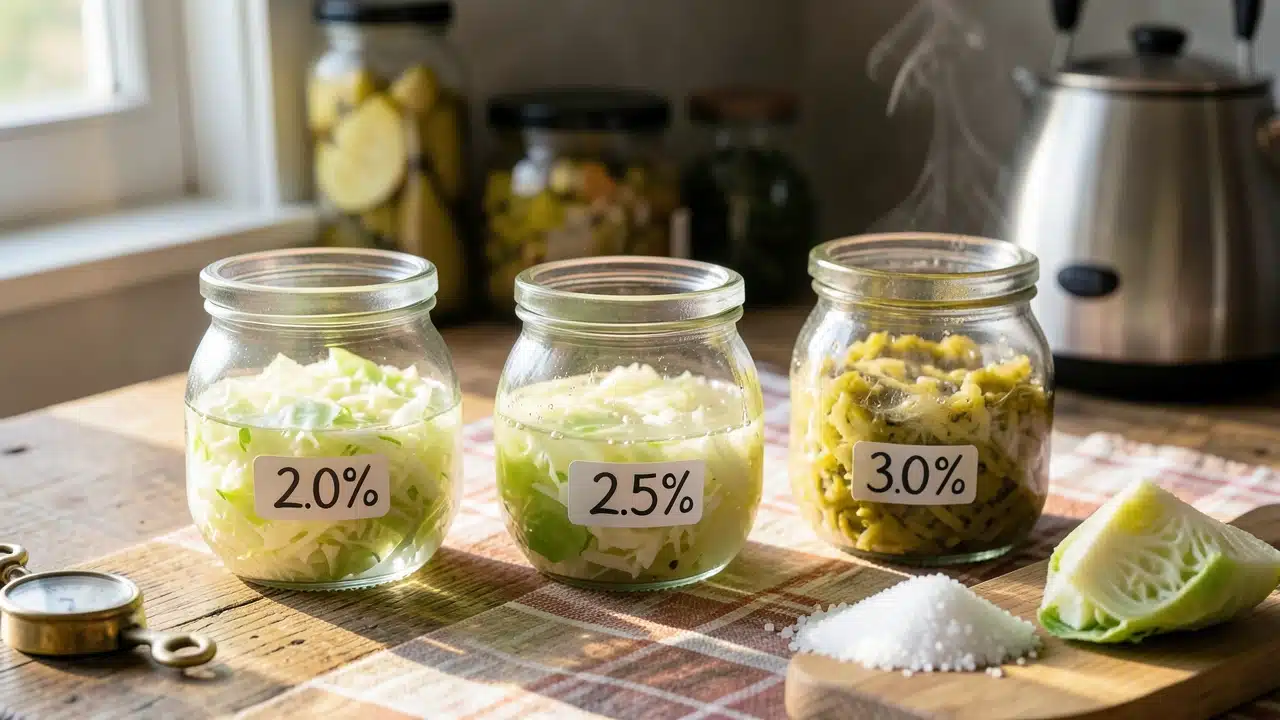
For traditional sauerkraut, the salt percentage is typically higher than for many other ferments, usually falling between 1.5% and 2.5%.
This higher salt content helps to draw out moisture from the cabbage effectively.
A widely accepted and reliable ratio for sauerkraut is 2% salt. This means 20 grams of salt for every 1000 grams of cabbage. When you shred the cabbage, you’ll then weigh it.
Then, you add the calculated amount of salt. You then massage the salt into the cabbage. This process helps to break down the cabbage cells.
It releases its natural juices. These juices will mix with the salt to form the brine. This brine covers the cabbage.
Some recipes might suggest 1.5% salt for a milder flavor or quicker fermentation. For 1000 grams of cabbage, this would be 15 grams of salt. However, going too low on salt can risk spoilage.
Conversely, a 2.5% brine (25 grams of salt per 1000 grams of cabbage) can be used for a longer shelf life and a more intense flavor. This is why a detailed Brine Ratio Guide: Pickles, Kraut, and Curtido Salt Percents is so valuable.
The process for sauerkraut involves shredding cabbage and mixing it thoroughly with salt. You then pack it tightly into a clean jar or crock. You want to press it down firmly to release more liquid.
If, after a few hours or overnight, the brine doesn’t cover the cabbage, you might need to add a little extra brine. You can make this by dissolving 2% salt in water (20g salt per 1000g water).
Brine Ratios for Curtido
Curtido is a fermented cabbage relish, popular in Salvadoran cuisine. It’s often served with pupusas and other dishes.
The fermentation process for curtido is similar to sauerkraut, but it often includes other vegetables like carrots and onions, and sometimes vinegar is added for a quicker pickle or a different flavor profile.
However, for a true fermented curtido, salt is essential.
For a traditional fermented curtido, a salt percentage of around 2% is generally recommended. This means 20 grams of salt for every 1000 grams of the total vegetable mixture (cabbage, carrots, onions, etc.). You would weigh all your chopped vegetables together.
Then, you add the calculated amount of salt and mix it thoroughly. The vegetables will release their own liquid to form the brine.
If the vegetables don’t release enough liquid to cover themselves after a day or two, you may need to supplement with a basic brine. This brine should also be around 2% salt. So, for every liter of water, you’d dissolve 20 grams of salt.
It’s important to ensure all the vegetables are submerged in brine to prevent mold growth. This is a crucial detail in any comprehensive Brine Ratio Guide: Pickles, Kraut, and Curtido Salt Percents.
The flavor of curtido is often enhanced by adding spices like oregano and sometimes a touch of vinegar after fermentation.
However, the initial fermentation relies on the salt to create the right conditions for lactic acid bacteria. This process develops the characteristic tangy flavor and preserves the relish.
Using the correct salt percentage ensures a safe and delicious product.
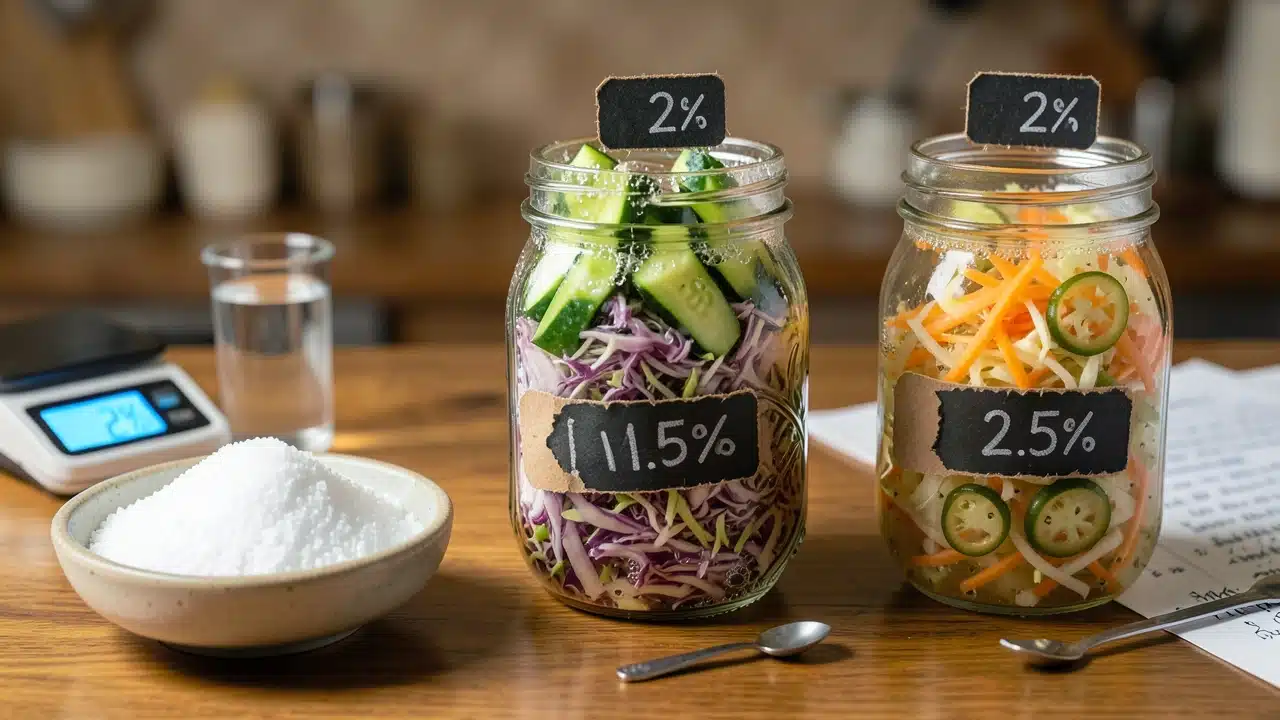
Comparing Salt Percentages: A Quick Look
It’s helpful to see the typical salt percentages side-by-side for different ferments. This comparison makes it easy to remember the general guidelines.
While there can be slight variations based on recipes and personal preference, these ranges are a solid foundation for successful fermentation.
| Fermented Pickles | 2% – 3% | Balances preservation with a desirable crunch and tang. |
| Sauerkraut (Kraut) | 1.5% – 2.5% (commonly 2%) | Higher salt helps draw out moisture from cabbage for a good brine. |
| Curtido | Around 2% | Ensures proper fermentation of cabbage and other vegetables. |
| Other Fermented Vegetables (e.g., Carrots, Beets) | 2% – 3% | Similar to pickles, needs salt for preservation and flavor development. |
As you can see, the percentages are quite similar for many common vegetable ferments. The slight differences often come down to the moisture content of the main vegetable and the desired final flavor profile.
For example, cabbage has a lot of water and can release it easily, making a 2% brine very effective for sauerkraut.
Cucumbers might need a bit more salt to ensure they stay crisp and don’t become mushy during fermentation.
This table is a great quick reference from our Brine Ratio Guide: Pickles, Kraut, and Curtido Salt Percents.
It highlights that while the exact number might shift by a half percent or so, the overall range is quite consistent for achieving safe and delicious results. Always remember to use non-iodized salt for the best outcome.
Tips for Measuring Salt and Brine
Accurate measurement is key to following any Brine Ratio Guide: Pickles, Kraut, and Curtido Salt Percents.
The most reliable method is using a kitchen scale. Weighing both your salt and your water (or vegetables) ensures you get the correct ratio every time.
This is far more accurate than using volume measurements like cups or spoons.
First, decide on your desired salt percentage. For example, let’s say you’re making sauerkraut and want a 2% brine. Second, weigh your shredded cabbage.
Let’s say you have 1000 grams (1 kilogram) of cabbage. Next, calculate the amount of salt needed. For a 2% brine, you need 2% of 1000 grams, which is 20 grams of salt.
Then, thoroughly mix the salt into the shredded cabbage. Massage it in until the cabbage starts to wilt and release its liquid. Finally, pack the salted cabbage tightly into your fermentation vessel.
The released liquid should create enough brine to cover the cabbage.
If you are making a brine solution to pour over vegetables (like for pickles), you would weigh your water. For 1000 grams of water and a 2.5% brine, you would add 25 grams of salt. Stir until fully dissolved.
Then, pour this brine over your cucumbers and seasonings in your jar. Make sure the brine covers everything completely.
You can use a fermentation weight or a clean plastic bag filled with brine to keep the vegetables submerged.
Always use a reliable kitchen scale. They are inexpensive and make a huge difference in fermentation success. Avoid using table salt if possible, as it can contain anti-caking agents and iodine, which can affect flavor and fermentation.
Pickling salt, sea salt, or kosher salt are good choices. Ensure your salt is pure and non-iodized.
Troubleshooting Common Brine Issues
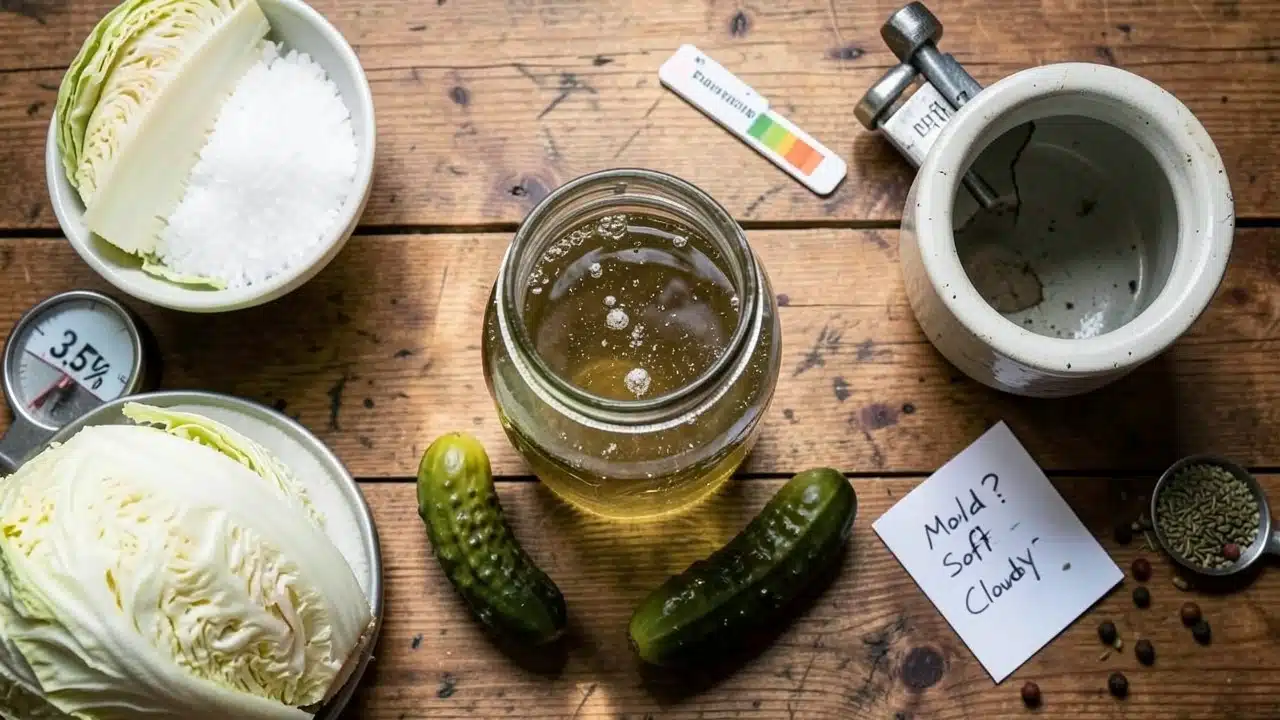
Even with a good guide, sometimes things don’t go perfectly. Understanding common brine issues can help you fix them or prevent them in the future. The most frequent problems relate to salt concentration and brine coverage.
- Brine Too Salty: If your ferment tastes too salty, it’s usually because too much salt was used. This can inhibit beneficial bacteria and make the food unpalatable. For future batches, re-weigh your salt and vegetables to double-check your calculations. If it’s already fermented and too salty, you can sometimes rinse the food before serving or use it in cooked dishes where the saltiness can be balanced.
- Brine Not Salty Enough: This is a more serious issue as it can lead to spoilage. If you realize you used too little salt, you can try to make a fresh 2% brine (20g salt per 1000g water) and add enough to ensure everything is submerged. However, if the ferment has already developed off-smells or mold, it’s best to discard it.
- Not Enough Brine to Cover: This is very common, especially with sauerkraut. It means the vegetables are exposed to air, which can lead to mold. If this happens within the first few days, you can top it up with a 2% brine solution. Ensure all vegetables are pushed down below the brine level.
- Cloudy Brine: A slightly cloudy brine is normal and often a sign of healthy fermentation. However, if the brine becomes slimy or develops a foul odor, it might indicate spoilage. This is usually related to incorrect salt levels or contamination.
The key to troubleshooting is often going back to the basics of the Brine Ratio Guide: Pickles, Kraut, and Curtido Salt Percents.
Ensure your salt percentage is correct and that all vegetables remain submerged. Cleanliness of equipment is also paramount to prevent unwanted microbial growth.
Frequently Asked Questions Of Brine Ratio Guide: Pickles, Kraut, And Curtido Salt Percents
Question: What is the best salt percentage for fermented pickles?
Answer: For most fermented pickles, a salt percentage between 2% and 3% is ideal. A 2.5% brine is a great starting point.
Question: Can I use regular table salt for fermentation?
Answer: It’s best to avoid regular table salt. Use non-iodized salt like pickling salt, sea salt, or kosher salt to ensure proper fermentation and avoid off-flavors.
Question: My sauerkraut brine doesn’t cover the cabbage. What should I do?
Answer: If your sauerkraut isn’t producing enough brine, you can make a 2% brine (20g salt per 1000g water) and add enough to submerge the cabbage completely. Ensure all cabbage stays below the brine level.
Question: How important is the Brine Ratio Guide: Pickles, Kraut, and Curtido Salt Percents for beginners?
Answer: This guide is very important for beginners. It helps ensure safety and success by providing the correct salt levels needed for beneficial bacteria to thrive and prevent spoilage.
Question: What happens if I use too much salt in my ferment?
Answer: Using too much salt can inhibit the beneficial bacteria, slowing down or stopping the fermentation process. It can also make the fermented food taste unpleasantly salty.
Question: Does the type of vegetable affect the salt percentage needed?
Answer: Yes, slightly. Vegetables with higher water content, like cabbage, might ferment well with a slightly lower percentage (around 2%), while others like cucumbers might benefit from a bit more (up to 3%) to maintain crispness.
Question: Is it okay if my brine gets cloudy?
Answer: Yes, a cloudy brine is usually a good sign that fermentation is active. However, if it becomes slimy, develops a foul smell, or shows mold, it may indicate spoilage.
Final Thoughts
Following a reliable Brine Ratio Guide: Pickles, Kraut, and Curtido Salt Percents is the most important step for successful home fermentation. The FDA emphasizes that cleanliness of equipment is essential for safe home fermentation.
It ensures your food is safe, tastes great, and develops those wonderful tangy flavors. Use a scale for accuracy and always keep your ferments submerged.