
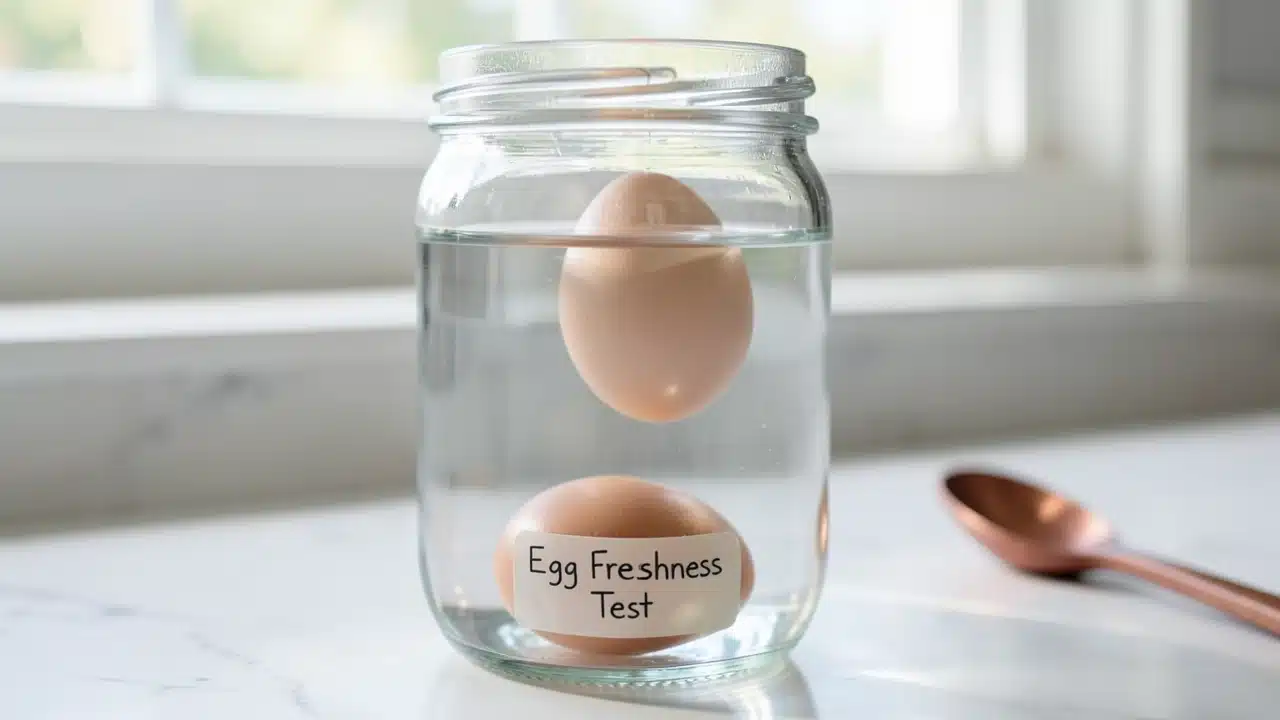
Egg Freshness Water Test: What The Float Means Scientifically
The egg freshness water test works because eggs lose moisture through shell pores as they age, enlarging the internal air cell.
Fresh eggs sink and lie flat; older eggs stand upright; floating eggs have a larger air pocket. Floating means poor quality, not automatic spoilage, so crack separately and check smell before use.
Knowing if your eggs are still good to eat is super important for your kitchen. You want to make sure you’re serving safe and tasty food.
That’s why understanding the Egg Freshness Water Test: What the Float Means Scientifically is so helpful.
It’s a simple trick that tells you a lot about your eggs without cracking them open. This easy test can save you from wasting food or, even worse, eating a bad egg. We’ll show you exactly what the float means and why it matters for your cooking.
Key Takeaways
- You’ll learn how to easily check egg freshness using just water.
- Understand the science behind why eggs float or sink in water.
- Discover how air cells in eggs change over time, affecting their buoyancy.
- Get practical tips on storing eggs to keep them fresh longer.
- Know when an egg is definitely too old to eat based on the float test.
- Gain confidence in choosing the freshest eggs for all your recipes.
Why Eggs Float or Sink: The Science Behind the Water Test
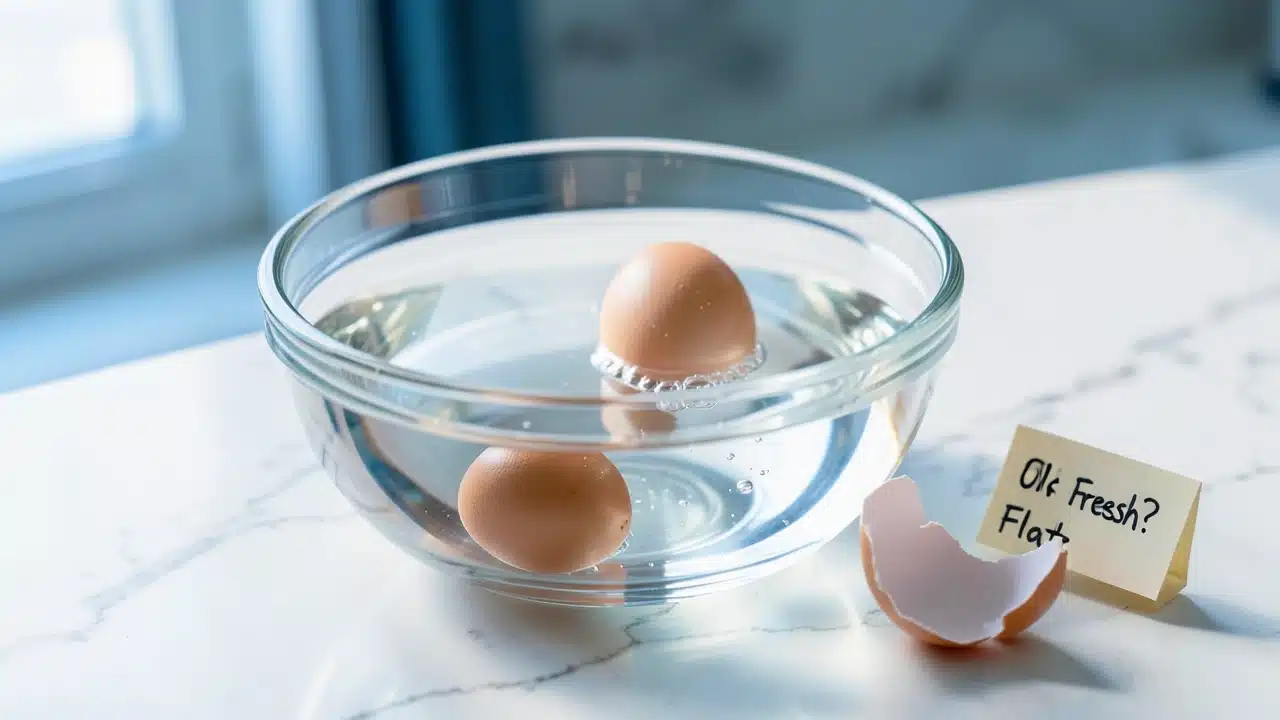
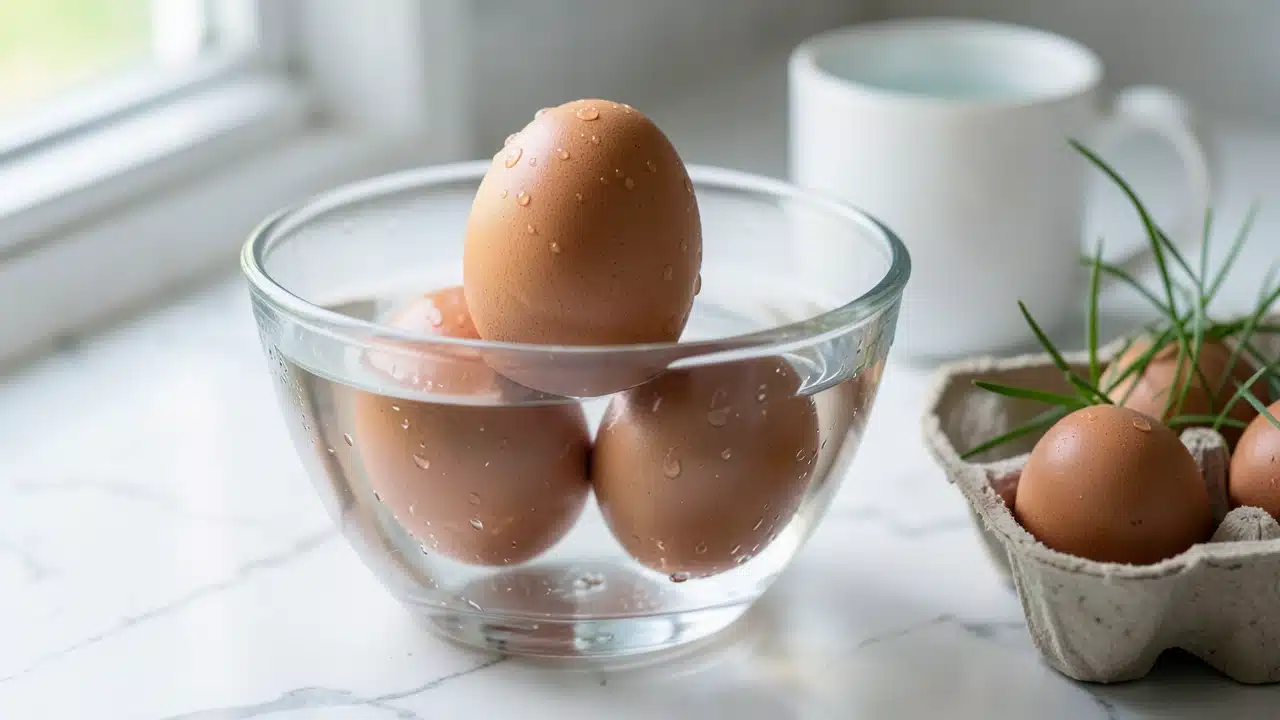
The simple water test for egg freshness relies on a basic scientific principle: buoyancy. When you place an egg in a bowl of water, its position tells you how fresh it is. This happens because eggs aren’t solid.
They have a shell, a yolk, and a white, but they also contain air. This air is key to understanding the Egg Freshness Water Test: What the Float Means Scientifically.
Eggs have tiny pores all over their shell. These pores allow gases to pass through. Over time, as an egg ages, moisture inside it evaporates through these pores.
At the same time, air from the outside can enter the egg through these same pores. This exchange creates and enlarges an air cell within the egg. The size of this air cell is what determines if the egg floats or sinks.
The Role of the Air Cell
Every egg has an air cell, usually found at the larger end. When an egg is very fresh, this air cell is very small. As the egg ages, the moisture inside the egg begins to escape.
Air also enters the egg through the porous shell. This process causes the air cell to grow larger. A larger air cell makes the egg lighter and more buoyant.
The Egg Freshness Water Test: What the Float Means Scientifically directly uses this growing air cell to gauge freshness. A bigger air cell means more air inside the egg. More air means the egg will be more likely to float.
It’s a direct indicator of how much air has replaced the moisture that has left the egg.
Interpreting the Float Test Results
The way an egg behaves in water gives clear signals about its age. It’s a visual and scientific way to check for spoilage. You don’t need special tools, just a glass of water and your eggs.
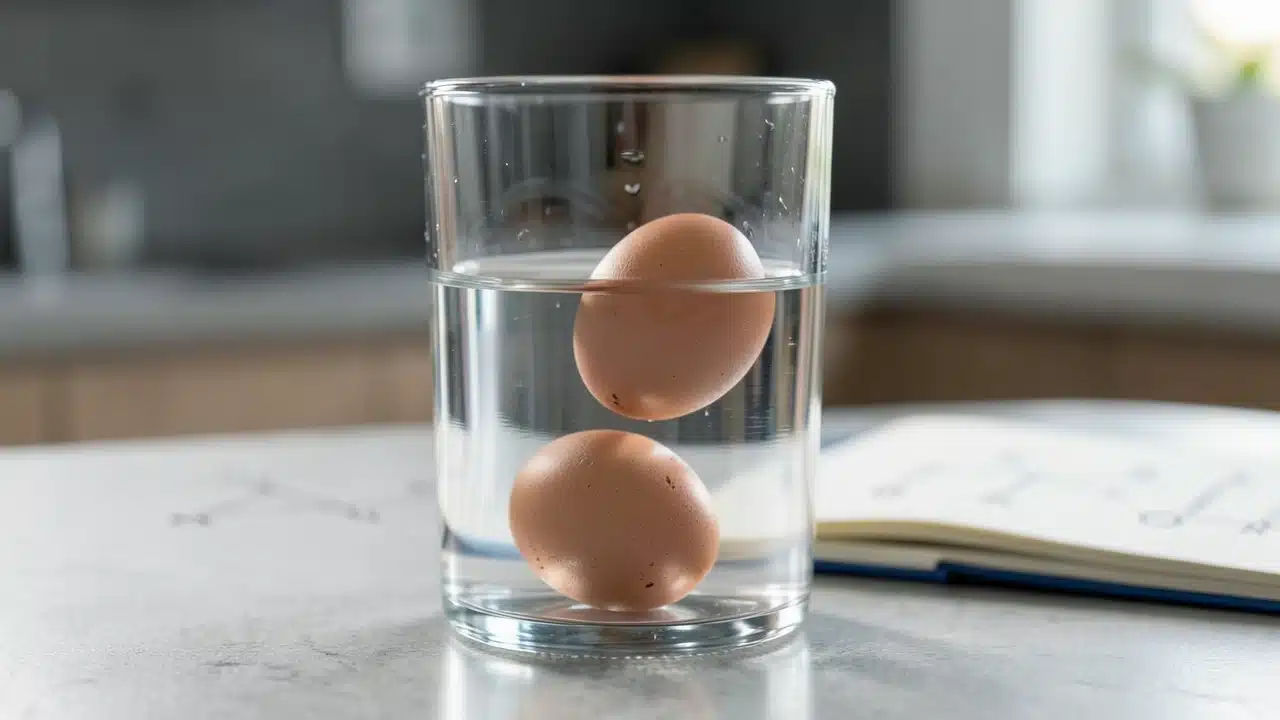
First, fill a bowl or glass with cool water. It should be deep enough to fully cover the egg. Second, gently place an egg into the water.
Observe how it settles at the bottom. Next, see if it stands up on its end, or if it floats. These different positions have specific meanings.
What It Means When an Egg Sinks
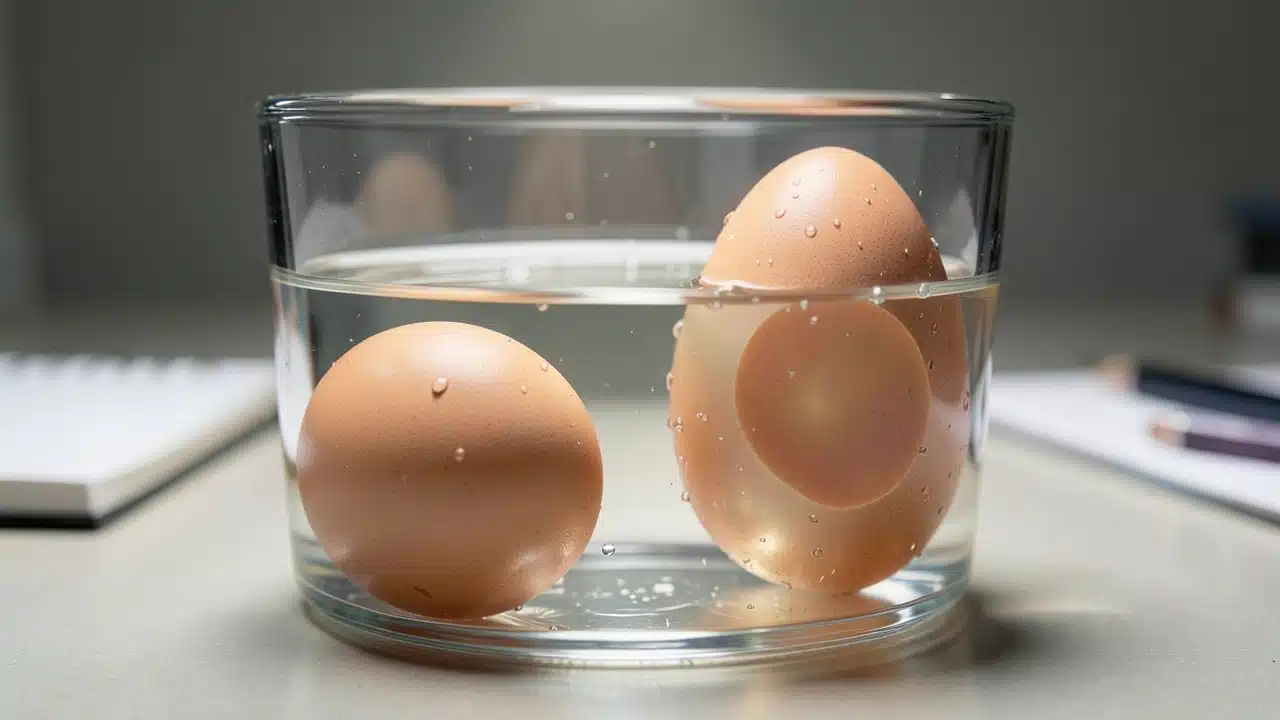
If an egg sinks quickly and lies flat on the bottom of the container, it is very fresh. This means the air cell inside is still small. The egg is dense and heavy for its size, so gravity pulls it down easily.
This is the ideal state for a fresh egg. You can use these eggs with confidence for any recipe.
A sinking egg is a good sign. It indicates that the egg has lost very little moisture. The internal structure is still tight and compact.
For cooking and baking, these eggs will perform as expected. The Egg Freshness Water Test: What the Float Means Scientifically confirms this freshness.
What It Means When an Egg Stands Upright
If an egg sinks but then stands up on its end at the bottom, it’s still good to eat, but it’s not as fresh as one lying flat. This means the air cell has grown a bit larger. The egg has started to lose some of its moisture.
It’s older than a brand-new egg but still perfectly fine for consumption.
Eggs that stand up are great for hard-boiling. The increased air cell can make them easier to peel. The Egg Freshness Water Test: What the Float Means Scientifically shows this intermediate stage of aging.
You can still use them in recipes where the egg is fully cooked.
What It Means When an Egg Floats
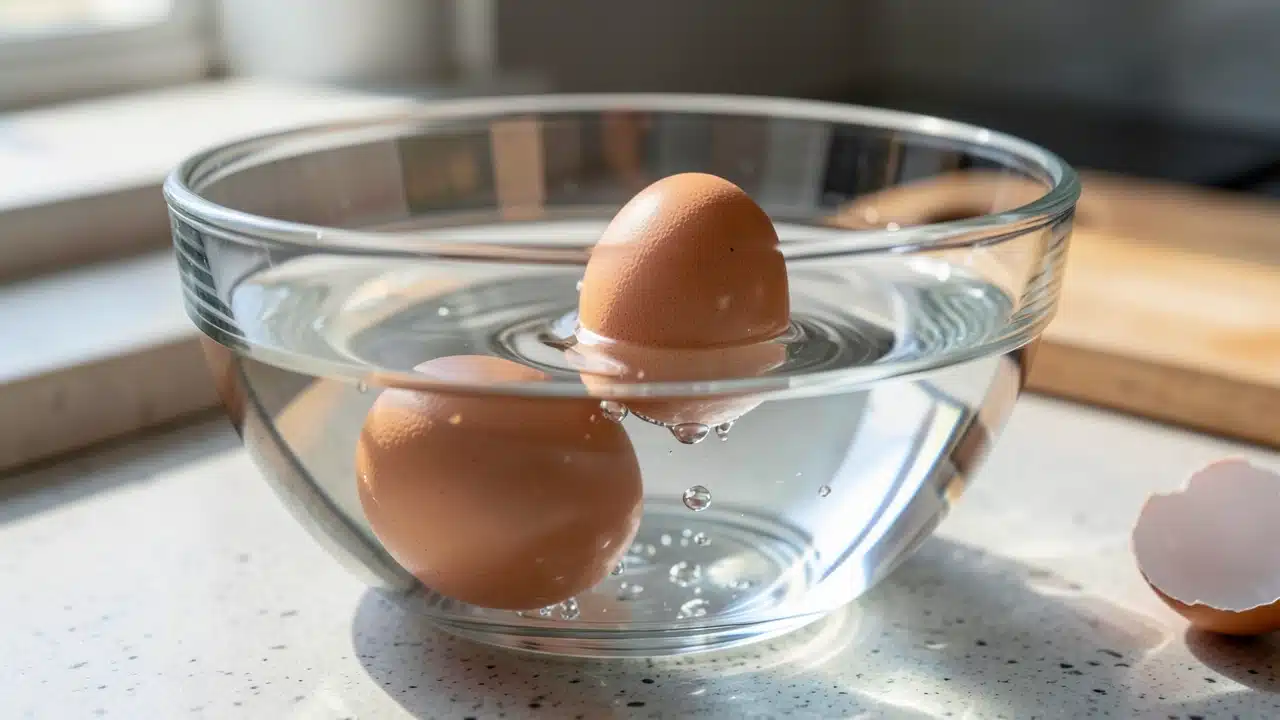
If an egg floats to the surface of the water, it is old and likely spoiled. This indicates that a significant amount of moisture has evaporated from the egg. The air cell has become very large.
This large air pocket makes the egg much more buoyant, causing it to float. An egg that floats should be discarded.
There’s a scientific reason for this float. The large air cell creates enough lift to overcome the egg’s weight in water. The Egg Freshness Water Test: What the Float Means Scientifically clearly flags these older eggs for disposal.
It’s a safety measure to prevent consumption of potentially harmful food.
Factors Affecting Egg Freshness and Floating
Several things influence how quickly an egg ages and how it performs in the water test. Understanding these factors helps you manage your egg supply better.
Shell Porosity
The shell of an egg is not solid. It has thousands of tiny pores. The size and number of these pores can vary between eggs.
Eggs with more porous shells will lose moisture and gain air faster. This means they will age more quickly and are more likely to float sooner.
Different breeds of chickens can also lay eggs with slightly different shell structures. This can lead to variations in how quickly eggs age.
The Egg Freshness Water Test: What the Float Means Scientifically accounts for these natural differences by looking at the resulting air cell size.
Storage Conditions
How you store your eggs makes a big difference. Keeping eggs in a cool, consistent temperature environment slows down the evaporation of moisture. This means the air cell will grow more slowly, and the egg will stay fresher for longer.Storing eggs in the refrigerator is crucial for maintaining their freshness.
The best place to store eggs is in their original carton. This helps protect them and prevents them from absorbing odors from other foods. The carton also slows down moisture loss.
Proper storage ensures that your Egg Freshness Water Test: What the Float Means Scientifically results are accurate indicators of age, not just poor storage.
Age of the Egg
Naturally, the older an egg gets, the more moisture it loses and the larger its air cell becomes. A freshly laid egg will sink flat. An egg that is a week or two old might stand up.
An egg that is several weeks old is more likely to float. The water test is a direct measurement of this aging process.
It’s important to remember that the float test is a guide. While it’s very reliable, other factors can sometimes play a small role. However, for most home cooks, it’s an excellent tool.
The Egg Freshness Water Test: What the Float Means Scientifically is a practical application of physics.
Beyond the Float Test: Other Ways to Check Egg Freshness
While the water test is excellent, there are other ways to be sure about your eggs. Sometimes, you might want a second opinion before cracking them open.
The Sniff Test
A spoiled egg will often have a very distinct, unpleasant sulfurous smell. This smell is due to the breakdown of proteins within the egg. If you crack an egg and it smells bad, it’s definitely spoiled, regardless of how it performed in the water test.
This is a crucial final check.
The smell is caused by gases produced as the egg deteriorates. These gases are strong and unmistakable.
The Egg Freshness Water Test: What the Float Means Scientifically is about buoyancy, but the sniff test is about chemical decomposition.
Visual Inspection After Cracking
Once you crack an egg into a bowl, you can also check its appearance. A fresh egg will have a bright yellow or orange yolk that stands up in the center. The egg white will be thick and hold its shape around the yolk.
As an egg ages, the yolk will become flatter and more fragile.
The egg white will also spread out more and become thinner. If the yolk breaks easily or the white looks watery and spreads thinly, the egg is older. If there are any pink or green discolorations in the white or yolk, the egg is spoiled and should be thrown away.
This visual check complements the Egg Freshness Water Test: What the Float Means Scientifically.
How to Store Eggs for Maximum Freshness
Proper storage is key to keeping eggs fresh and ensuring they pass the water test for as long as possible. Simple steps can extend their usability significantly.
Keep Them in the Carton
Always store eggs in their original carton. The carton protects the eggs from damage. It also helps slow down moisture loss through the shell.
This is more effective than storing them loosely in the egg tray of your refrigerator door, which can expose them to temperature fluctuations.
The carton acts as a barrier. It reduces air circulation around the eggs. This helps maintain the humidity around the shells.
The Egg Freshness Water Test: What the Float Means Scientifically will give more reliable results if eggs are stored properly.
Store Them Pointy-End Down
When you place the carton in the refrigerator, orient it so the eggs are stored with the pointy end facing downwards.
The air cell is located at the larger, blunt end of the egg. Storing them this way keeps the air cell at the top.
This helps keep the yolk centered and away from the air cell, which can help maintain freshness.
This simple positioning can help prevent the yolk from breaking easily. It also helps keep the egg’s internal structure more stable. It’s a small detail that can contribute to longer shelf life.
The Egg Freshness Water Test: What the Float Means Scientifically is a test of time and storage.
Maintain a Consistent Cool Temperature
Refrigeration is essential for slowing down the aging process of eggs. Aim to keep your refrigerator at a consistent temperature between 35°F and 40°F (1.7°C to 4.4°C).
Avoid storing eggs in the refrigerator door, where temperatures can fluctuate more due to frequent opening and closing.
A stable, cool environment is best. This minimizes the rate at which moisture evaporates. It also slows down any bacterial growth that could occur.
The benefits of proper storage are clear for anyone using the Egg Freshness Water Test: What the Float Means Scientifically.
The Science of the Air Cell Explained Further
The air cell is more than just a pocket of air; it’s a dynamic part of the egg. Its formation and growth are directly tied to the egg’s environment and age.
How the Air Cell Forms
When an egg is laid, the contents are warm. As it cools, the contents contract. This contraction creates a vacuum.
This vacuum pulls air in through the pores in the shell. This initial air pocket is usually small and located at the larger end of the egg. It’s a normal part of the egg’s structure.
Over time, moisture within the egg also evaporates. This evaporation further increases the volume of the air cell. The Egg Freshness Water Test: What the Float Means Scientifically is a direct observation of this expanding air cell. The egg freshness test method visually demonstrates how the air cell expands as the egg ages.
Why a Larger Air Cell Means More Buoyancy
Buoyancy is the upward force exerted by a fluid that opposes the weight of an immersed object. In the case of an egg in water, the water exerts an upward force. The egg’s weight is the downward force due to gravity.
A fresh egg has a small air cell, making it denser than the surrounding water. Its weight is greater than the buoyant force, so it sinks. As the air cell grows, the egg becomes less dense overall.
Eventually, the buoyant force can equal or exceed the egg’s weight, causing it to float. The Egg Freshness Water Test: What the Float Means Scientifically is a simple demonstration of Archimedes’ principle.
Frequently Asked Questions Of Egg Freshness Water Test: What The Float Means Scientifically
Question: Does a floating egg always mean it’s spoiled?
Answer: A floating egg usually means it’s very old and likely spoiled. It’s best to discard it to be safe, as the large air cell indicates significant moisture loss and potential deterioration.
Question: Can I still eat an egg that stands up in the water test?
Answer: Yes, an egg that stands up on its end is still good to eat. It’s just not as fresh as one that lies flat. It’s a sign the air cell has grown a bit.
Question: What is the scientific reason behind the Egg Freshness Water Test: What the Float Means Scientifically?
Answer: The test works because as eggs age, they lose moisture and air enters through pores, creating a larger air cell. A bigger air cell makes the egg more buoyant, causing it to float.
Question: How long do eggs typically stay fresh enough to sink?
Answer: Properly refrigerated eggs can stay fresh enough to sink for about 3 to 4 weeks after their packing date. However, this can vary based on storage conditions.
Question: Is the Egg Freshness Water Test: What the Float Means Scientifically accurate for all types of eggs?
Answer: Yes, the principle applies to all chicken eggs, whether they are white, brown, or from different breeds. The size of the air cell is the key factor.
Question: Should I crack a floating egg open to check before discarding?
Answer: It is generally not recommended to crack open a floating egg. If it floats, it has aged significantly and is very likely spoiled. Discarding it prevents potential contamination or unpleasant smells.
Final Thoughts
Using the Egg Freshness Water Test: What the Float Means Scientifically is a simple yet effective way to check if your eggs are good. For official recommendations on egg storage and freshness, refer to the USDA egg safety guidelines.
A sinking egg is fresh, one that stands is still okay, and a floating egg should be tossed. This easy method helps you use your eggs wisely and safely in the kitchen.