How Bread Machines Knead Dough Without Any Human Effort
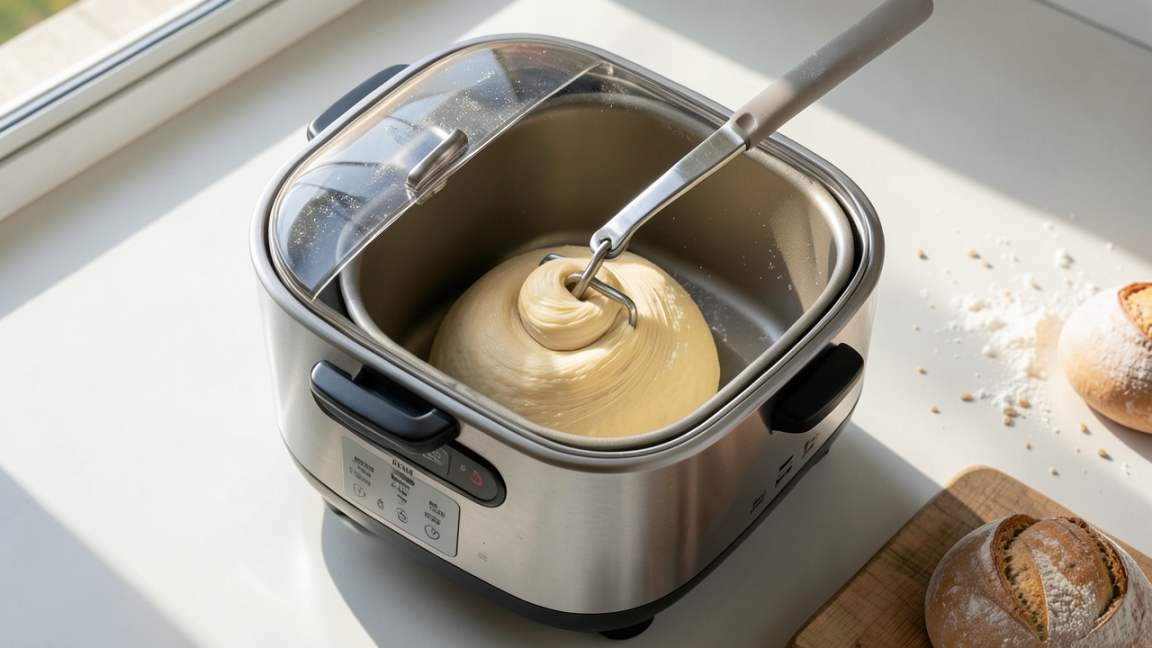
A bread machine kneads dough without human effort by using a small electric motor and gearbox to rotate a paddle inside a non-stick pan, applying consistent torque that folds and stretches the dough. This automated process builds gluten networks efficiently, replicating the stretch-and-fold technique, with programmable rest cycles allowing hydration and relaxation for improved gluten formation. Dual paddle systems offer enhanced kneading action, but even single-paddle machines achieve reliable, hands-free dough development.
A bread machine takes flour, water, yeast, and salt and turns them into a loaf automatically. The core process that replaces manual work is the kneading cycle.
Quick Verdict: In short, a bread machine kneads dough using a small electric motor that turns a built-in paddle inside a non-stick bread pan. The motor applies calculated torque to rotate the paddle, which folds, stretches, and works the dough. This automated cycle builds gluten networks efficiently without any human effort.
Today we will explain exactly How Bread Machines Knead Dough Without Any Human Effort. We will cover the mechanics of the motor, the design of the paddles, and the physics of gluten development inside that sealed metal box.
Key Takeaways
- A bread machine uses a small DC motor and a gearbox to rotate a paddle at 60 to 100 RPM, providing consistent kneading force.
- The paddle pushes and folds the dough against the walls of the pan, replicating the stretch-and-fold technique used by bakers.
- Programmable rest cycles allow the dough to hydrate and relax before kneading, which improves gluten formation without extra work.
- Dual paddle systems, found in premium machines like Zojirushi, provide more thorough kneading and reduce stress on the motor.
- Understanding hydration levels and paddle design helps you troubleshoot poor kneading results in any machine.
What Parts Make Up the Kneading System?
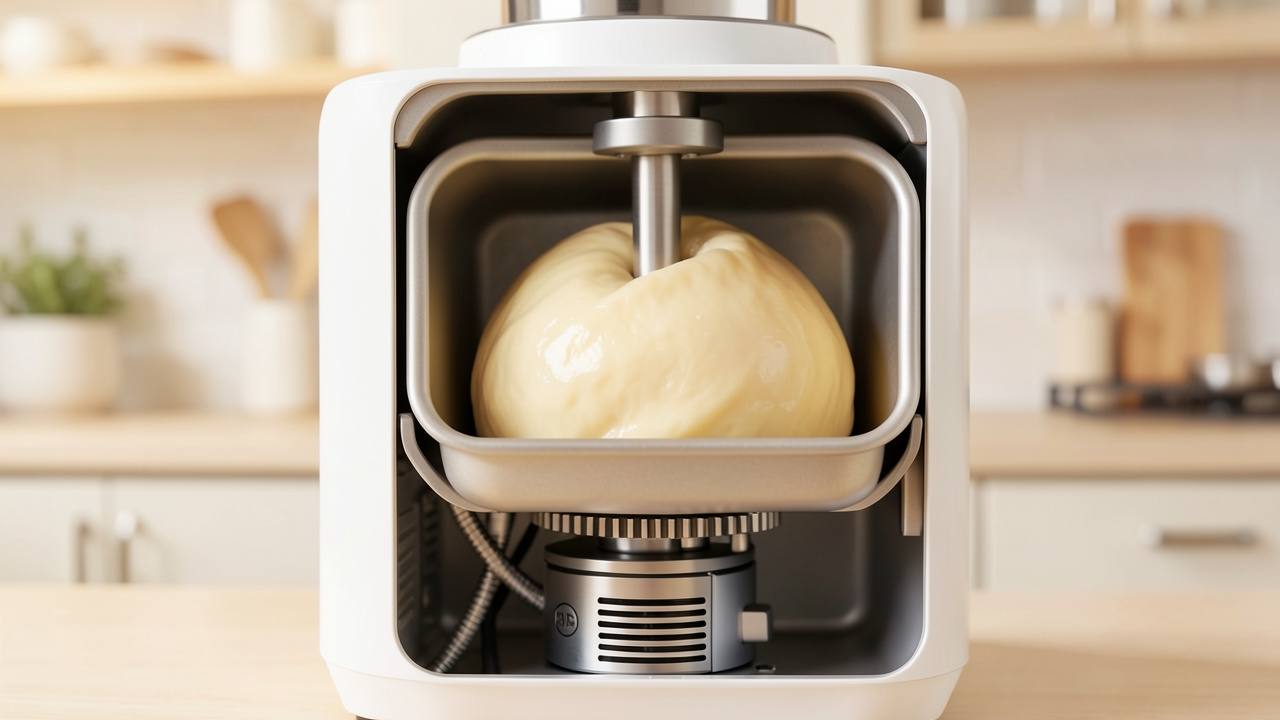
To understand the process, you need to know the four main components that work together. Each part plays a specific role in transforming a shaggy dough into a smooth elastic ball.
The Motor and Gearbox
The motor creates rotational force called torque. According to, most consumer bread machines use a small DC motor rated between 50 and 100 watts. This motor spins at a high speed, typically around 10,000 to 15,000 RPM.
A gearbox reduces this speed dramatically to the 60 to 100 RPM range needed for kneading. This gear reduction multiplies the torque, giving the machine enough power to knead dense whole wheat or rye doughs without stalling. Without the gearbox, the motor would spin too fast and overheat.
Important: The gearbox is the real hero. It allows a small motor to produce the same kneading force as a person pressing down with their body weight. This is How Bread Machines Knead Dough Without Any Human Effort.
The Bread Pan
The bread pan is a rectangular or square metal container with a non-stick coating. It sits directly above the motor and gearbox. The pan has a central post or a hole at the bottom where the driveshaft connects to the paddle.
Most pans are designed with straight sides and a narrow base. This shape forces the dough to move upward and fold over itself as the paddle spins. The paddle cannot simply spin in place because the walls of the pan create resistance.
The Kneading Paddle or Paddles
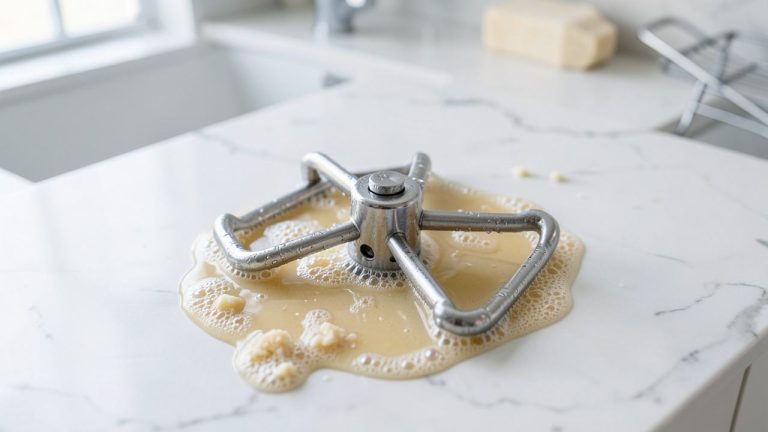
The paddle is the component that makes direct contact with the dough. It is usually made of hard plastic or metal with a non-stick coating. Standard machines use a single paddle shaped like a small hook or wing. Premium machines like those from Zojirushi use two paddles that rotate in opposite directions.
Some newer machines feature collapsible paddles. These paddles fold flat against the bottom of the pan during the baking phase. This technology prevents the large hole that traditional paddles leave in the bottom of the loaf.
How Does the Paddle Actually Knead the Dough?
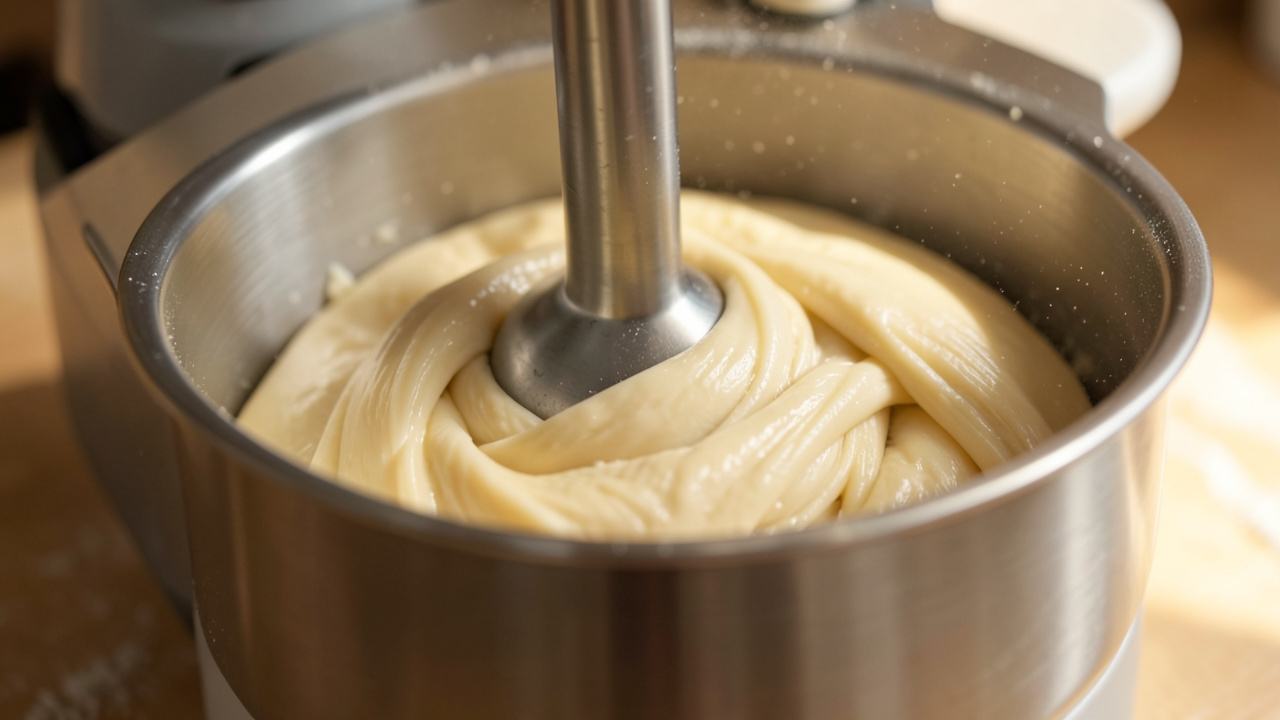
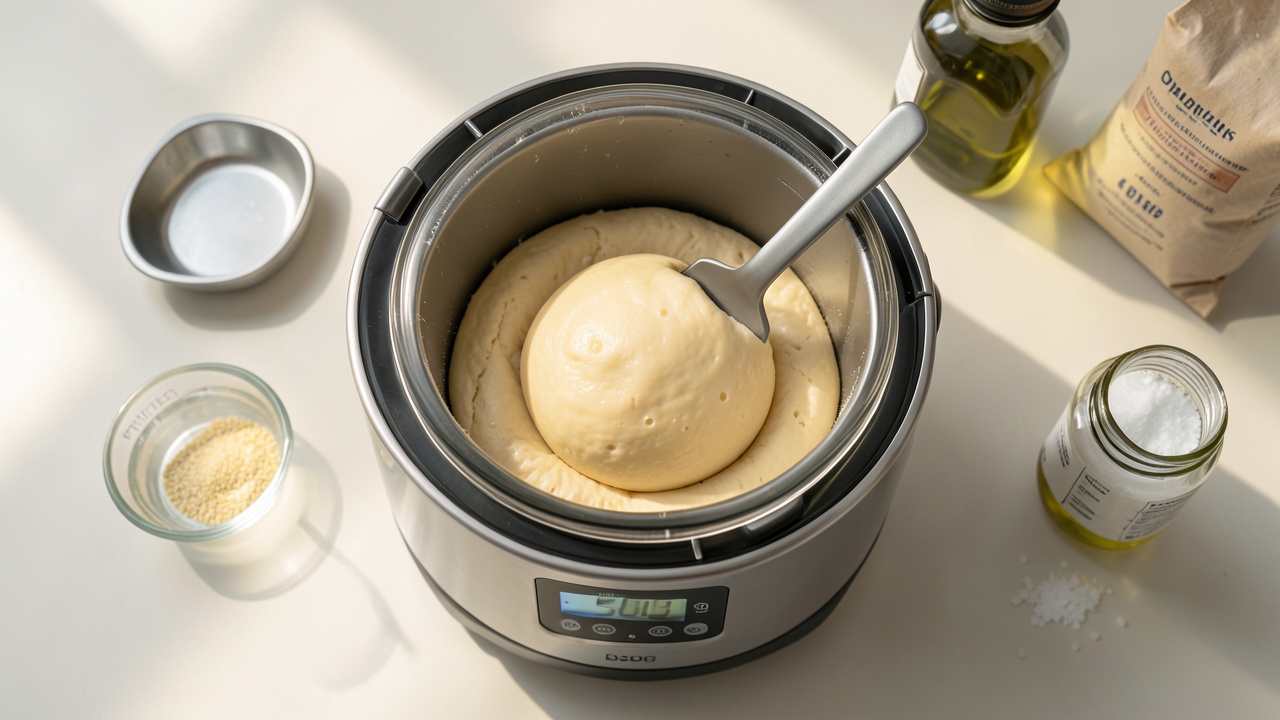
The paddle does not rotate freely in the center of the pan. It rotates along the bottom and scrapes the walls. As the motor turns the paddle, three distinct actions happen that mimic hand kneading.
- Folding: The paddle pushes the dough upward and against the side of the pan. This folds the dough over itself, trapping air and aligning gluten strands.
- Stretching: As the paddle continues its rotation, it pulls the dough along the curved bottom edge of the pan. This stretches the dough and creates tension in the gluten network.
- Compressing: The back side of the paddle presses the dough against the pan wall. This compression forces out air pockets and creates a uniform texture.
The entire process repeats every second. After about 10 to 15 minutes of continuous cycling, the dough transitions from a sticky, shaggy mass into a smooth, elastic ball.
Single Paddle vs Dual Paddle Systems
Not all bread machines knead the same way. The number of paddles and their design significantly affect the final dough quality. Here is a comparison of the two main systems.
| Feature | Single Paddle | Dual Paddle |
|---|---|---|
| Kneading Efficiency | Good for basic loaves (up to 2 lbs) | Excellent for large or dense loaves (up to 2.5 lbs) |
| Motor Stress | Higher stress as all work is on one shaft | Lower stress as work is distributed |
| Hole in Bread | Leaves one large hole at the bottom | Leaves two smaller holes |
| Common Brands | Cuisinart, Oster, Hamilton Beach | Zojirushi, Panasonic |
Dual paddle systems provide a more even kneading action. The two paddles work together to pull the dough in multiple directions at the same time. This reduces the time needed for complete gluten development and leads to a finer crumb structure.
The Science of Gluten Development Without Human Intervention
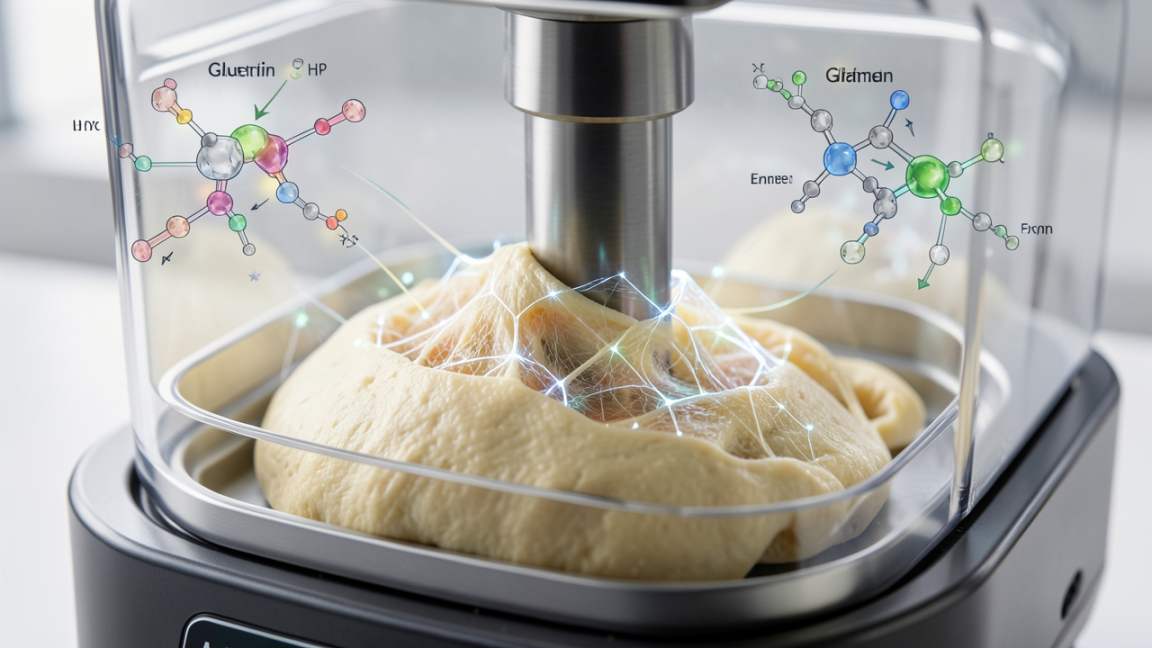
Gluten is the network of protein bonds that gives bread its structure and chewiness. According to, two proteins called glutenin and gliadin make up about 80 percent of the protein in wheat flour. When water is added, these proteins combine to form gluten.
Kneading accelerates this process by aligning the protein strands into a strong network. In a bread machine, the paddle does this alignment automatically. The machine also controls the environment to optimize gluten formation.
Temperature Control
The ideal dough temperature during kneading is between 78 and 82 degrees Fahrenheit. Most bread machines have a heating element inside the lid or at the bottom of the pan. This element maintains a consistent temperature throughout the kneading cycle.
Hand kneading cannot maintain this precise temperature range. Friction from manual kneading often raises the dough temperature above 85 degrees, which can slow fermentation and produce a denser loaf.
Rest and Autolyse Cycles
Many modern bread machines include a programmed rest period before active kneading begins. During this rest, the flour fully absorbs the water. This step is called autolyse. It allows the gluten to start forming naturally without mechanical force.
According to baking science from, a 10 to 20 minute rest reduces the total kneading time needed by up to 30 percent. The bread machine manages this timing perfectly every time.
Tip: If your bread machine has a “Dough” or “Manual” cycle, let the dough rest for 15 minutes after the initial mix. You can open the lid, scrape down the sides, and let the timer run. Your machine will handle the rest.
Why Bread Machines Knead Differently Than Hand Kneading
Hand kneading requires you to push, fold, and turn the dough repeatedly. A bread machine uses a completely different mechanical action. Here is a direct comparison of the two methods.
| Aspect | Hand Kneading | Bread Machine |
|---|---|---|
| Action | Push, fold, and turn on a flat surface | Rotating paddle inside a confined pan |
| Shear Force | High shear from pressing into the table | Moderate shear from paddle rotation |
| Oxidation | More exposure to air | Less exposure, inside a closed pan |
| Temperature Control | Hard to manage, relies on air temp | Heated elements maintain 78-82F |
| Time | 8 to 12 minutes of active work | 10 to 20 minutes completely automated |
The lack of oxidation in a bread machine is an advantage. Less oxygen exposure preserves the color and flavor of the flour. Many home bakers find that machine-kneaded dough produces a sweeter, more tender crumb compared to aggressively hand-kneaded dough.
What Factors Affect Kneading Performance?
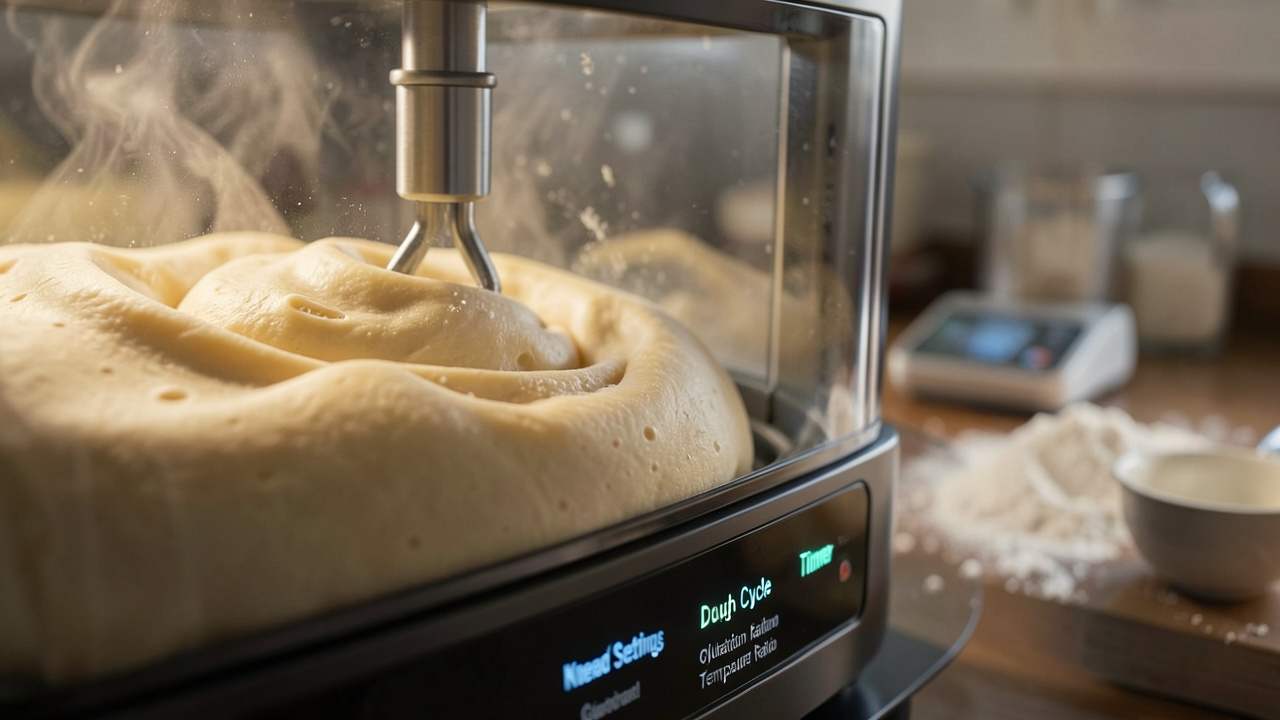
Even with a fully automatic machine, the final result depends on a few variables that you control. Understanding these factors helps you get the best possible knead every time.
- Hydration Level: Drier doughs (under 60 percent hydration) put more strain on the motor. The paddle may struggle to form a cohesive ball. Higher hydration doughs (65 to 70 percent) knead more easily but may take longer to come together.
- Flour Type: Whole wheat flour contains more fiber and bran, which absorb more water and create a heavier dough. Most machines need a dedicated whole wheat cycle with an extended kneading time and longer rest.
- Paddle Condition: Over time, the non-stick coating on the paddle can wear off. This allows the paddle to scrape the bottom of the pan and create black flecks in the dough. Replace worn paddles immediately.
- Pan Position: The bread pan must snap securely into place. If it is not fully seated, the paddle may not engage the driveshaft properly, resulting in a stalled kneading cycle.
- Altitude: At high altitudes (above 3000 feet), dough rises faster and requires different kneading times. Some machines have an altitude setting that adjusts the cycle length.
Warning: Do not exceed the maximum flour capacity of your machine. Overfilling the pan prevents the paddle from moving the dough effectively. This can cause the motor to overheat and burn out. Check your manual for weight limits.
Common Myths vs Facts About Bread Machine Kneading
There are several misconceptions about how bread machines handle the dough. Here are the most common myths and the facts behind them.
Myth 1: Bread machines crush the yeast during kneading
Many people think the paddle damages the yeast cells. In reality, the yeast granules dissolve quickly in the liquid. The kneading action distributes the yeast throughout the dough without crushing individual cells.
Myth 2: You cannot use fresh herbs or whole grains
Modern machines handle add-ins very well. Most machines have a signal that tells you when to add nuts, seeds, or herbs. The gentle folding action of the paddle incorporates these ingredients without breaking them.
Myth 3: The paddle kneading creates a rubbery texture
Over-kneading can make dough rubbery, but bread machines have optimized cycle times. According to, their machines use sensors to detect dough consistency and adjust the kneading time. This prevents overworking the gluten.
How to Get the Best Results from Your Machine
How Bread Machines Knead Dough Without Any Human Effort is impressive, but you still need to set the machine up for success. Follow these practical tips to ensure a perfect loaf every time.
- Weigh your ingredients. Volume measurements for flour are wildly inaccurate. A kitchen scale costs very little and guarantees the correct hydration ratio. Use grams for precision.
- Add liquids first. Pour water, milk, or eggs into the pan before adding the flour. This creates a slurry that protects the yeast from direct contact with the salt and fat.
- Cut fat into small cubes. Butter or shortening should be cut into small pieces before adding. This helps the paddle distribute the fat evenly during the initial mix.
- Check the dough ball after 10 minutes. Open the lid and look at the dough. It should form a smooth, round ball that cleans the sides of the pan. If it is too dry, add water one teaspoon at a time. If it is too sticky, add flour one tablespoon at a time.
- Use cool water for whole wheat cycles. Whole wheat cycles are longer and generate more friction heat. Starting with cool water (60 to 65F) prevents the dough from overheating during the extended kneading time.
Common Kneading Problems and Solutions
Even with a fully automatic machine, sometimes the kneading cycle does not go as expected. Here is a troubleshooting table for the most common problems.
| Problem | Cause | Solution |
|---|---|---|
| Dough does not form a ball | Too much or too little liquid | Add 1 tbsp liquid or flour mid-cycle |
| Motor sounds strained | Dough is too dry or too heavy | Add water slowly, reduce flour next time |
| Paddle sticks to bread | Standard paddle design | Use a collapsible paddle or remove before bake |
| Dough rises but falls in middle | Over-kneading during second mix | Check if machine has a “light” crust setting |
Frequently Asked Questions
How does a bread machine know when the dough is kneaded enough?
Most machines use a timer-based system rather than a sensor. The manufacturer programs the cycle based on the total flour weight and dough type. High-end machines like the Panasonic SD-CG105 use a weight sensor to detect dough stiffness and adjust the cycle.
Can I open the lid while the machine is kneading?
Yes, you can open the lid during the kneading phase. Opening the lid lets you check the dough consistency and add more liquid or flour if necessary. However, opening the lid too often during the rise cycle can cause the dough to deflate.
Why does my machine leave a hole in the bottom of the bread?
The hole is caused by the kneading paddle staying in place during the baking cycle. As the bread bakes, it bakes around the paddle. Collapsible paddles solve this problem by folding flat after the kneading cycle ends.
How long does the kneading cycle last in a typical bread machine?
A standard white bread kneading cycle lasts between 10 and 15 minutes. Whole wheat or multigrain cycles are longer, usually 15 to 20 minutes, to ensure full gluten development in the heavier dough.
Can I use a bread machine to just knead dough without baking?
Yes, almost every bread machine has a “Dough Only” cycle. This cycle mixes and kneads the dough without baking it. You can then remove the dough, shape it, and bake it in a conventional oven. This is a popular method for pizza dough and dinner rolls.
Resources and Tools
- America’s Test Kitchen Bread Machine Review – Independent testing and ranking of popular bread machines.
- King Arthur Baking Bread Machine Guide – Tips for converting recipes and troubleshooting dough issues.
- Wikipedia Gluten Page – Technical explanation of glutenin, gliadin, and the science of dough.
- Zojirushi Official Site – Product specifications for dual-paddle and collapsible paddle bread machines.
Final Thoughts
Bread machines simplify the complex chemistry of baking through clever mechanical engineering. The paddle, motor, and gearbox work together to develop gluten without any strain on your end. Understanding How Bread Machines Knead Dough Without Any Human Effort lets you tweak recipes and troubleshoot problems with confidence.