Finding the Right Flour-to-Egg Ratio for Machine-Made Pasta
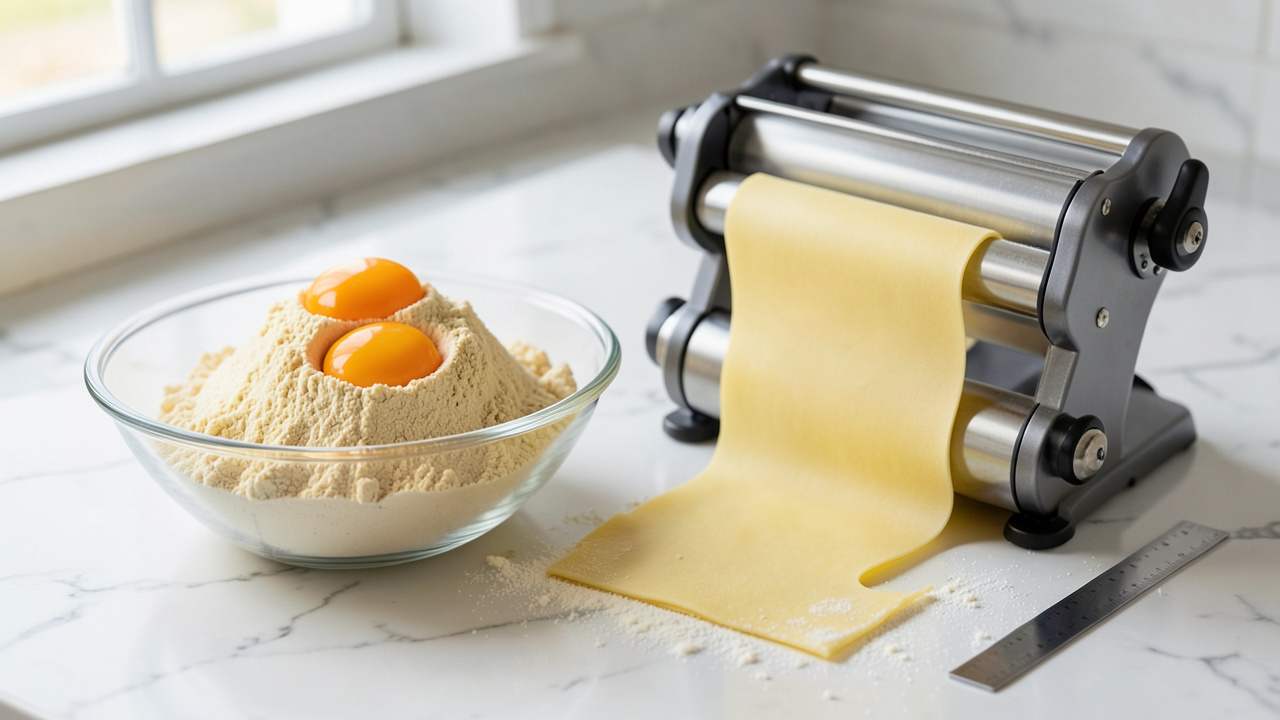
The optimal flour-to-egg ratio for machine-made pasta is 240 grams of flour to 150 grams of egg, yielding a 1.6:1 ratio by weight with roughly 40-45% hydration. This precise weight-based ratio ensures the dough is firm and pliable enough to pass through rollers without sticking or tearing. Resting the dough for at least 30 minutes after kneading relaxes the gluten for consistent results.
Machine-made pasta requires a precise flour-to-egg ratio for machine-made pasta. This ratio controls how the dough behaves in the rollers and how it tastes on the plate.
Quick Verdict: Simply put, the best starting ratio for machine-made pasta is 2 cups (240g) of flour to 3 large eggs (150g). This creates a firm, pliable dough that feeds smoothly through a roller without sticking or tearing. Weighing your ingredients eliminates guesswork and delivers consistent results every time. Adjust from this baseline based on your flour type and hydration needs.
Key Takeaways
- The ideal flour-to-egg ratio for machine-made pasta by weight is 1.6 parts flour to 1 part egg, typically 240g of flour to 150g of egg.
- Using a scale for this ratio is far more reliable than using volume measurements like cups, which can vary widely based on how you scoop the flour.
- A dough hydration of roughly 40-45 percent prevents the pasta from being too dry to laminate or too sticky to handle through the machine.
- Resting the dough for at least 30 minutes after kneading relaxes the gluten, resulting in smoother rolling and cleaner cuts.
- Adjusting the number of egg yolks versus whole eggs is a powerful tool for controlling tenderness and color without changing the total hydration.
What Is the Standard Flour-to-Egg Ratio for Pasta?
The standard ratio taught in most Italian cookbooks is 2 cups of flour to 3 large eggs. This flour-to-egg ratio for machine-made pasta works as a reliable starting point for most home cooks. According to, maintaining a hydration level around 42 percent is critical for dough that rolls through a machine without tearing.
The USDA reports that a single large egg weighs 50 grams without the shell. That means 3 large eggs give you 150 grams of liquid. For the flour, 2 cups of “00” flour typically weighs around 240 grams. This creates a simple weight ratio of 1.6:1.
| Ingredient | Volume | Weight (grams) | Baker’s Percentage |
|---|---|---|---|
| 00 Flour (Caputo, Antimo) | 2 cups | 240g | 100% |
| Large Eggs (whole) | 3 large | 150g | ~62.5% |
| Olive Oil (optional) | 1 tsp | 5g | ~2% |
Important: Weight measurements are always superior to volume for this ratio. A cup of sifted flour weighs less than a cup of packed flour. This variation can ruin your dough hydration. Use a digital scale set to grams.
How to Adjust the Ratio for Different Types of Pasta
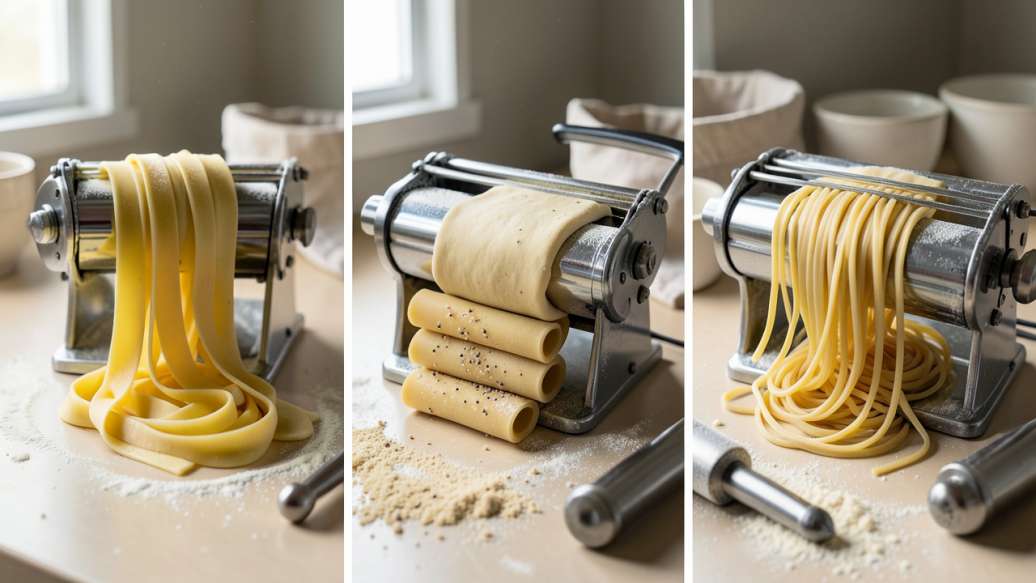
Not all pasta is the same. The standard 2:1 ratio works for classic egg tagliatelle, but other shapes and machines may require a different balance. Research from the University of Parma highlights that gluten development during lamination is more uniform in a stiffer dough, while extrusion machines often need a wetter dough.
100 Percent “00” Flour (Classic Egg Pasta)
This is the benchmark. Use 240g of “00” flour to 150g of whole egg. This yields a silky, tender sheet perfect for ravioli or fettuccine. The dough is dry enough to knead without sticking but moist enough to pass through the rollers easily.
Blend of “00” and Semolina
For a more robust pasta that holds up to hearty sauces, replace 50 percent of the “00” flour with semolina (semola rimacinata). Semolina absorbs less water than “00” flour. You must increase the egg or liquid slightly, up to 160g of egg for 240g of total flour. This creates a rough, sauce-gripping texture.
Extruded Pasta Machines (KitchenAid, Philips)
Extrusion machines push dough through a bronze die. They require a much stiffer dough. For machines like the, use semolina and water instead of eggs. A typical ratio is 200g of semolina to 80g of water. This dough should look like coarse, damp sand before it compresses and extrudes.
Adding Vegetable Purees (Spinach, Tomato)
Adding wet purees changes the total hydration. For spinach pasta, blanch the spinach, squeeze it dry completely, and puree it. Replace one whole egg with 50g of the spinach puree. For tomato pasta, use 40g of concentrated tomato paste and reduce the egg amount by one yolk. You are balancing the total liquid to keep the hydration near 42-45 percent.
| Pasta Type | Flour Ratio | Liquid Ratio | Hydration % |
|---|---|---|---|
| Classic Egg Tagliatelle | 100% 00 Flour (240g) | 3 Whole Eggs (150g) | 62.5% |
| Rustic Semolina Blend | 50/50 00 & Semolina (240g) | 3 Eggs + 1 Yolk (168g) | 70% |
| Extruded Semolina Pasta | 100% Semolina (200g) | Warm Water (80g) | 40% |
| Spinach Pasta | 100% 00 Flour (240g) | 2 Eggs + 50g Spinach Puree | ~63% |
How to Knead and Rest the Dough for the Machine
Getting the ratio right is step one. Properly mixing and resting that ratio is what makes the machine work for you instead of against you.
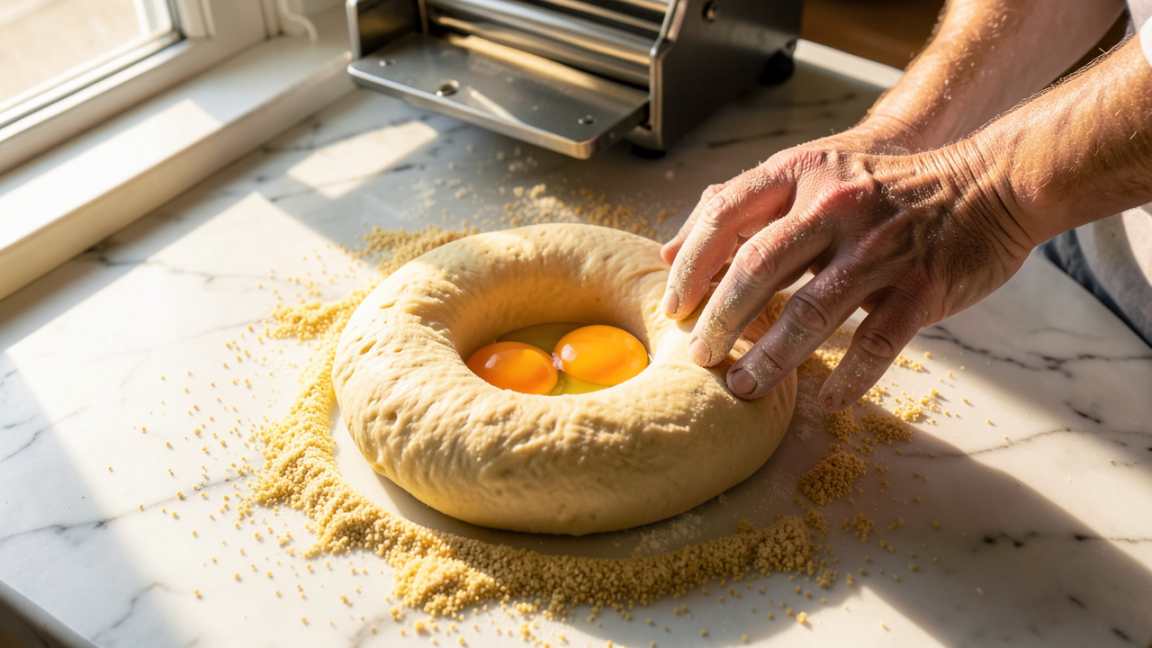
Step 1: Form a Well
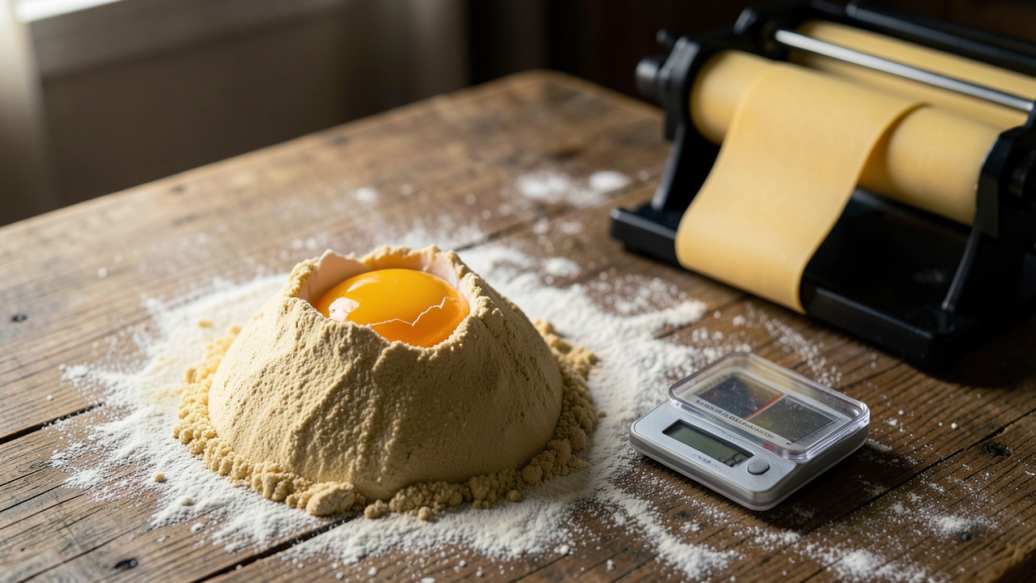
Pour the 240g of flour onto a clean work surface. Form a wide crater in the center. Crack the 3 large eggs into the middle. Beat the eggs gently with a fork, slowly incorporating the inner walls of the flour well.
Step 2: Mix with a Fork
Continue mixing with the fork until a shaggy, lumpy mass forms. Do not worry if it looks dry. This is normal. If the dough refuses to come together, add water one teaspoon at a time. According to, a dough that looks dry will often hydrate perfectly during kneading.
Step 3: Knead for 8 to 10 Minutes
Bring the shaggy mass together with your hands. Push the dough away from you with the heel of your hand. Fold it over and rotate it. Continue this motion for 8 to 10 minutes. The dough should transform from rough and cracked into a smooth, supple ball.
Step 4: Wrap and Rest
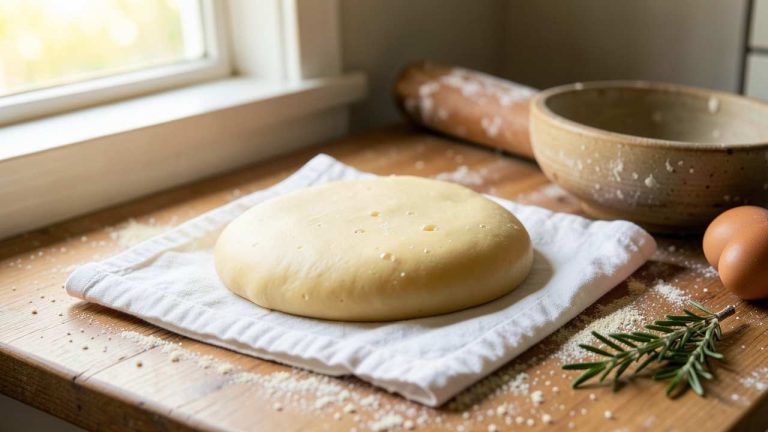
Wrap the dough tightly in plastic wrap. Let it rest at room temperature for at least 30 minutes, up to 2 hours. This step is non-negotiable. Resting relaxes the gluten strands. Without this rest, the dough will resist the rollers and snap back to its original shape.
Tip: You can make the dough up to 24 hours ahead. Store it in the refrigerator wrapped tightly. Let it sit at room temperature for 20 minutes before rolling. The gluten relaxes fully during this cold rest.
What the Right Ratio Is Not (Common Myths)
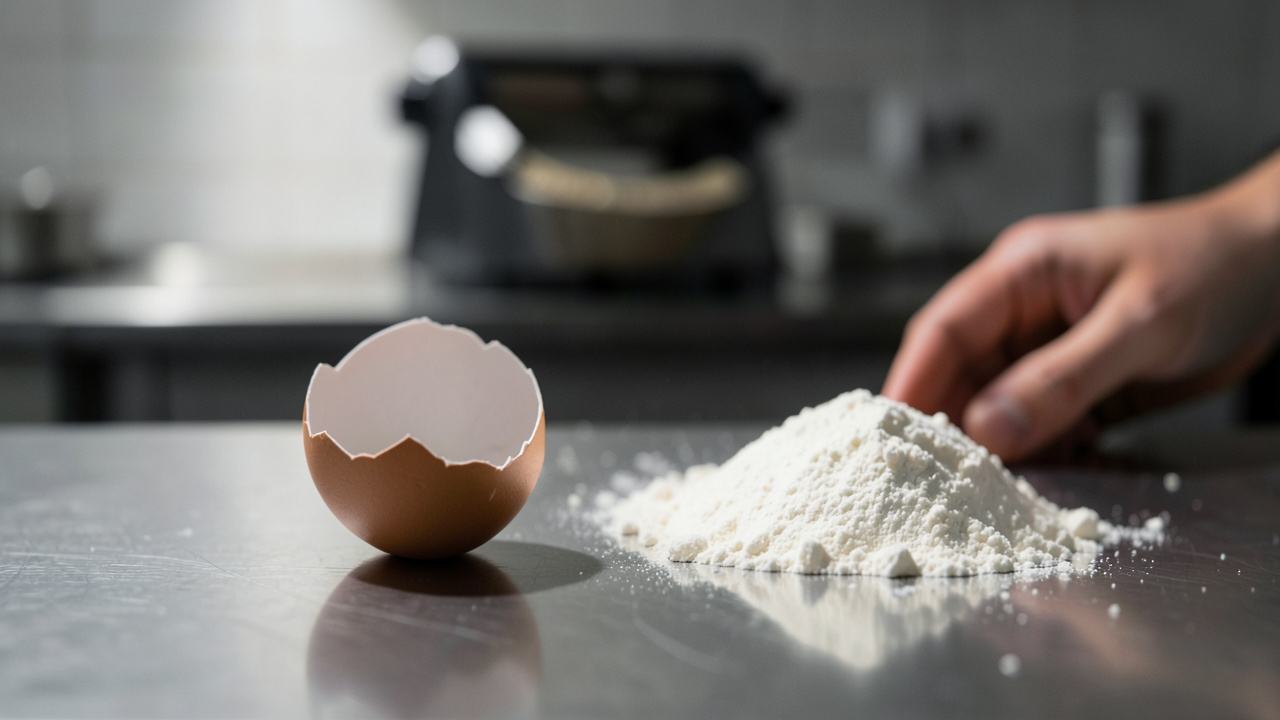
Many home cooks carry misconceptions about the flour-to-egg ratio for machine-made pasta. These myths lead to sticky dough, torn sheets, or tough noodles.
- Myth 1: More eggs always make better pasta. Adding an extra egg increases hydration. If the dough exceeds 65 percent hydration, it becomes sticky and impossible to run through a standard roller without tearing. Stick to the 62.5 percent baseline for “00” flour.
- Myth 2: You must use only egg yolks. Yolks add richness and color. But whites provide the necessary structure and water. An all-yolk dough is extremely fragile and hard to handle. Use at least 2 whole eggs per batch for proper gluten formation.
- Myth 3: A sticky dough is a ruined dough. Machine-sticky dough often just needs more kneading or a slightly lower hydration. A sticky dough can be saved by adding small amounts of flour during kneading. It is rarely ruined unless it completely loses its shape.
Common Problems and Solutions with Machine Pasta Dough
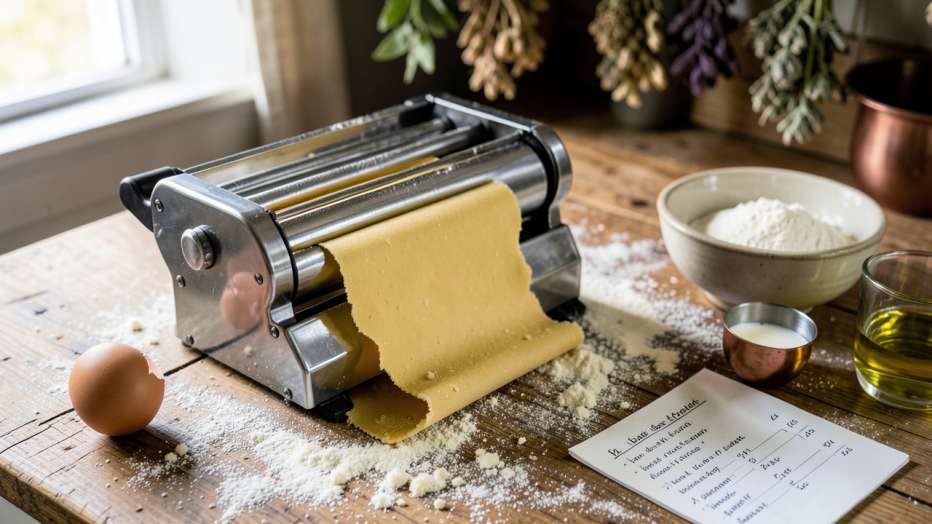
Even with the perfect ratio, things can go wrong. The table below addresses the most common issues machine users face.
| Problem | Cause | Solution |
|---|---|---|
| Dough cracks at edges | Dough is too dry or rested too long without wrapping | Add water 1 tsp at a time. Rest the dough again for 15 minutes. |
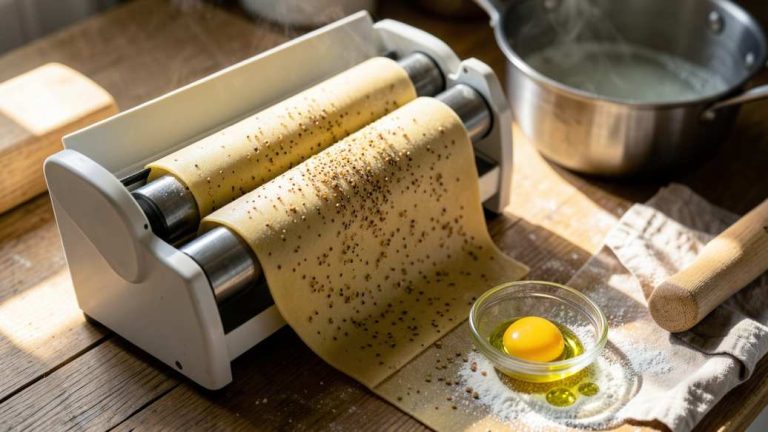
| Dough sticks to rollers | Hydration too high or humidity is high | Dust the sheet with “00” flour as it passes through. Start at a wider setting. |
| Dough shrinks back after rolling | Gluten is not relaxed. Dough rested too little. | Let the rolled sheet rest for 5 minutes before cutting. |
| Pasta tears when cutting | Dough is too thin or too wet | Stop rolling at setting 6 or 7. Ensure dough is well-floured before cutting. |
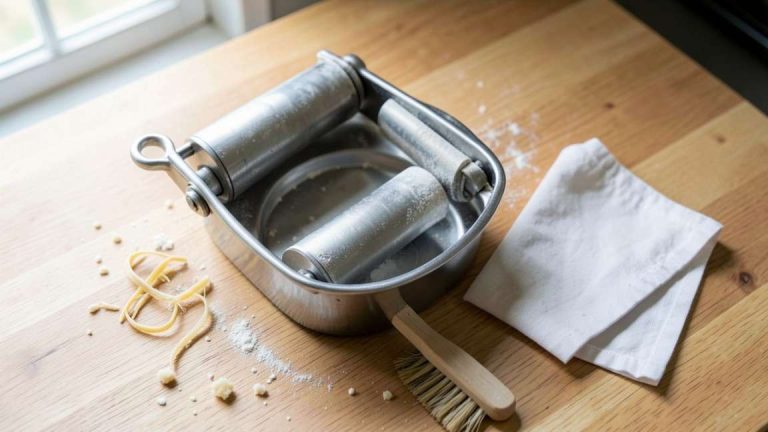
Warning: Do not force sticky dough through a pasta machine. It can clog the rollers and damage the gears. If the dough sticks heavily, roll it by hand or add more flour. Clean the rollers immediately if they become gummed up.
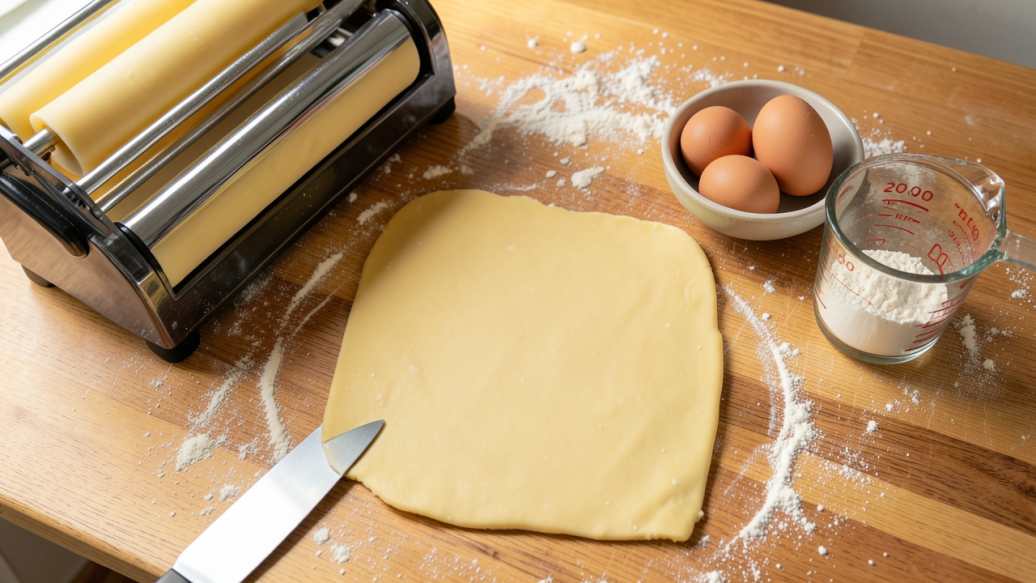
Pro Tips for Machine Success
These tips come from professional pasta makers and experienced home cooks who have tested the flour-to-egg ratio for machine-made pasta hundreds of times.
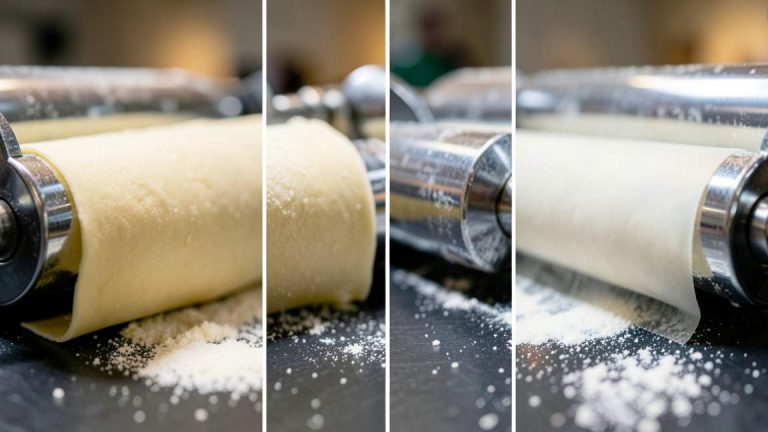
- Always dust the sheet with “00” flour as you feed it through the machine. This prevents sticking without changing the dough chemistry. Use a small brush to remove excess flour after the final pass.
- Use the lamination technique for flawless sheets. Fold the sheet into thirds after the first pass, rotate it 90 degrees, and feed it through again. This aligns the gluten strands and prevents holes.
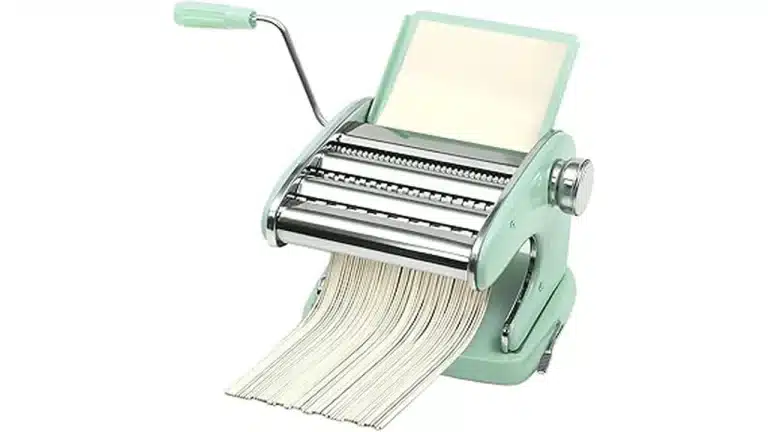
- Stop rolling at setting 6 or 7 on a standard Marcato Atlas. Setting 8 is often too thin and fragile for many sauces. Setting 5 is perfect for lasagna or pappardelle.
- Dry the pasta for 10 minutes before cooking if you just made it. A short rest helps the noodles hold their shape in boiling water and prevents them from turning mushy.
- Freeze your fresh pasta for longer storage. Freeze it flat on a baking sheet, then transfer it to a bag. You can cook it directly from frozen. Add 30 seconds to the cooking time.
Frequently Asked Questions
What is the best flour for a pasta machine?
Finely ground “00” flour is the best choice for most pasta machines. It produces a very smooth and elastic dough. A blend of 50 percent “00” and 50 percent semolina is better for heartier pasta shapes.
Can I use bread flour in my pasta machine?
Yes, you can use bread flour, but the dough will be much chewier. Bread flour has a higher protein content (around 12-13 percent). You may need to add an extra egg yolk to keep the dough tender.
Why is my pasta dough too dry and cracking?
This happens when the dough hydration is too low. The standard hydration for machine pasta is around 40-45 percent by weight. Add water a teaspoon at a time during kneading until the dough becomes smooth and pliable.
How do I adjust the ratio if I want to add spinach or tomato paste?
You must account for the moisture in the vegetable. For spinach, blanch it, squeeze it completely dry, and puree it. Replace one egg with 50g of puree. For tomato, use 40g of concentrated tomato paste and reduce the egg by one yolk.
Should my eggs be room temperature for pasta dough?
Yes. Room temperature eggs mix into the flour more evenly than cold eggs. This creates a more consistent dough. Take your eggs out of the refrigerator 30 minutes before you start making the pasta.
Final Thoughts
Mastering the flour-to-egg ratio gives you complete control over your homemade pasta. Start with the 1.6:1 weight ratio as your baseline. Then adjust based on your chosen flour and the dish you are making. Your machine will reward this precision with smooth, restaurant-quality pasta sheets every time.