How Extrusion Dies Shape So Many Different Pasta Varieties
Extrusion dies are precision-engineered metal plates with specifically shaped openings that force pasta dough through to create hundreds of distinct varieties, from spaghetti to fusilli. The die’s internal geometry—including hole shape, grooves, ridges, and rotating blades—determines the final pasta form, while material choices like bronze or Teflon coating affect surface texture and sauce adhesion. With over 600 pasta shapes produced globally, each requiring a custom die design, the die’s material and maintenance directly impact final product quality and cooking performance.
Pasta extrusion is the process that transforms a simple dough into hundreds of unique shapes using a machine called an extruder.
This article explains how extrusion dies – the metal plates with specially cut holes – create the wide variety of pasta you see on supermarket shelves.
Quick Verdict: Simply put, extrusion dies are precision-engineered metal plates that force pasta dough through specifically shaped openings to create different pasta varieties. The die’s internal geometry – including grooves, ridges, and cutting mechanisms – determines whether you get penne, fusilli, or spaghetti. Without these interchangeable dies, mass-produced pasta would be limited to only a few basic forms.
Key Takeaways
- Extrusion dies use a combination of hole shape, internal grooves, and rotating blades to form every pasta shape from spaghetti to rotini.
- Bronze dies produce a rough, porous surface that helps sauces cling better, while Teflon-coated dies create a smooth, glossy finish.
- According to the National Pasta Association, there are more than 600 distinct pasta shapes produced worldwide, each requiring a custom die design.
- Die material and maintenance directly affect pasta texture, cooking time, and sauce absorption rates.
- Modern extrusion technology allows manufacturers to quickly swap dies and produce dozens of shapes on a single production line.
How Extrusion Dies Work
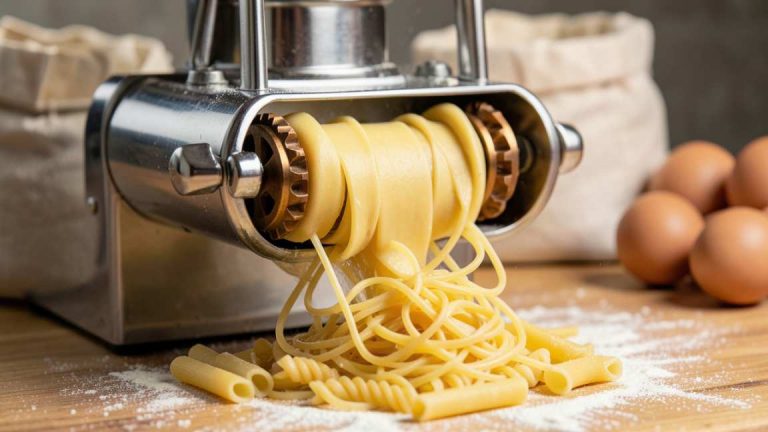
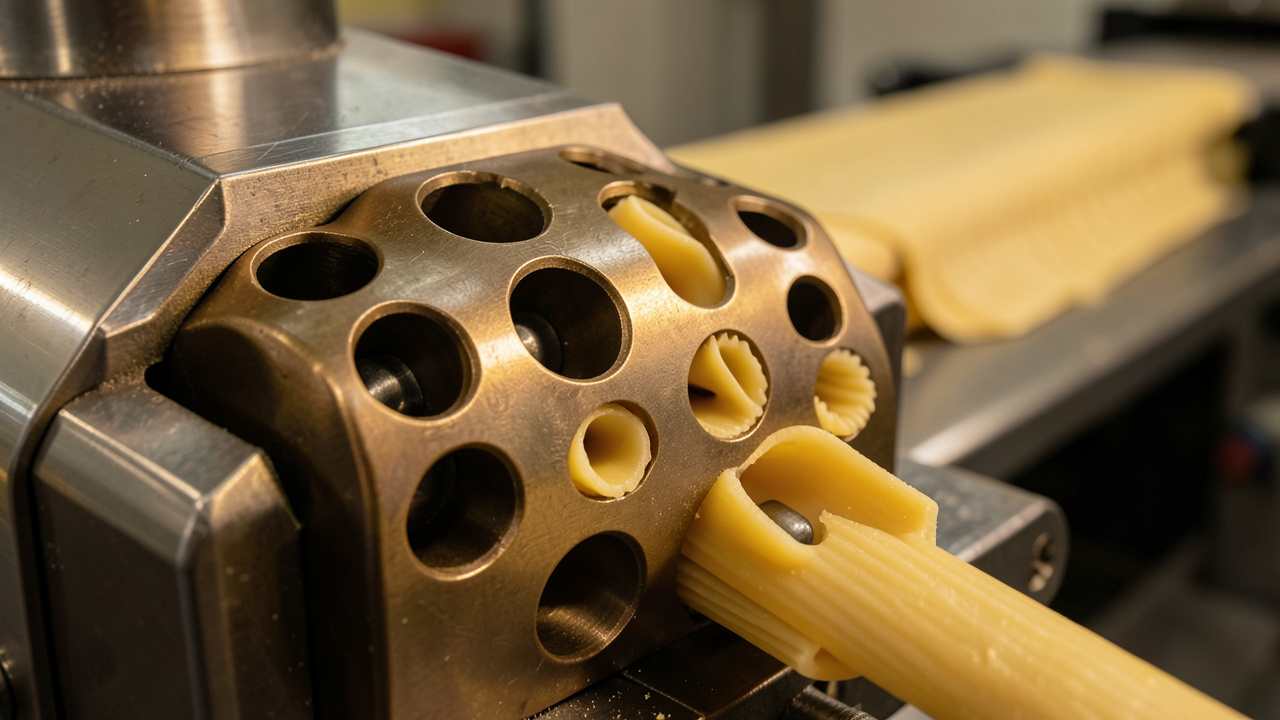
An extrusion die is essentially a metal plate with precisely cut openings. The dough – made from semolina flour and water – is pushed through these openings under high pressure. A rotating blade at the exit cuts the extruded dough into pieces.
The extrusion pressure during pasta making typically ranges from 80 to 120 bar, according to engineering guidelines from Bühler Group. This pressure forces the dough through the die openings at a consistent speed.
What makes a die create a specific shape? It depends on three factors: the shape of the opening, the internal grooves inside the opening, and the cutting mechanism.
Important: The dough’s moisture content also affects how it flows through the die. Too much moisture causes sticky pasta, while too little leads to cracking during drying. Manufacturers maintain a dough moisture level of about 30-32% for optimal extrusion.
The Three Key Elements of a Pasta Die
- Hole shape – The basic outline of the opening determines the pasta’s cross-section. Round holes give spaghetti or bucatini, while rectangular holes create lasagna sheets.
- Internal grooves and ridges – Grooves cut into the die wall create ridges on the pasta surface. For example, penne gets its diagonal ridges from grooves inside the tube-shaped die.
- Cutting blade – A rotating knife at the die face cuts the extruded dough at specific intervals. Faster cutting produces shorter pieces like macaroni, while slower cutting creates longer shapes like fettuccine.
The Role of Die Design in Pasta Shapes
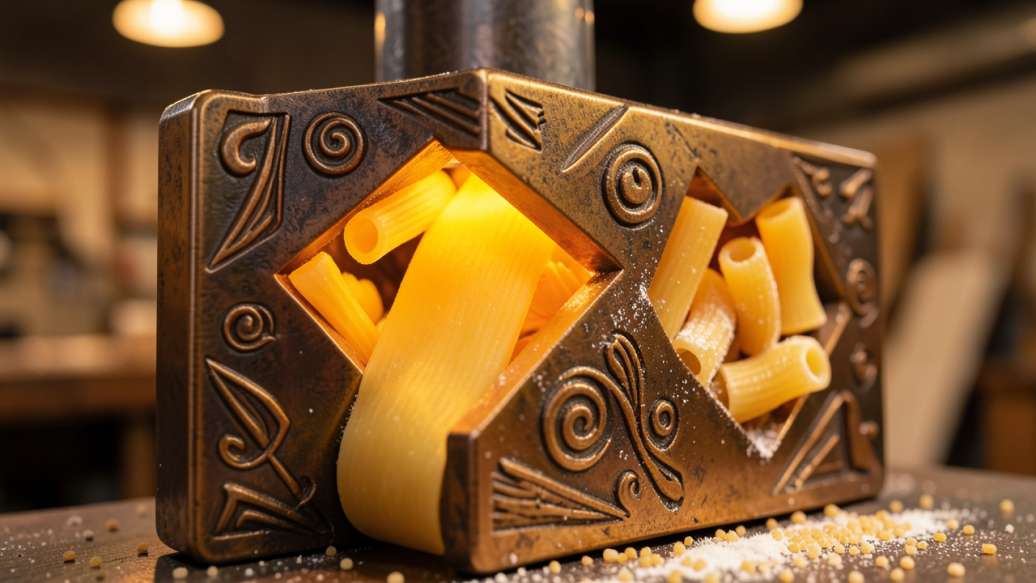
Each pasta shape requires a unique die. Designers start by drawing the desired shape’s cross-section and surface texture. Then they machine that design into a stainless steel or bronze plate.
Barilla, one of the largest pasta manufacturers, produces over 130 different pasta shapes using extrusion dies. That means Barilla has at least 130 distinct die designs in use. A study by the University of Gastronomic Sciences in Pollenzo found that bronze-drawn pasta absorbs up to 30% more sauce than Teflon-drawn pasta.
Complex shapes like fusilli or rotini require dies with spiral grooves. These grooves twist the pasta as it exits, creating the corkscrew effect. Shell-shaped pasta uses a curved die opening combined with a blade that cuts at an angle.
| Pasta Shape | Die Opening Type | Surface Feature | Cutting Method |
|---|---|---|---|
| Spaghetti | Round hole | None (smooth) | Continuous extrusion, cut after drying |
| Penne | Round tube with grooves | Diagonal ridges | Rotating blade at die face |
| Fusilli | Round hole with spiral grooves | Spiral twist | Rotating blade with timing |
| Conchiglie (shells) | Curved slit | Ridged outer surface | Angled blade cut |
| Lasagna | Rectangular slot | Smooth or ruffled edges | Continuous sheet, cut later |
Types of Extrusion Dies
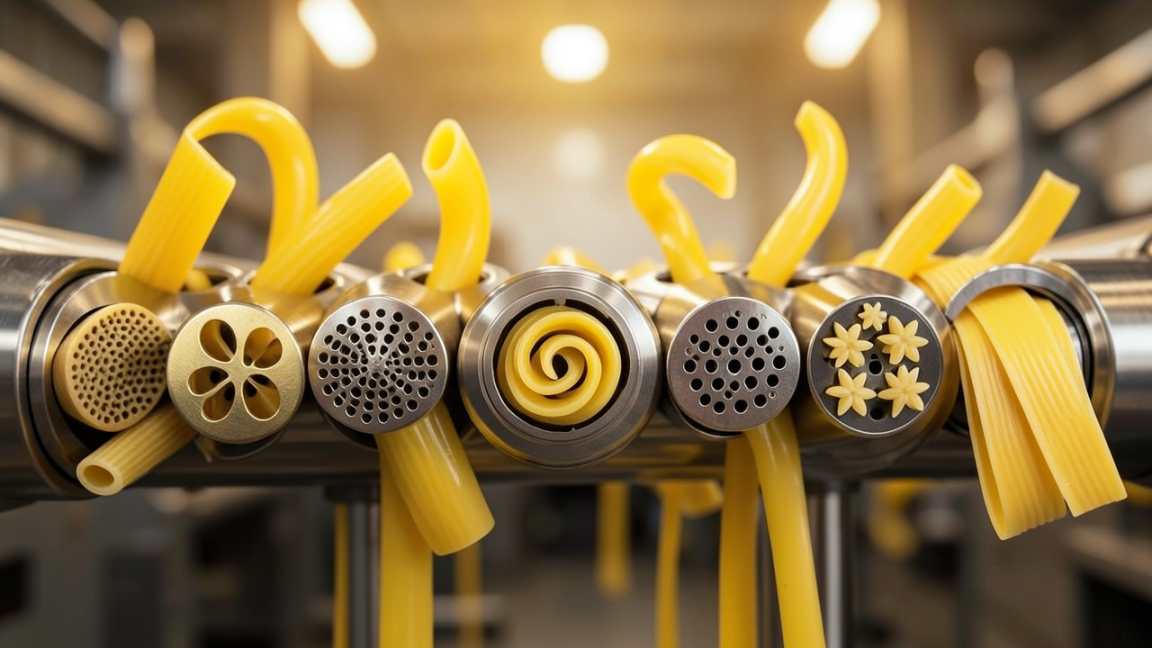
Manufacturers mainly use two types of die materials: bronze and Teflon-coated stainless steel. Each produces a different pasta texture.
Bronze Dies
Bronze dies are the traditional choice. They give pasta a rough, porous surface that sauces cling to easily. According to equipment suppliers, bronze dies typically need replacement after 150-200 hours of production. The rough texture comes from the natural friction between the bronze and the dough.
Warning: Bronze dies are more expensive and wear out faster than Teflon-coated dies. This is one reason why artisanal pasta costs more. The slower extrusion speed also increases production time.
Teflon-Coated Dies
Teflon-coated dies are common in large-scale pasta factories. The non-stick coating allows dough to flow faster and smoother, increasing production speed. The pasta emerges with a shiny, smooth surface that does not hold sauce as well. Most supermarket brands use Teflon dies because they are durable and efficient.
Barilla and De Cecco use a combination of both, depending on the product line. Premium bronze-drawn pasta commands higher prices because of its superior sauce adhesion.
Why Die Material Matters for Pasta Quality
The die material directly affects three important qualities: sauce adherence, cooking behavior, and visual appeal.
- Sauce adherence: The rough surface of bronze-drawn pasta creates tiny pores that trap oil and water-based sauces. Smooth Teflon-drawn pasta tends to let sauce slide off.
- Cooking time: Bronze-drawn pasta typically cooks 1-2 minutes faster because water penetrates the porous surface more easily. Smooth pasta requires slightly longer boiling.
- Visual appeal: Bronze-drawn pasta has a matte, slightly rough appearance that many chefs prefer. Teflon-drawn pasta looks shiny and uniform, which some consumers prefer for visual consistency.
A study by the University of Gastronomic Sciences in Pollenzo found that bronze-drawn pasta absorbs up to 30% more sauce than Teflon-drawn pasta. This statistic is often cited by artisanal pasta makers to justify premium pricing.
What Makes a Die Produce a Specific Shape?
Every pasta shape has a specific set of design parameters. The die designer must consider the dough’s extrusion behavior, the desired cooking properties, and the visual appeal. Here are the main factors that shape the final product.
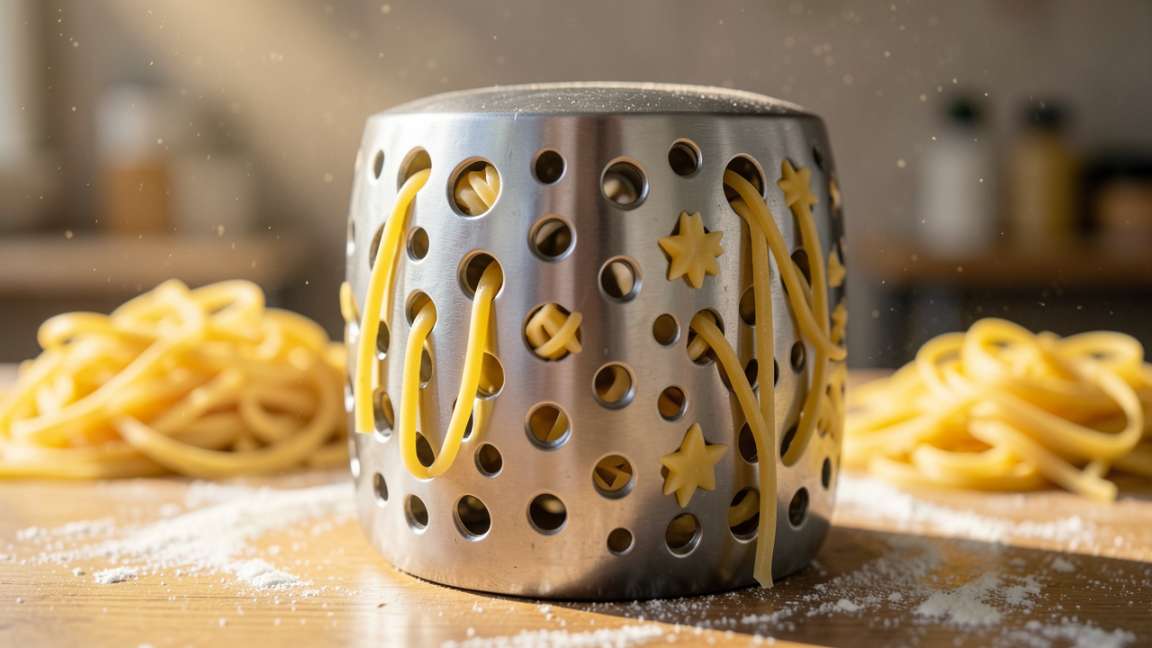
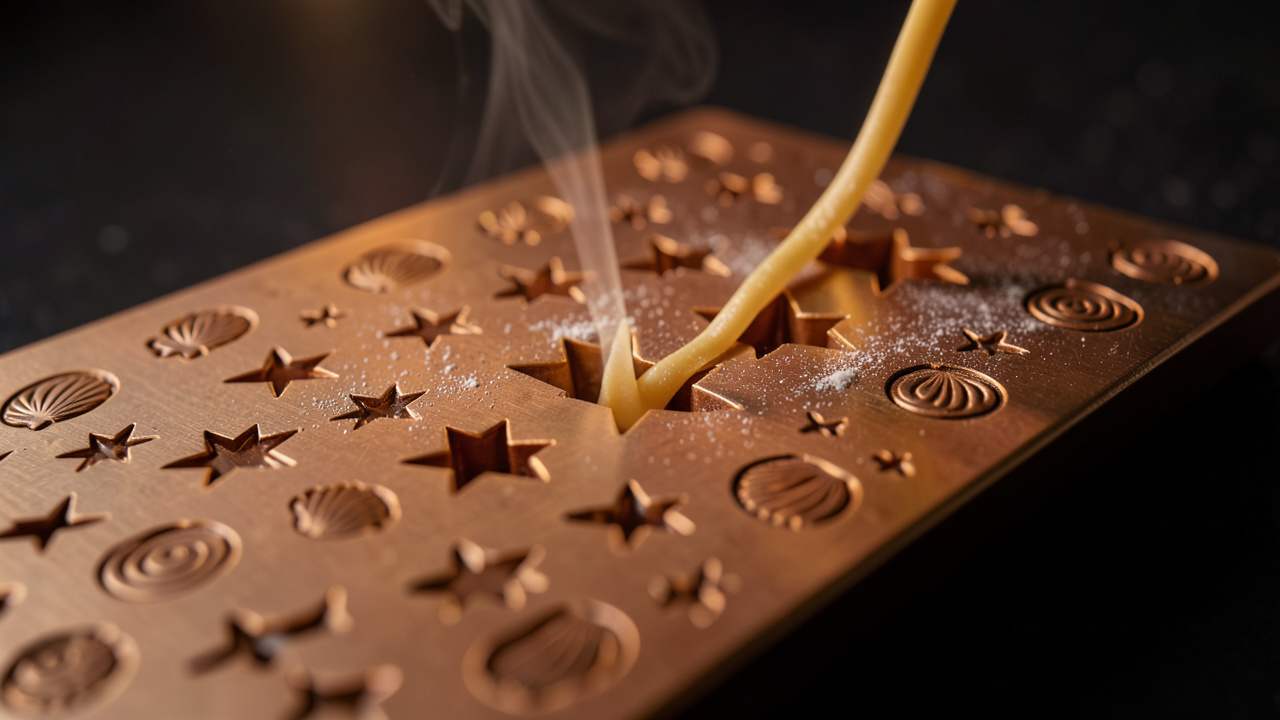
- Cross-section geometry: The shape of the die opening defines the pasta’s basic form. Round holes give tubular shapes, square holes give ribbons, and star-shaped holes give decorative pasta.
- Grooves and ridges: Small channels cut into the die interior create lines, ridges, or spirals on the pasta surface. These grooves also help guide the dough flow evenly.
- Blade speed and angle: The rotating blade cuts the extruded dough at precise intervals. A slower blade produces longer pieces, while a faster blade gives shorter cuts. The blade angle can create diagonal ends like penne or straight cuts like macaroni.
- Die thickness: Thicker dies provide more structural support during extrusion but require higher pressure. Thinner dies allow faster production but may wear out sooner.
- Dough consistency: The moisture and protein content of the dough affect how it flows through the die. Higher protein semolina gives stronger, more resilient pasta that holds its shape better.
According to the International Pasta Organization, over 600 pasta shapes exist globally. Each shape requires a unique die. Some dies can be modified by interchangeable inserts to produce multiple shapes from the same base plate, but most are purpose-built for a single variety.
Common Myths vs Facts
Several misconceptions surround pasta extrusion dies. Here are three of the most common myths and the facts that correct them.
Myth 1: Bronze dies are always better than Teflon dies.
Bronze dies are superior for sauce adherence, but Teflon dies have advantages in production speed and cost. For high-volume commercial pasta, Teflon dies allow consistent quality at lower prices. The best choice depends on your priorities: texture or affordability.
Myth 2: All pasta shapes come from unique dies.
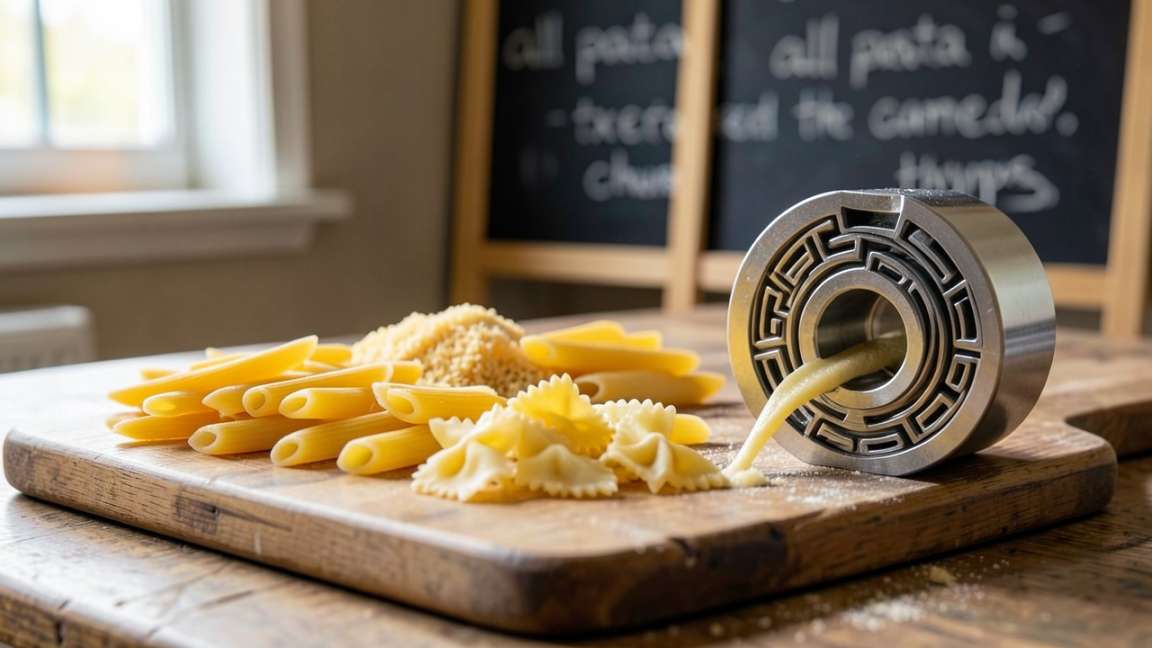
Some shapes come from the same die with different cutting methods. For example, spaghetti and bucatini share a similar die design, but bucatini uses a central pin in the die to create the hole. Also, some manufacturers use die inserts to create variations without a completely new plate.
Myth 3: Glass or acrylic dies are used for specialty shapes.
Some people claim that fragile materials like glass are used for intricate pasta shapes. In reality, all commercial extrusion dies are made from metal – bronze, stainless steel, or brass. Only very small-scale or artistic pasta makers might experiment with non-metal dies, but they are not used in mass production.
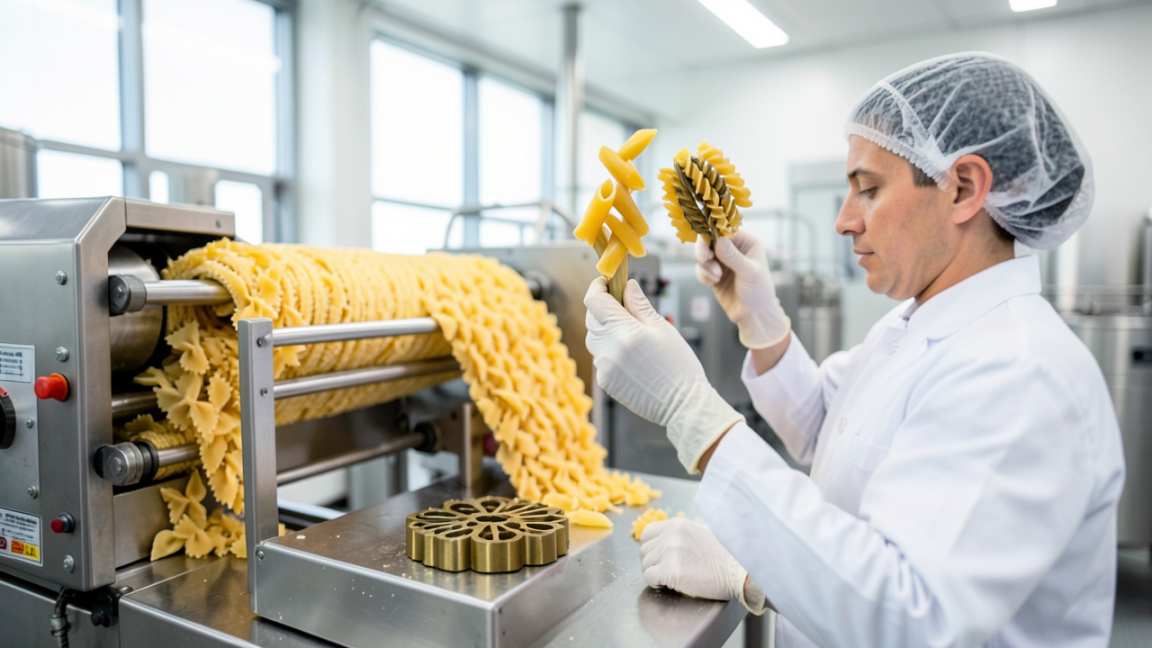
How Manufacturers Change Dies for Different Shapes
On a typical pasta production line, the extruder head can be disassembled quickly. The die is held in place by a clamping ring. Operators loosen the clamp, remove the current die, and install a new one. This process takes about 10-15 minutes.
Modern extrusion presses from companies like Bühler and Pavan allow die changes without stopping the line completely. Some systems use a rotating turret that holds several dies and can switch between shapes in seconds.
When changing dies, operators must also adjust the cutting blade speed and the dough feed rate. Different shapes require different blade speeds to achieve the correct length.
Tip: If you are a small pasta maker, start with the most popular shapes – spaghetti, penne, fusilli – and invest in dies for those first. You can always add more dies later as demand grows.
Frequently Asked Questions
How long does a pasta extrusion die last?
Bronze dies typically last 150-200 hours of production before needing replacement or re-machining. Teflon-coated dies can last 500-800 hours because the coating reduces wear. The lifespan also depends on the dough’s abrasiveness and the extrusion pressure.
Can the same die make different pasta sizes?
No. Each die produces exactly one shape and size. To make a different size, you need a separate die with different hole dimensions. However, some manufacturers use multiple dies on the same extruder head to produce several shapes simultaneously.
Why does bronze-drawn pasta cost more?
Bronze dies are more expensive to manufacture and wear out faster. They also require slower extrusion speeds to prevent clogging. These factors increase production costs, which manufacturers pass to consumers. According to industry data, bronze-drawn pasta costs 20-40% more than Teflon-drawn pasta.
What is the most complex pasta shape to extrude?
Shapes with many curves or small details, such as rotini, radiatore, or cavatappi, are difficult to produce. The grooves and spiral cuts in the die require precise machining. If the die is not perfect, the pasta may break apart during extrusion or cooking.
Do all dried pastas use extrusion dies?
Most dried pastas are extruded, but some specialty pastas like handmade orecchiette or trofie are shaped by hand without dies. Fresh pasta sheets for lasagna or fettuccine are sometimes rolled and cut rather than extruded. However, the vast majority of commercial dry pasta comes from extrusion.
Final Thoughts
Extrusion dies are the unsung heroes behind the hundreds of pasta shapes you find at the store. The material, design, and maintenance of these dies determine texture, sauce adherence, and cooking behavior. Understanding how dies work helps you choose the right pasta for your dish and appreciate the engineering behind every forkful.