How Griddle Temperature Affects Pancake Browning Evenness
Griddle temperature directly determines pancake browning evenness by controlling the Maillard reaction, with the most uniform results achieved at a stable surface temperature between 350°F and 375°F. Temperatures below 300°F slow browning excessively, causing pale and rubbery pancakes, while above 400°F browning becomes uncontrollable, leading to burnt spots and raw interiors. The critical practical step is to use an infrared thermometer to identify hot spots and adjust heat for a consistent surface temperature across the entire griddle.
Uneven browning ruins the perfect pancake experience. This post explains how griddle temperature directly controls browning evenness and how you can fix it today.
Simply put, griddle temperature between 350°F and 375°F (177°C – 190°C) creates the most even pancake browning. Lower temperatures cause pale, rubbery pancakes. Higher temperatures burn the outside while the center stays raw. A stable surface temperature is the key chemical requirement for uniform Maillard browning.
Key Takeaways
- A stable griddle surface temperature, typically between 350°F and 375°F, is required for even pancake browning across the entire surface.
- The Maillard reaction, which creates the golden-brown color, slows down significantly below 300°F and becomes uncontrollable above 400°F, leading to burnt spots.
- Uneven browning is usually caused by hot spots on your griddle or poor heat distribution, not by the batter itself.
- Using an infrared thermometer removes the guesswork and helps you adjust the knobs to maintain a consistent cooking surface temperature.
- Different pancake batter thicknesses and ingredients require slight temperature adjustments of about 10-15°F to achieve uniform color.
What Is Pancake Browning Evenness?
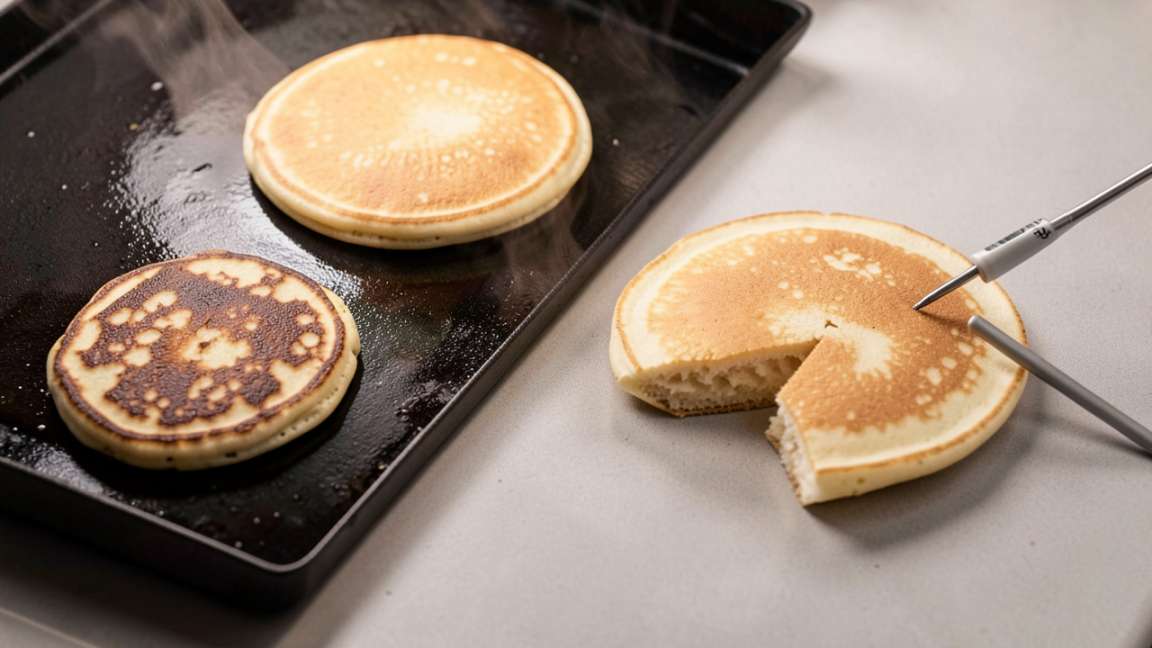
Pancake browning evenness describes how consistently the golden-brown color develops over the entire pancake surface. A perfectly even pancake has a uniform tan or brown color from edge to center.
This visual cue comes from two chemical processes. The Maillard reaction is the primary driver of browning. It occurs when proteins and sugars in the batter react under heat. The second process is caramelization, which happens when sugars break down at higher temperatures.
According to food scientist, the Maillard reaction begins at roughly 285°F. For pancakes, you need the entire cooking surface to stay above this threshold. If parts of the griddle fall below it, those areas of the pancake stay pale.
Even browning also means the heat distribution is consistent. A griddle with hot spots causes pancakes that are dark in some areas and light in others. This indicates that your griddle temperature is uneven.
Important: Visual browning is not just about looks. Even browning signals that the pancake structure is set properly. The interior is cooked through, and the exterior has developed desirable flavor compounds.
How Does Griddle Temperature Affect Maillard Browning?
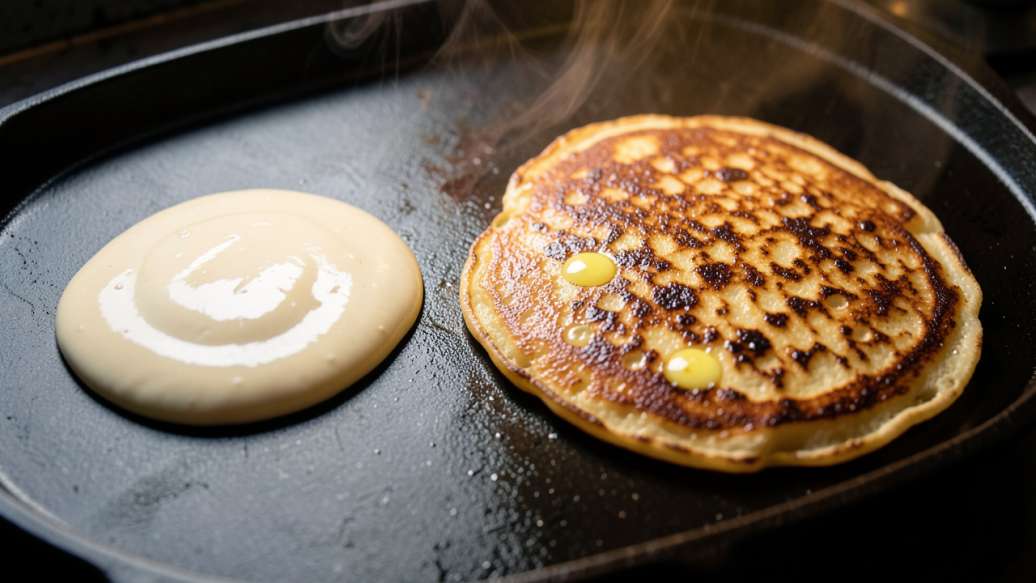
The griddle temperature directly controls the rate of the Maillard reaction. Every degree of heat speeds up or slows down how fast the pancake surface browns.
Research published by the shows that the Maillard reaction rate roughly doubles with every 10°C (18°F) increase in temperature. This means a small temperature swing on your stovetop leads to a massive change in browning speed.
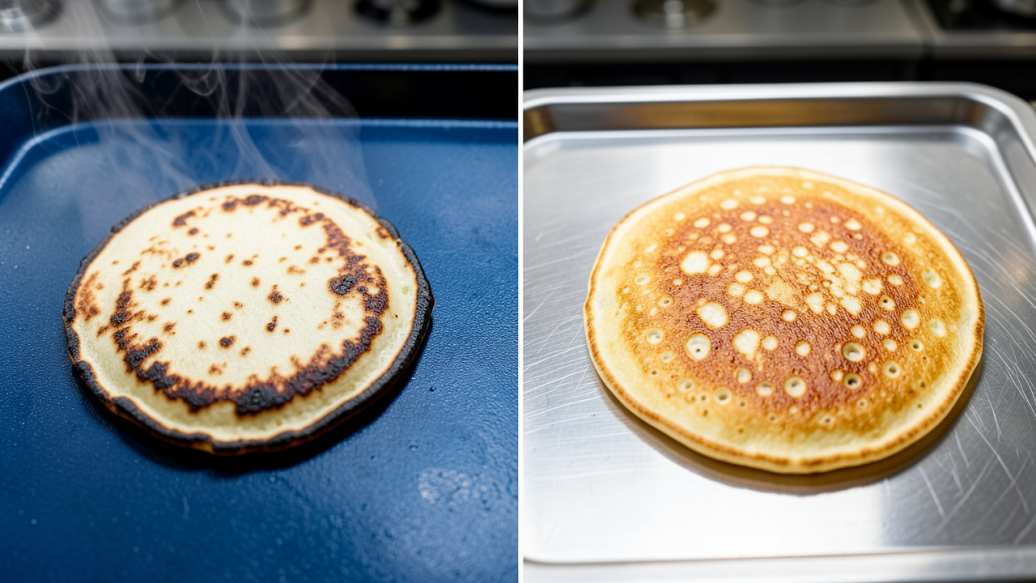
If your griddle runs at 330°F, the reaction happens slowly. The pancake cooks through before the surface gets enough color. You end up with a pale, dry pancake. If your griddle runs at 410°F, the reaction explodes. The outside burns black before the inside has time to cook.
The sweet spot for the Maillard reaction in pancakes is between 350°F and 375°F. At this range, the reaction occurs fast enough to produce a rich golden-brown color within 2-3 minutes per side. The interior also reaches the proper temperature for starch gelatinization.
Warning: Do not rely on your stovetop dial alone. A dial set to “medium” can fluctuate by 50-70°F during cooking. These swings cause uneven browning across a batch of pancakes.
The Ideal Temperature Range for Even Pancake Browning
Different temperature ranges produce completely different results. Here is a breakdown of what happens at each level.
| Temperature Range | Browning Evenness | Texture Outcome | Best Use Case |
|---|---|---|---|
| Below 325°F (163°C) | Pale and uneven | Dense, dry, and tough | Dutch babies or oven-baked pancakes |
| 325°F – 350°F (163°C – 177°C) | Light tan, some spotting | Soft, slightly cakey | Thick American-style pancakes |
| 350°F – 375°F (177°C – 190°C) | Even golden-brown | Fluffy interior, crisp edges | Standard buttermilk pancakes |
| 375°F – 400°F (190°C – 204°C) | Dark brown, risk of burning | Crispy outside, raw center risk | Thin crepes or blinis |
| Above 400°F (204°C) | Burnt spots, extremely uneven | Burnt exterior, raw interior | Not suitable for pancakes |
Use this table as a reference when setting up your griddle. The 350°F to 375°F zone is your target for standard pancakes. Measure the temperature at the center and the edges to check for hot spots.
Common Myths vs Facts About Griddle Heat
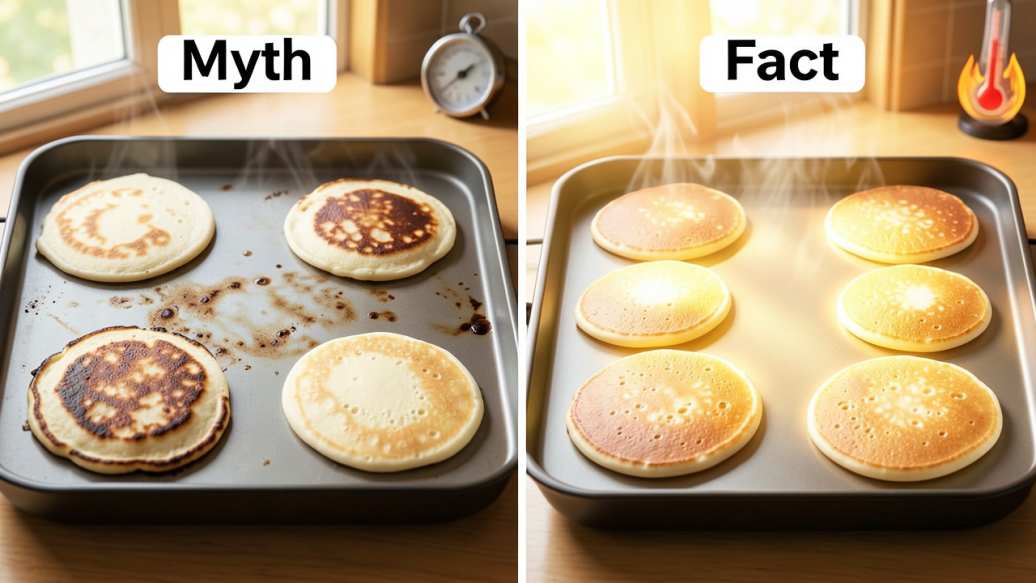
There are several myths about how heat affects pancake browning. Here are the facts based on cooking science.
Myth 1: High heat seals in moisture
High heat does not seal moisture into pancakes. It burns the exterior sugars and proteins before the interior sets. The result is a charred outside and a gooey, uncooked center. A moderate temperature of 350°F allows the interior to steam and rise evenly.
Myth 2: Uneven browning means the batter is bad
Uneven browning is almost always a griddle issue, not a batter issue. Hot spots on an electric griddle or a warped pan create localized areas of high heat. Use an infrared thermometer to find these spots and adjust your cooking position accordingly.
Myth 3: You must use butter on the griddle for even color
Butter contains milk solids that burn at around 350°F. These burnt solids create dark speckles on your pancakes. For more even browning, use a neutral oil with a high smoke point, such as avocado or grapeseed oil. The American Butter Institute confirms that butter burns faster than vegetable oils.
How to Test and Maintain Your Griddle Temperature
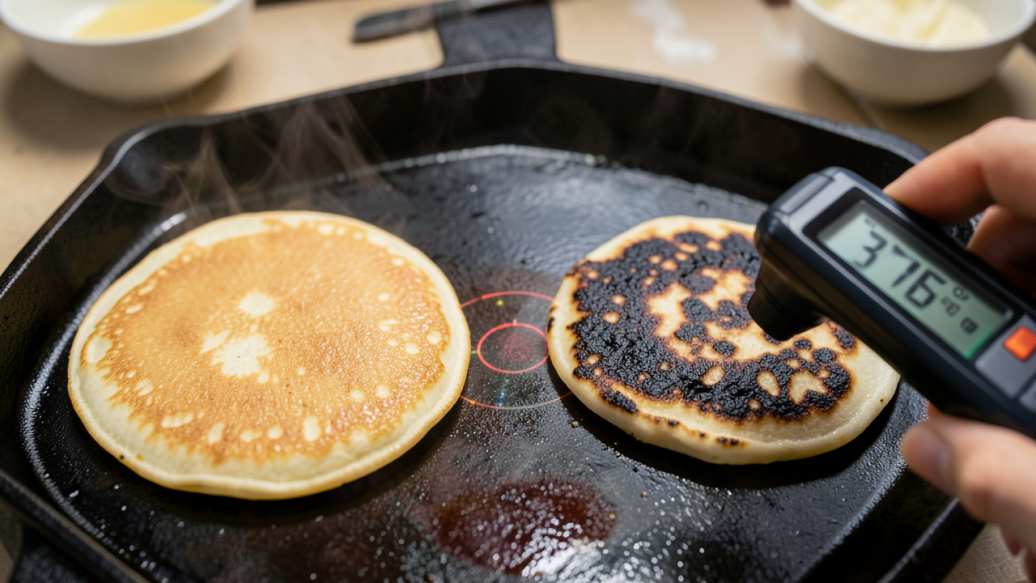
Testing your griddle surface is the only way to guarantee even browning. Follow these steps to get accurate results.
- Preheat your griddle on medium heat for at least 5-7 minutes. Cast iron takes longer than aluminum to reach a steady state.
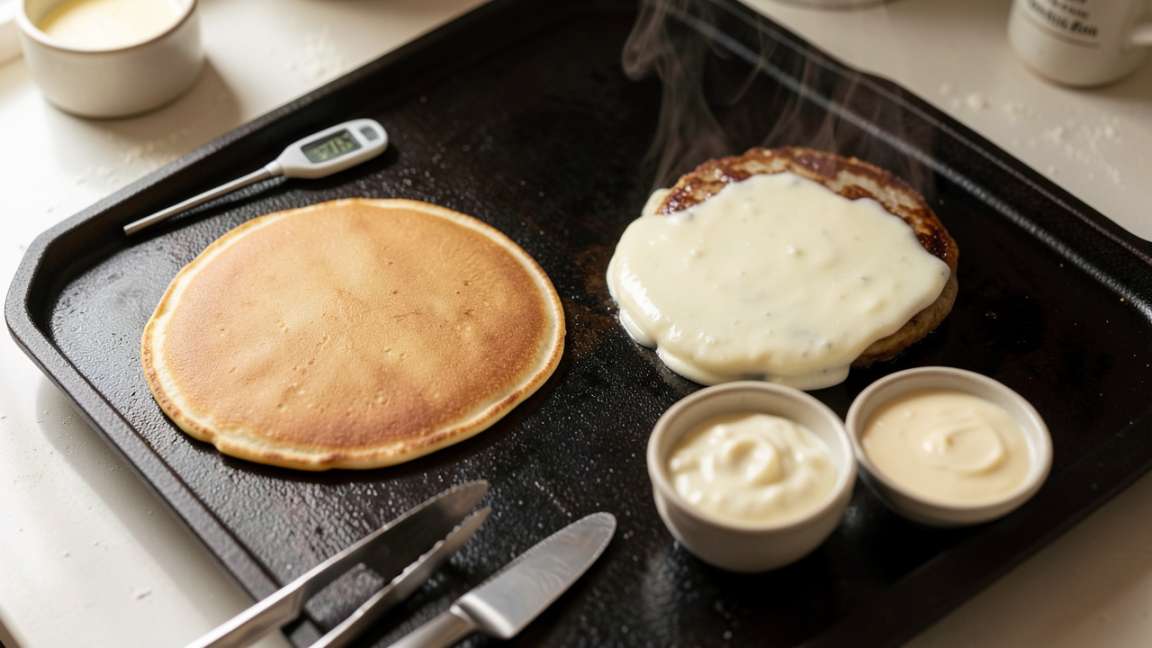
- Use an infrared thermometer to measure the temperature across the surface. Take readings at the center, the front edge, the back edge, and both sides.
- Look for a temperature variance of less than 20°F across the surface. Anything higher will produce uneven browning.
- Adjust your burner settings based on the readings. If the center is hotter, move your pan or use a heat diffuser.
- Conduct a water drop test. Flick a drop of water onto the griddle. If it dances and evaporates quickly, the surface is around 375°F. If it sits and boils, the surface is too cool.
Tip: Let the griddle recover heat between batches. Pouring cold batter drops the surface temperature by 30-50°F. Wait 30-60 seconds for the griddle to climb back to 350°F before starting the next batch.
Signs Your Griddle Temperature Is Wrong
Your pancakes tell you exactly what is happening with the heat. Look for these visual signs during cooking.
- Bubbles form but do not pop quickly. This signals the griddle is below 325°F and the browning reaction is too slow.
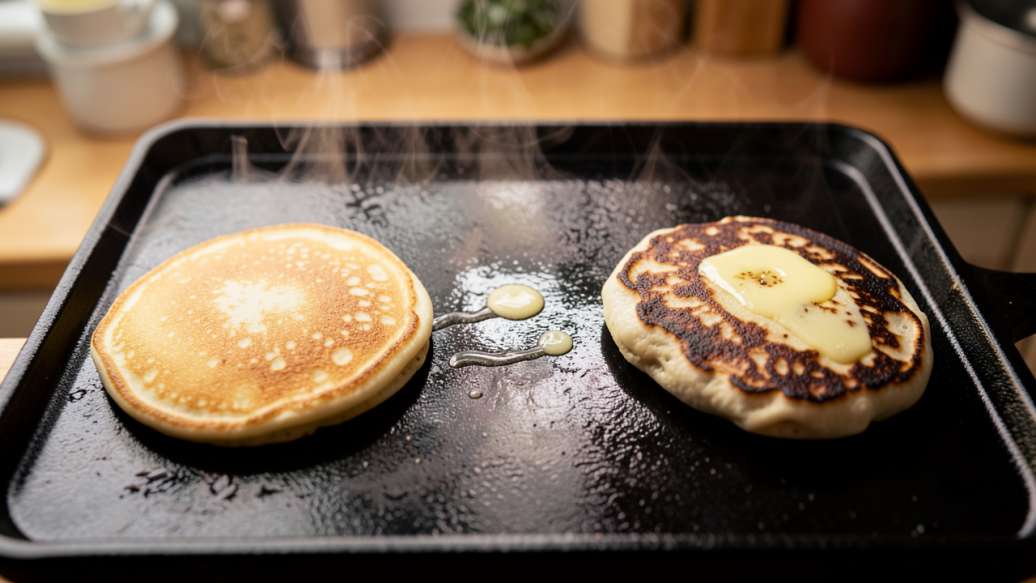
- The first side is dark brown but the second side is pale. The griddle temperature is too high and is burning the batter before it cooks through.
- The edges are lacy and dark but the center is light. This means the griddle has hot spots at the edges where the flames touch the pan.
- You see dark speckles on the surface. This happens when using butter at temperatures above 350°F, as the milk solids burn.
- The pancake surface is an uneven patchwork of tan and white spots. The griddle temperature is fluctuating wildly, often due to a thin pan with low thermal mass.
Warning: Do not press down on a cooking pancake to force browning. This squeezes out the air bubbles and makes the pancake dense. Adjust the heat instead.
How Griddle Material Affects Temperature Stability
The material of your griddle or pan plays a big role in how well it holds temperature. Even heat distribution is critical for consistent browning.
| Material | Heat Retention | Browning Evenness | Best For |
|---|---|---|---|
| Cast Iron | Excellent (high thermal mass) | Very even once preheated | Consistent batches of standard pancakes |
| Stainless Steel | Moderate | Requires precise heat management | Experienced cooks |
| Non-Stick/Aluminum | Low to Moderate | Prone to hot spots | Occasional use, simple pancakes |
| Electric Griddle | Good (large surface area) | Most even across the full surface | High volume cooking |
Cast iron and electric griddles offer the best temperature stability. According to, the thermal mass of cast iron helps maintain a steady temperature when cold batter hits the pan. This stability translates directly to more even browning.
How to Adjust Temperature for Different Batter Types
Not all pancake batters behave the same way on a griddle. The sugar and fat content changes how fast browning occurs.
- Buttermilk pancakes: The acid in buttermilk slows browning slightly. Set your griddle at 365-375°F to get a deep golden color.
- Whole wheat pancakes: These contain more protein and fiber. They brown faster. Lower your griddle to 345-355°F to avoid burning.
- Sweet pancakes (with added sugar or fruit): Extra sugar caramelizes and burns quickly. Use a lower temperature of 340-350°F.
- Protein pancakes: High protein content speeds up the Maillard reaction significantly. Keep the heat at 330-345°F or they will turn black.
- Gluten-free pancakes: These lack structure and spread thin. Use a temperature of 350-360°F for even browning without burning the edges.
Each batter type shifts the ideal temperature range. Adjust your dial based on what you are cooking. The goal is always a slow, steady browning that finishes just as the center sets.
Frequently Asked Questions
What is the best griddle temperature for pancakes?
The best griddle temperature for standard pancakes is 375°F (190°C). This temperature allows the Maillard reaction to produce a golden-brown color evenly across the surface. It also gives the interior enough time to cook through and become fluffy.
Why do my pancakes burn on the outside but stay raw in the middle?
Your griddle temperature is too high, typically above 400°F. The exterior cooks and burns before the heat can conduct to the center. Lower the temperature by 25-30°F and extend the cooking time by 30 seconds per side.
Does the type of fat I use affect pancake browning?
Yes, the fat choice matters. Butter burns at around 350°F due to milk solids, leading to dark speckles. Oils like avocado or canola oil have much higher smoke points and create a cleaner, more even browning across the pancake surface.
How can I fix a griddle that has hot spots?
Identify hot spots using an infrared thermometer or a flour test (sprinkle flour on the dry griddle and watch it brown). Cook on the cooler areas of the griddle first, or rotate the pan 180 degrees halfway through preheating. Placing a heat diffuser between the burner and the pan also helps.
Should I flip pancakes when bubbles appear, or wait for even browning?
Wait until the bubbles pop and leave small holes that stay open. But also check that the edge is set and starting to brown. This indicates the bottom has reached the correct color and structure. Flipping too early, based only on bubbles, results in a pale, uneven final product.
Final Thoughts
Achieving perfectly browned pancakes every time starts with controlling your griddle heat. Use an infrared thermometer to hit the 350-375°F sweet spot for standard batters. Mastering this temperature zone will transform your breakfast results and eliminate pale or burnt pancakes for good.