
What Materials Are Used In Modern Kitchens? A Complete Material Guide
Picture this: you’re planning a kitchen renovation, and your contractor asks about countertop materials.
Picture this: you're planning a kitchen renovation, and your contractor asks about countertop materials.
Suddenly, you’re faced with a dizzying array of options, from granite and quartz to butcher block and concrete. Choosing the right materials can feel overwhelming, but it’s a key step in creating a functional and beautiful space.
This guide will help you understand the most popular choices, so you can make informed decisions that enhance your kitchen’s look and feel.
By the end, you’ll be well-equipped to select materials that are both stylish and durable, improving your kitchen’s usability and making it a joy to be in.
Key Takeaways
- You will learn about the most common materials used in modern kitchens.
- This guide explains the pros and cons of each material for countertops, cabinets, and flooring.
- Understand the durability and maintenance needs of different kitchen surfaces.
- Discover how material choices impact the overall style and functionality of your kitchen.
- Gain insights into budget considerations for various kitchen materials.
- Learn about emerging trends in kitchen material selection.
![What Materials Are Used In Modern Kitchens A Complete Material Guide[1]](https://kitchentoolslab.com/wp-content/uploads/2026/05/What_Materials_Are_Used_In_Modern_Kitchens__A_Complete_Material_Guide1.jpg)
Countertop Materials: The Heart of Your Kitchen Workstation
Countertops bear the brunt of kitchen activity, from chopping vegetables to placing hot pans. Selecting the right material means balancing aesthetics with practicality.
Each surface offers a unique combination of durability, maintenance requirements, and cost. This section explores the most popular choices, helping you find the perfect fit for your culinary adventures.
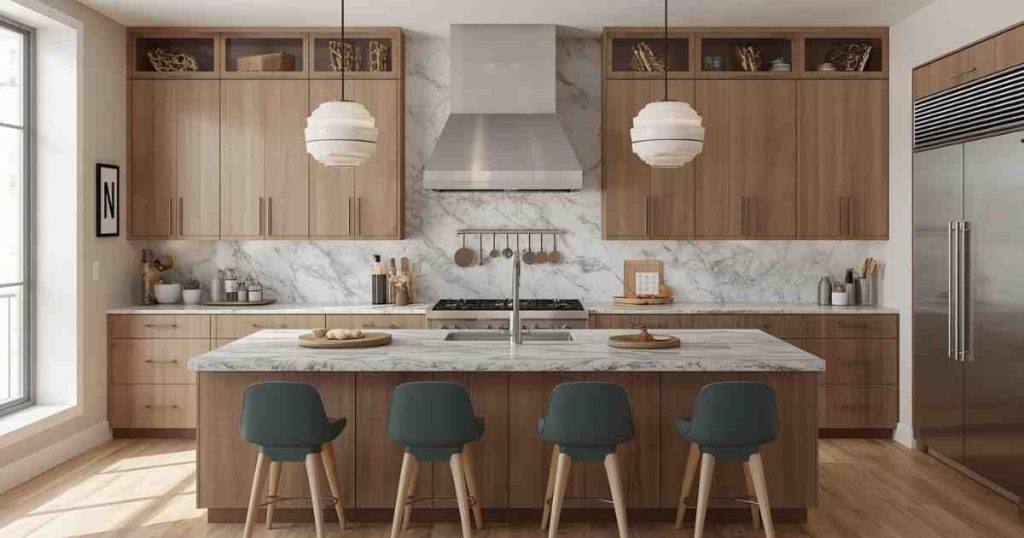
Granite: Natural Beauty and Strength
Granite is a natural stone quarried from the earth, known for its distinctive patterns and rich colors. No two slabs are exactly alike, offering a unique look for every kitchen. It’s a popular choice due to its impressive durability and heat resistance.
Granite is formed from cooling magma deep within the earth, making it incredibly hard and resistant to scratches and heat. This makes it a fantastic surface for food preparation, as it can withstand hot pots and pans without damage.
However, granite is porous and requires regular sealing to prevent stains from absorbing. Spills should be wiped up quickly to avoid them seeping into the stone.
Maintenance and Care
Proper sealing is key to keeping granite looking its best. Most sealants need to be applied annually, though some modern options last longer.
- Clean spills immediately with a mild soap and water.
- Avoid using abrasive cleaners or harsh chemicals, as they can damage the sealant.
- Regularly check the sealant’s effectiveness by pouring a small amount of water on the surface; if it beads up, the seal is good. If it soaks in, it’s time to reseal.
Real-Life Example: The Busy Family Kitchen
The Smith family loves to cook together, and their granite countertops have been a central part of their kitchen for years.
Despite daily use, including hot pans from the oven and extensive chopping, their granite has held up exceptionally well. They reseal it once a year, which keeps it stain-free and looking as good as new.
Quartz: Engineered for Performance
Quartz countertops are an engineered product, made from crushed quartz crystals mixed with resins and pigments. This manufacturing process results in a non-porous, highly durable, and consistent surface.
The non-porous nature of quartz means it’s naturally resistant to stains, bacteria, and mold. It doesn’t require sealing, making it a low-maintenance option for busy households.
While very durable, quartz is not indestructible. Extremely high heat can damage the resin binder, and sharp objects can cause scratches, though it is generally more scratch-resistant than laminate.
Appearance Options
Quartz comes in a vast array of colors and patterns, from solid whites and grays to realistic marble and granite imitations. This versatility allows for a wide range of design possibilities.
- Solid colors offer a sleek, modern look.
- Veined patterns can mimic natural stones like marble or quartzite.
- Speckled or flecked designs provide a classic and timeless appeal.
Speed Considerations: Installation Time
The installation of quartz countertops is generally straightforward, typically taking one to two days once the templates are complete. This efficient process means less disruption to your kitchen routine.
Butcher Block: Warmth and Workability
Butcher block countertops are made from solid wood, usually maple, oak, or walnut, joined together in strips. They bring a warm, natural feel to the kitchen and offer a unique work surface.
Wood is a renewable resource and can be sanded and refinished if it becomes scratched or damaged. This makes it a forgiving material for those who love to chop directly on their countertops.
However, wood is susceptible to water damage, stains, and heat. It requires regular oiling or sealing to protect it and keep it looking its best.
Edgewise vs. End Grain
Butcher block is available in two main constructions: edgewise, where the strips are laid on their sides, and end grain, where the shorter ends of the strips are visible. End grain is generally more durable and forgiving for chopping.
- Edgewise: More affordable, shows wear more quickly on the surface.
- End Grain: More expensive, designed for heavy chopping, hides knife marks better.
Sample Scenario: The Home Baker’s Dream
Sarah, an avid baker, chose butcher block for her kitchen island. She loves being able to roll out dough directly onto the wood surface. She oils her butcher block weekly and is careful with hot items, ensuring it remains a functional and beautiful part of her baking sanctuary.
Laminate: Budget-Friendly Versatility
Laminate countertops are a cost-effective option made from layers of particleboard or MDF topped with a decorative paper or plastic film. They are available in a vast range of colors, patterns, and textures.
Laminate is lightweight, easy to install, and can mimic the look of more expensive materials like granite or wood at a fraction of the cost. It’s also relatively easy to clean.
However, laminate is less durable than stone or quartz. It can scratch, chip, and is sensitive to heat and moisture.
Durability Factors
The lifespan of laminate depends heavily on its construction and how it’s treated. Higher-quality laminates offer better resistance to everyday wear and tear.
- Resistant to stains and easy to wipe clean.
- Prone to scratching from sharp knives or abrasive pads.
- Not resistant to high heat; hot pots can cause permanent damage.
Comparison of Countertop Materials
| Material | Pros | Cons | Average Cost (per sq ft) |
|---|---|---|---|
| Granite | Durable, heat resistant, unique beauty | Porous, requires sealing, can chip | $50 – $200+ |
| Quartz | Non-porous, stain and scratch-resistant, low maintenance | Can be damaged by extreme heat, heavy | $60 – $200+ |
| Butcher Block | Warm, natural look, workable surface, renewable | Requires regular sealing/oiling, sensitive to water and heat | $40 – $150+ |
| Laminate | Affordable, wide variety of looks, easy to clean | Less durable, prone to scratches and chips, not heat resistant | $20 – $50 |
Cabinetry: Storage and Style Solutions
Kitchen cabinets are the backbone of your kitchen, providing essential storage while significantly impacting the overall aesthetic. The materials and construction methods used influence their durability, look, and price.
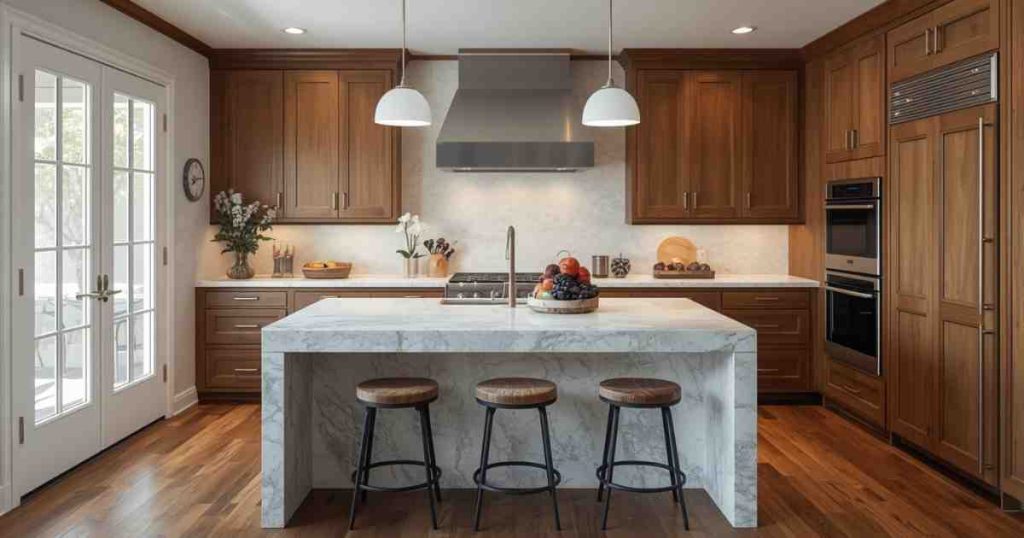
Wood Cabinets: Timeless Appeal
Solid wood cabinets are a classic choice, offering warmth, beauty, and longevity. Common wood types include oak, maple, cherry, and birch, each with its unique grain pattern and color.
Solid wood is strong and durable, able to withstand the daily rigors of a busy kitchen. It can also be stained or painted to match any decor.
Wood can be susceptible to changes in humidity, which can cause expansion or contraction. It may also scratch or dent over time, though these imperfections can often be repaired.
Types of Wood
Different wood species offer varying degrees of hardness, grain patterns, and color. This allows for a wide range of customization to fit your style.
- Oak: Strong, prominent grain, affordable.
- Maple: Smooth, fine grain, takes stain well.
- Cherry: Rich color that deepens with age, elegant.
- Birch: Light color, consistent grain, good for painted finishes.
Real-Life Example: A Century-Old Farmhouse Kitchen
In a beautifully restored farmhouse, original oak cabinets have been carefully maintained for over a century. Their solid construction and natural grain have aged gracefully, adding character and charm. Regular cleaning and occasional minor repairs have kept them functional and stunning.
MDF and Particleboard: Engineered Alternatives
Medium-Density Fiberboard (MDF) and particleboard are engineered wood products often used in cabinet construction, especially for doors and panels. They are typically covered with veneers, laminates, or paint.
These materials are more cost-effective than solid wood and provide a smooth, stable surface, ideal for painted finishes. They are less prone to warping than solid wood.
However, MDF and particleboard are not as durable as solid wood and can be damaged by excessive moisture. They are also heavier.
Veneers and Laminates
These finishes offer the look of natural wood or solid colors at a lower price point. Understanding the quality of the veneer or laminate is key to longevity.
- Wood Veneer: A thin layer of real wood glued to a core material, offering a natural wood look.
- Laminate: A printed paper or plastic film layered over a substrate, available in many colors and patterns.
Cabinet Finishes: The Final Touch
The finish on your cabinets plays a crucial role in both protection and aesthetics. It shields the material from moisture and wear while defining the kitchen’s style.
Stain vs. Paint
Choosing between stain and paint depends on the desired look and the base material of the cabinets.
- Stains: Enhance the natural grain of wood, offering a warm, natural look.
- Paints: Provide a solid color finish, from matte to high gloss, and can cover imperfections.
Sample Scenario: Modern Minimalist Kitchen
For a sleek, modern kitchen, the homeowners opted for flat-panel cabinets made of MDF with a high-gloss white laminate finish. This choice provides a clean, seamless look that is easy to wipe down and reflects light, making the space feel larger and brighter.
Flooring: Durability Meets Design
Kitchen flooring needs to be tough enough to handle spills, dropped items, and constant foot traffic. It also sets the tone for the entire kitchen’s design.
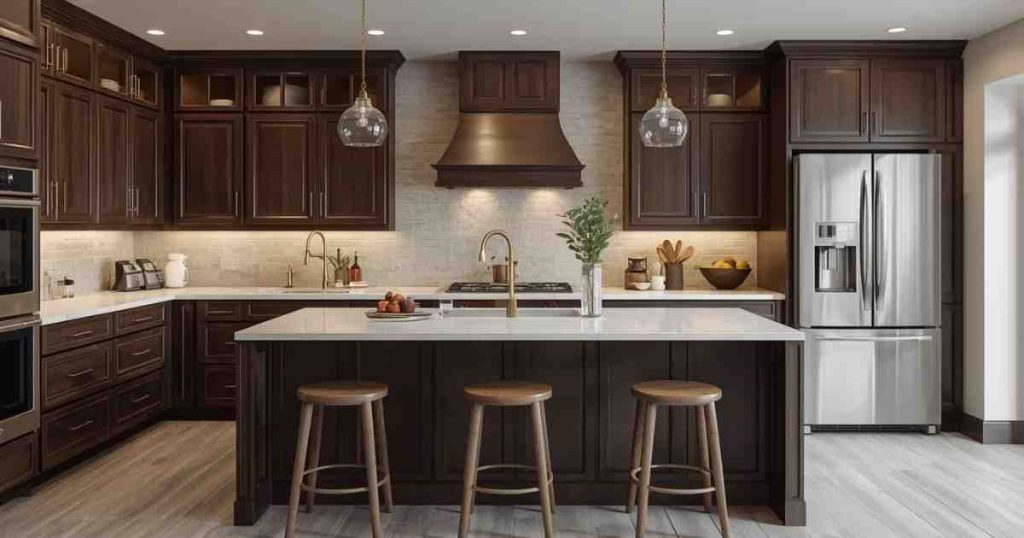
Tile: Versatile and Water-Resistant
Ceramic and porcelain tiles are very popular for kitchens due to their durability, water resistance, and wide variety of styles. They are easy to clean and can withstand heavy use.
Porcelain tile is denser and less porous than ceramic, making it more resistant to moisture and staining, and an excellent choice for high-traffic areas.
The grout between tiles can be a weak point, as it can stain and is harder to clean. However, advancements in grout technology and sealing can mitigate this.
Tile Types and Benefits
Different types of tile offer distinct advantages for kitchen environments.
- Ceramic Tile: Affordable, available in many colors and patterns, good for moderate traffic.
- Porcelain Tile: Extremely durable, water-resistant, suitable for heavy traffic and potential spills.
- Natural Stone Tile (e.g., Slate, Travertine): Beautiful, unique, but can be more expensive and require sealing.
Maintenance and Cleaning
Regular sweeping and mopping are usually sufficient for keeping tile floors clean. For grout, specialized cleaners can help maintain its appearance.
- Use a damp mop with a mild, pH-neutral cleaner.
- Avoid abrasive scrubbers that can scratch the tile surface.
- Consider using a grout sealer to protect against stains.
Hardwood: Warmth and Elegance
While often associated with living areas, hardwood floors can also work in kitchens if properly maintained. They bring a timeless warmth and elegance to the space.
Hardwood floors are durable and can be sanded and refinished multiple times, extending their lifespan. They offer a natural, beautiful aesthetic.
However, they are susceptible to scratches, dents, and water damage. Spills must be wiped up immediately, and it’s best to use rugs in high-traffic or splash-prone areas.
Wood Species and Finishes
The type of wood and the finish applied significantly affect the floor’s durability and appearance.
- Harder Woods (e.g., Oak, Maple): More resistant to dents and scratches.
- Softer Woods (e.g., Pine): More prone to wear, but can offer a rustic charm.
- Polyurethane Finish: Provides a protective layer against moisture and wear.
Statistic: Hardwood Flooring Popularity
A recent survey indicated that approximately 25% of homeowners consider hardwood a desirable flooring option for their kitchens, appreciating its natural beauty and warmth.
Luxury Vinyl Plank (LVP): Practical and Stylish
Luxury vinyl plank flooring has gained significant popularity for kitchens. It offers a durable, water-resistant, and attractive alternative to traditional materials.
LVP is known for its excellent water resistance, making it ideal for kitchens where spills are common. It’s also comfortable underfoot and more forgiving than tile if something is dropped.
It can be susceptible to deep scratches from sharp objects or heavy furniture. While durable, it doesn’t offer the same lifespan as natural stone or hardwood.
Installation and Versatility
LVP often comes in planks that click together, making installation relatively easy for DIYers. It can mimic the look of wood, stone, or tile.
- Waterproof construction makes it perfect for kitchens.
- Wide variety of designs, including realistic wood grains and stone patterns.
- Can be installed over existing flooring in many cases.
Sample Scenario: The Pet-Friendly Kitchen
The Johnson family has two dogs and chose LVP flooring for their kitchen. It has proven to be highly resistant to scratches from their pets’ nails and is easy to clean up after muddy paws. The realistic wood look also adds warmth to their home.
Emerging Trends and Sustainable Materials
The kitchen design landscape is constantly evolving, with a growing focus on both aesthetics and environmental impact. New materials and techniques are emerging to meet these demands.
Concrete Countertops: Industrial Chic
Concrete countertops offer a unique, modern, and industrial aesthetic. They are durable and can be customized in color and finish.
Concrete is strong and can be poured into custom shapes and sizes. It can be sealed to resist stains, but it is naturally porous and requires careful maintenance.
Customization and Finish
The beauty of concrete lies in its versatility. Artisans can add pigments for color or embed materials for unique textures.
- Pigmented Concrete: Achieves a range of solid colors.
- Exposed Aggregate: Reveals small stones or glass within the surface.
- Polished Finish: Creates a smooth, high-gloss appearance.
Recycled and Sustainable Materials
There’s a growing movement towards using recycled and sustainable materials in kitchens. This includes countertops made from recycled glass or paper, and cabinets from reclaimed wood or bamboo.
These materials reduce environmental impact and can add a unique story to your kitchen design.
Examples of Sustainable Choices
Opting for eco-friendly materials is a great way to design a beautiful and responsible kitchen.
- Recycled Glass Countertops: Made from post-consumer or post-industrial glass, offering a vibrant and unique look.
- Bamboo Flooring: A rapidly renewable resource that is hard and durable.
- Reclaimed Wood Cabinets: Gives old materials a new life, adding character and reducing waste.
Statistic: Consumer Interest in Sustainability
A recent industry report found that over 60% of consumers are interested in sustainable kitchen materials, indicating a growing demand for eco-friendly options.
The Rise of Compact Surfaces
Compact surfaces, often referred to as Sintered Stone or Dekton, are a newer category of ultra-compact materials. They are incredibly durable, heat-resistant, and non-porous.
These materials are manufactured under extreme pressure and heat, creating a highly dense and stable surface. They are ideal for both countertops and backsplashes.
Frequently Asked Questions Of What Materials Are Used In Modern Kitchens? A Complete Material Guide
Are granite countertops truly maintenance-free?
No, granite countertops require regular sealing, typically once a year, to prevent staining. They should also be cleaned with mild soap and water.
Can I cut directly on butcher block countertops?
Yes, butcher block is designed to be a cutting surface. However, it will show knife marks over time, and the wood will need to be oiled regularly and can be sanded down if needed.
Is quartz better than granite for kitchens?
Quartz is non-porous and doesn’t require sealing, making it more stain-resistant and lower maintenance than granite. Granite is more heat-resistant. The choice often comes down to personal preference and maintenance tolerance.
How durable is luxury vinyl plank (LVP) flooring in a kitchen?
LVP is very durable for kitchens. It’s waterproof, scratch-resistant to a degree, and comfortable to stand on. It’s an excellent practical choice for busy family kitchens.
What are the most expensive kitchen countertop materials?
Typically, natural stones like marble and quartzite, as well as premium quartz patterns and high-end compact surfaces, tend to be the most expensive countertop materials.
Summary
Modern kitchens offer a vast palette of materials for every surface. From the enduring beauty of granite and quartz countertops to the warm embrace of wood cabinets and the practical resilience of tile or LVP flooring, each choice shapes your kitchen’s function and style. The growing demand for eco-friendly options is driving interest in sustainable kitchen materials.
Consider durability, maintenance, and your personal aesthetic to create a space that is both beautiful and built to last. Make informed selections to build a kitchen you’ll love.

![How To Design A Modern Kitchen On A Tight Budget Step By Step Guide[1]](https://kitchentoolslab.com/wp-content/uploads/2026/05/How_To_Design_A_Modern_Kitchen_On_A_Tight_Budget__Step-By-Step_Guide1-768x403.jpg)
![What Is A Modern Kitchen Definition, Key Features And Design Principles Explained[1]](https://kitchentoolslab.com/wp-content/uploads/2026/05/What_Is_A_Modern_Kitchen__Definition_Key_Features_And_Design_Principles_Explained1-768x403.jpg)
![Japandi Kitchen Design How To Blend Japanese And Scandinavian Styles[1]](https://kitchentoolslab.com/wp-content/uploads/2026/05/Japandi_Kitchen_Design__How_To_Blend_Japanese_And_Scandinavian_Styles1-768x403.jpg)