
Curved Kitchen Design: Why Rounded Edges Are Dominating Kitchens?
Imagine walking into a kitchen that feels soft and inviting, without any sharp corners to bump into. This isn’t just a dream anymore; it’s the look that’s taking over in 2026. Curved kitchen design is making a big splash, bringing a gentler touch to our homes.
We’ll explore how these flowing lines and rounded edges are becoming so popular. By understanding this trend, you’ll see how it can make your kitchen more stylish and functional, keeping you engaged with the content longer.
Key Takeaways
- Curved kitchen designs offer a softer, more welcoming aesthetic.
- Rounded edges improve safety by reducing the risk of bumps and bruises.
- Flowing lines can enhance the sense of space and movement in a kitchen.
- The organic shapes of curved designs provide a unique visual appeal.
- Curved elements offer practical advantages in terms of usability and accessibility.
- This trend is set to be a major influence on kitchen styles in 2026.
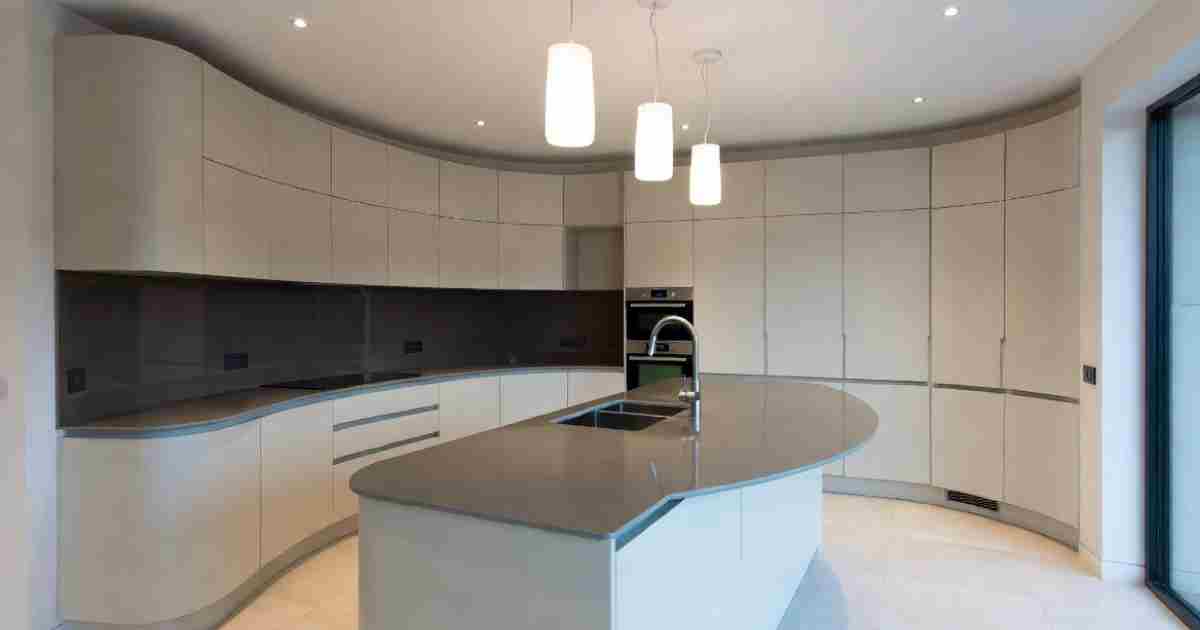
The Appeal of Softened Kitchen Spaces
The shift towards curved kitchen design, particularly with rounded edges, represents a broader move towards creating more comfortable and inviting living areas.
For years, sharp angles and straight lines dominated kitchen aesthetics, often reflecting a modern, minimalist, or industrial style. However, there’s a growing desire for spaces that feel more human-centric and less rigid.
Curved kitchen design offers precisely that: a sense of warmth, flow, and a touch of organic beauty. This section explores the fundamental reasons why designers and homeowners alike are embracing these softer forms, promising a more relaxing and visually pleasing environment.
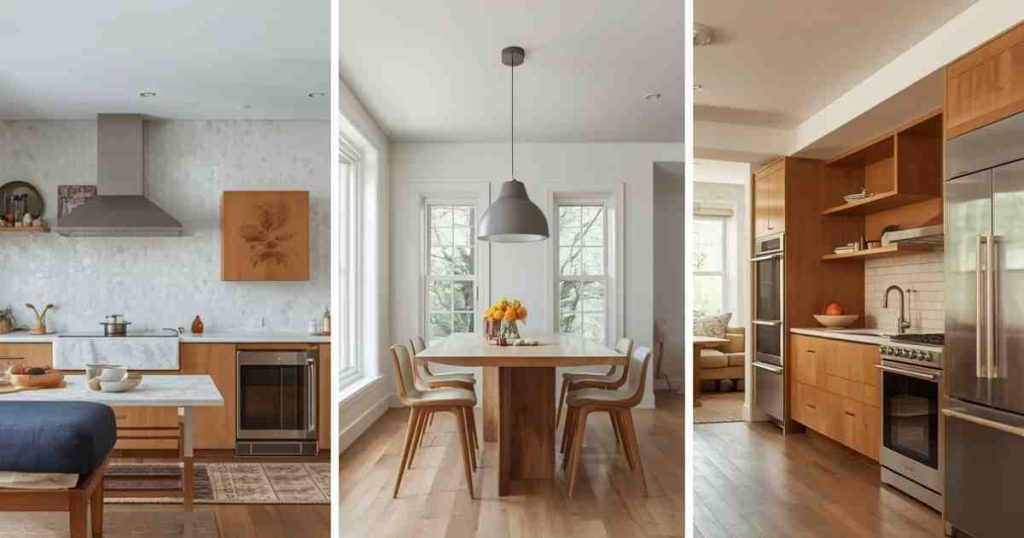
Emotional Connection to Curves
Our brains are naturally drawn to curves. Think about nature – rolling hills, flowing rivers, the gentle shape of a pebble. These forms are soothing and pleasant to our senses.
In contrast, sharp corners can feel aggressive or jarring. When applied to kitchen design, this innate preference means that spaces with rounded elements often feel more inviting and less intimidating.
This creates an emotional connection, making the kitchen a more comfortable place to spend time, whether cooking, entertaining, or simply relaxing with a cup of coffee.
This psychological impact is a key driver behind the popularity of curved kitchen design. It taps into a deep-seated appreciation for organic shapes, translating into a more harmonious and visually appealing living space.
A Break from the Past
For a long time, the sleek, linear kitchen was the ideal. This style, while undeniably chic, can sometimes feel cold or impersonal. The resurgence of curves signals a departure from this trend, offering a refreshing alternative.
It’s about adding a bit of softness and personality to what can often be a very functional, and sometimes sterile, part of the home.
This embrace of rounded edges in 2026 kitchens isn’t just a fleeting fad; it’s a response to a desire for more comfortable and welcoming domestic environments.
Practical Benefits of Rounded Edges
Beyond aesthetics, the practical advantages of curved kitchen design are significant. One of the most immediate benefits is improved safety.
Sharp corners in high-traffic areas like kitchen walkways or around islands can lead to painful bumps and bruises, especially for children or when carrying items.
Rounded edges eliminate this hazard, creating a safer environment for everyone in the household.
This focus on safety makes curved elements a wise choice for families. It contributes to a more relaxed atmosphere, knowing that the risk of accidental injury is reduced.
Enhanced Traffic Flow
In kitchens, especially smaller ones, sharp corners can impede movement. Rounded countertops or cabinet corners allow for smoother transitions between different areas. This can make a kitchen feel more open and easier to navigate.
It’s a subtle change that can have a big impact on the overall usability of the space.
Improved Accessibility
For individuals with mobility issues, sharp corners can be a genuine obstacle. Curved designs can offer better accessibility, allowing wheelchairs or walkers to move more freely around the kitchen. This makes the kitchen a more inclusive space for all members of the family.
Exploring Curved Kitchen Elements
Incorporating curved design into a kitchen can take many forms, from subtle touches to bold statements.
Understanding the various elements that can be softened allows for a more nuanced approach to achieving the desired aesthetic and functionality.
Whether you’re renovating or just looking for inspiration, this section breaks down the specific areas where curves are making a significant impact in modern kitchen design.
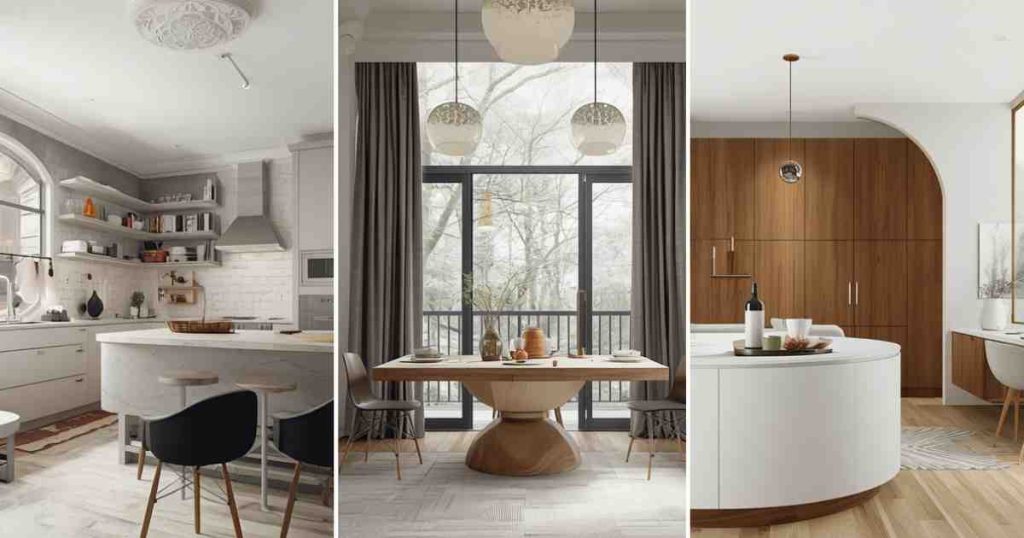
Curved Countertops and Islands
Countertops and kitchen islands are often focal points. Introducing curves here can dramatically change the feel of the space. A rounded island offers a more organic centerpiece, encouraging conversation and interaction.
It can also provide more comfortable seating space and easier passage around the work area.
Consider a waterfall edge that gently curves down the side of an island, or a fully rounded breakfast bar. These features add a sophisticated yet friendly touch.
One popular approach is to use a curved silhouette for the entire island. This creates a flowing, sculptural element that draws the eye and softens the overall look of the kitchen.
Another method involves incorporating curved edges on rectangular islands, offering a compromise that still adds a touch of softness without a complete shape overhaul.
Material Considerations for Curves
Working with curved surfaces requires careful material selection. Natural stone like granite or quartz can be expertly shaped into smooth, flowing lines, though this may increase fabrication costs. Solid surface materials offer greater flexibility for seamless, rounded edges.
Laminates can also be formed into gentle curves, providing a more budget-friendly option. The choice of material will impact the overall look, feel, and price of your curved kitchen design.
Aesthetic Impact
The aesthetic impact of a curved island or countertop is profound. It breaks up the often boxy nature of kitchen layouts, introducing a sense of movement and grace.
This visual dynamism can make a kitchen feel larger and more airy, even if its footprint remains the same.
It’s a key component of the Curved Kitchen Design: Why Rounded Edges Are Dominating 2026 Kitchens trend.
Rounded Cabinetry and Doors
Cabinetry is another area where curves are gaining traction. Instead of sharp, squared-off doors and drawers, designers are opting for fronts with softened edges or even fully rounded profiles. This can be achieved through routed edges or by incorporating curved panels.
A kitchen with rounded cabinet doors can exude a retro charm or a modern, soft aesthetic, depending on the overall style. It contributes to a cohesive look where every element feels considered and gentle.
Types of Rounded Cabinetry
- Soft-edged doors: The corners and edges of standard cabinet doors are slightly rounded. This is a subtle way to introduce curves without a drastic change.
- Radiused drawer fronts: Drawers can feature a gentle outward curve, adding a tactile and visual interest.
- Curved cabinet panels: Some cabinets may feature an entire curved panel, especially for corner units or to create a continuous flowing line across a bank of cabinets.
Each of these approaches adds a layer of sophistication and comfort to the kitchen. They contribute to the overall feeling of a welcoming and thoughtfully designed space.
Example: A Retro-Modern Kitchen
Consider a kitchen where the upper cabinets have a slight radius on their edges, and the base cabinets feature gently curved drawer fronts.
Paired with a curved island and perhaps a rounded backsplash tile, this creates a cohesive look that feels both modern and nostalgic. The smooth transitions between elements make the kitchen feel more inviting and less stark.
Curved Backsplashes and Wall Features
Even smaller details like backsplashes can incorporate curves to enhance the overall design. This could involve using subway tiles arranged in a subtle wave pattern, or a custom-designed backsplash with a gently curved top edge.
Wall features can also embrace curves. Think of an arched niche for displaying decorative items or a curved bulkhead above an island.
These elements add architectural interest and reinforce the flowing aesthetic of Curved Kitchen Design: Why Rounded Edges Are Dominating 2026 Kitchens.
Material and Pattern Ideas
- Wave patterns: Tiles can be laid to create a gentle, undulating pattern that mimics natural forms.
- Arched openings: Creating arched doorways or alcoves within the kitchen space adds a classic yet soft architectural element.
- Sculptural backsplashes: Bespoke backsplashes made from materials like plaster or concrete can be molded into unique curved shapes.
These elements, while not always the primary focus, contribute significantly to the overall harmony and character of the kitchen. They demonstrate how curves can be integrated at various scales.
The Impact of Curved Design on Space Perception
The way a kitchen feels is as important as how it looks. Curved lines and rounded edges have a unique ability to influence our perception of space, making areas feel more expansive and harmonious.
This section delves into how these organic shapes contribute to a more inviting and visually open kitchen environment, a key aspect of why Curved Kitchen Design: Why Rounded Edges Are Dominating 2026 Kitchens is a growing trend.
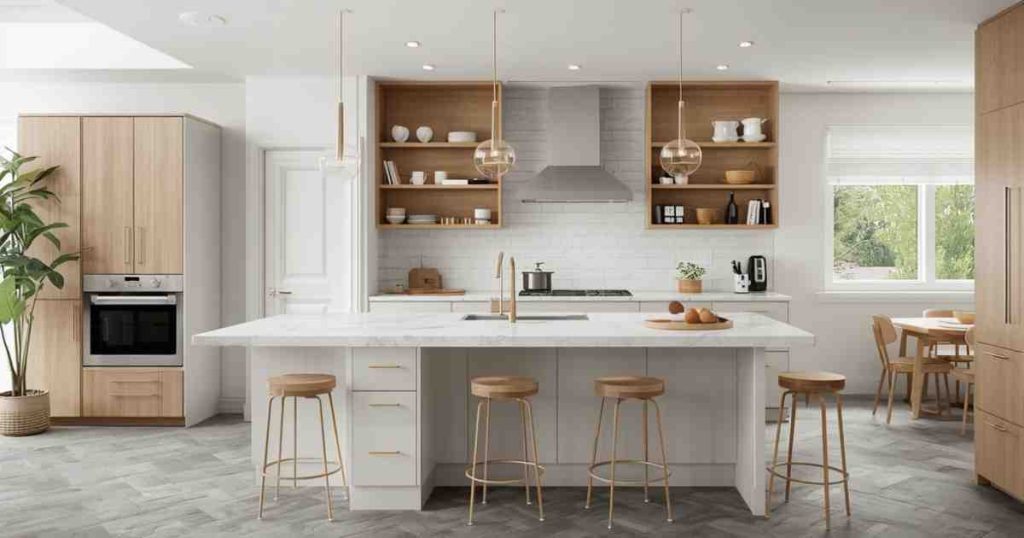
Creating a Sense of Flow
Sharp corners can create visual interruptions, making a space feel segmented and smaller. Curves, on the other hand, create a sense of continuous movement. Imagine a rounded island; it doesn’t stop abruptly.
Instead, it guides the eye around it, encouraging a feeling of openness. This fluidity is crucial in kitchen design, as it’s a hub of activity.
This flowing movement makes it easier to walk around the kitchen and interact with others. It reduces visual clutter and promotes a feeling of calm.
Flowing Layouts
In larger kitchens, curved elements can be used to define zones without using harsh lines. For example, a curved banquette seating area can naturally delineate the dining space from the cooking zone. This creates distinct areas while maintaining an overall sense of connection and flow.
Softer Visual Experience
The human eye naturally follows smooth lines. When applied to kitchen design, this means that curved elements can lead the eye around the room in a pleasing way.
This creates a softer visual experience, reducing the visual stress that can be associated with overly geometric or sharp designs.
It contributes to a more relaxing and comfortable atmosphere.
This is particularly important in spaces where people spend a lot of time, like the kitchen. A less visually jarring environment can significantly improve the overall mood and enjoyment of the space.
A More Inviting Atmosphere
The gentle nature of curves contributes to a more inviting and welcoming atmosphere. It’s an invitation to linger, to connect, and to feel at ease. This is a stark contrast to kitchens that feel too formal or intimidating due to their sharp, rigid geometry.
Reducing the Feeling of Congestion
In smaller kitchens, sharp corners can make the space feel even more cramped. Rounded edges on countertops, islands, and cabinets can create the illusion of more space.
They remove visual barriers and allow light to flow more freely, which can make a compact kitchen feel much larger and less congested.
This effect is subtle but powerful. It’s one of the key reasons why Curved Kitchen Design: Why Rounded Edges Are Dominating 2026 Kitchens is a trend for all home sizes.
Case Study: Small Apartment Kitchen Upgrade
A homeowner in a compact city apartment was struggling with their galley kitchen. It felt tight and difficult to move around. They decided to
The new island allowed easier passage, and its rounded edges made the space feel less confrontational.
The homeowner reported feeling significantly more relaxed in the kitchen. They could now comfortably have a friend over for coffee without feeling like they were constantly in each other’s way.
This simple change, focusing on curved design, improved both the function and the feel of the small space.
Trends and Popularity in 2026
As we look towards 2026, the influence of curved kitchen design is undeniable. It’s a trend that is evolving, incorporating new materials and bolder applications.
This section explores why these soft lines are so dominant now and what we can expect to see more of in the coming year, solidifying Curved Kitchen Design: Why Rounded Edges Are Dominating 2026 Kitchens as a key style.
Why Now? Societal Shifts
The increased popularity of curved kitchen design can be linked to broader societal shifts. After years of fast-paced living and the rise of digital connectivity, there’s a growing appreciation for comfort, well-being, and creating personal sanctuaries.
Homes are increasingly seen as places of retreat and relaxation, and the soft, organic forms of curves contribute to this sense of calm and comfort.
This desire for a more grounded and human-scale living environment is driving many design choices, with curves playing a central role in creating that desired atmosphere.
Statistics on Home Design Preferences
Recent surveys highlight this shift. A 2023 National Kitchen and Bath Association (NKBA) survey indicated a growing interest in softer, more organic shapes and a move away from stark minimalism.
Approximately 65% of designers reported an increase in requests for rounded or curved elements in kitchen renovations.
This data underscores the growing demand for the aesthetic and functional benefits that Curved Kitchen Design: Why Rounded Edges Are Dominating 2026 Kitchens offers.
Another study by Houzz found that homeowners are increasingly prioritizing comfort and personalization in their home design.
This aligns with the idea that curved elements add a unique, comfortable, and inviting character to a space, making it feel more personal and less generic.
Materials and Innovations
Advancements in material science and fabrication techniques are making it easier and more cost-effective to incorporate curves.
Manufacturers are developing new ways to shape and mold materials like quartz, solid surfaces, and even wood to achieve seamless, elegant curves.
This accessibility means that more homeowners can now explore curved kitchen designs without facing prohibitive costs or complex installation challenges. Innovations in fabrication allow for more intricate and precise curved forms.
Advancements in Fabrication
- CNC Machining: Computer Numerical Control (CNC) machines can precisely cut and shape materials like stone and wood into complex curves and organic forms, allowing for custom designs with high accuracy.
- Thermoforming: This process allows certain plastics and solid surface materials to be heated and molded into desired curved shapes, creating seamless, flowing elements for countertops and backsplashes.
- Advanced Adhesives and Joinery: New bonding techniques enable the creation of smooth, continuous curved surfaces from multiple pieces of material, minimizing visible seams and enhancing the organic look.
These technological leaps are instrumental in making sophisticated curved designs more achievable for a wider range of projects.
Future Outlook
The trend towards Curved Kitchen Design: Why Rounded Edges Are Dominating 2026 Kitchens is expected to continue gaining momentum.
As more people experience the comfort, safety, and aesthetic appeal of these designs, they will become more commonplace.
We’ll likely see even more innovative applications, pushing the boundaries of what’s possible with curved forms in kitchen architecture and interior design.
Example: A Fully Integrated Curved Kitchen
Imagine a kitchen where the countertops seamlessly transition into the sink basin, the island has a gently curved edge, and even the cabinet doors feature subtle radii.
This holistic approach to curved design creates a visually stunning and highly functional space. The absence of sharp angles makes cleaning easier and the entire environment feels more cohesive and harmonious.
Comparing Straight vs. Curved Kitchen Designs
To fully appreciate the impact of curved kitchen design, it’s helpful to compare it directly with traditional straight-line approaches.
This comparison highlights the unique advantages and aesthetic differences that make rounded edges a dominating force in 2026. Understanding these distinctions can aid in making informed decisions for your own kitchen.
| Feature | Straight Kitchen Design | Curved Kitchen Design |
|---|---|---|
| Aesthetic | Modern, minimalist, sharp, precise, geometric | Organic, soft, inviting, flowing, comfortable, tactile |
| Safety | Potential for sharp corners causing injuries, especially for children. | Reduced risk of bumps and bruises due to rounded edges. Safer for families and high-traffic areas. |
| Space Perception | Can make spaces feel more structured, sometimes boxy or cramped in smaller areas. | Enhances a sense of flow and openness, making spaces feel larger and less congested. |
| Traffic Flow | Can create more abrupt transitions, potentially hindering movement. | Facilitates smoother movement and easier navigation around the kitchen. |
| Installation/Cost | Generally more standard and cost-effective due to simpler fabrication. | Can be more complex and costly due to specialized fabrication and material shaping. |
| Ergonomics | Standard reach and function. | Can offer more comfortable reach and interaction points, especially with curved islands. |
Pros and Cons of Straight Designs
Straight kitchen designs have long been the standard for good reason. They are straightforward to plan, manufacture, and install, making them a reliable and often more budget-friendly option.
The clean lines convey a sense of order and efficiency, appealing to those who prefer a minimalist or contemporary look.
However, this very precision can sometimes lead to a sterile or impersonal feel. Sharp corners, while efficient in layout, can be a hazard. In smaller spaces, straight lines can emphasize the limitations of the area, making it feel more confined.
Advantages of Curved Designs
The advantages of curved kitchen designs are becoming increasingly evident. The inherent softness of curves creates a warmer, more inviting atmosphere, transforming the kitchen from a purely functional space into a social hub. The improved safety is a significant benefit for households with children or elderly individuals.
Furthermore, the way curves manipulate space perception is remarkable. They can make even modest kitchens feel more spacious and dynamic, encouraging a sense of ease and comfort that straight lines often struggle to achieve.
This makes Curved Kitchen Design: Why Rounded Edges Are Dominating 2026 Kitchens a compelling choice for modern living.
Sample Scenario: Family Kitchen Safety
- A family with two young children is planning a kitchen renovation. They frequently worry about their children running into the sharp corners of their existing island and countertops.
- They opt for a design featuring a curved island with no sharp edges and rounded corners on their countertops.
- During the first week after renovation, one of the children trips and falls near the island. Instead of hitting a hard, sharp corner, they gently bump into the rounded side, avoiding injury.
- The parents feel a significant sense of relief, knowing that the design choice has made their kitchen a safer place for their active children.
Sample Scenario: Maximizing a Small Kitchen
- A homeowner has a small, galley-style kitchen that feels cramped and difficult to maneuver in.
- They decide to
- This change opens up the walkway significantly. The curved edge makes it easier to pass by and creates a more inviting space for someone to sit while the cook is working.
- The homeowner reports that the kitchen now feels more spacious and is a much more enjoyable place to be, demonstrating the spatial benefits of curved design.
Frequently Asked Questions Of Curved Kitchen Design: Why Rounded Edges Are Dominating Kitchens?
Are curved kitchens more expensive?
Generally, curved kitchen designs can be more expensive than traditional straight-line designs. This is because they often require more specialized fabrication and installation techniques to achieve smooth, flowing shapes. However, as the trend grows, more manufacturers are offering cost-effective options, and the increased demand is beginning to influence pricing.
How do I incorporate curves into an existing kitchen?
You can introduce curves in several ways. Consider adding a rounded backsplash, replacing a sharp-cornered island with a curved one, or opting for cabinet doors with softened edges. Even small touches like rounded drawer pulls or a curved light fixture can contribute to the aesthetic.
Are rounded edges practical for cleaning?
Yes, rounded edges can often be easier to clean. They eliminate tight corners where dust and debris can accumulate. Smooth, continuous curves allow for easier wiping and fewer hard-to-reach spots, contributing to a more hygienic kitchen environment.
What styles of kitchens work best with curved elements?
Curved elements can work with a variety of styles. They are particularly effective in contemporary, modern, transitional, and even some mid-century modern designs. The key is to ensure the curves are integrated thoughtfully to complement the overall aesthetic, rather than feeling out of place.
Will curved kitchen designs go out of style quickly?
While trends do evolve, the appeal of curves is rooted in fundamental design principles related to nature and human comfort. The move towards softer, more inviting spaces suggests that curved elements, especially those that enhance safety and flow, are likely to remain popular for a considerable time, becoming a more enduring feature of kitchen design.
Wrap Up
Curved kitchen design is more than a passing trend; it’s a thoughtful evolution towards creating more harmonious and functional spaces. Choosing rounded countertop edges can enhance both the aesthetics and safety of your kitchen.
Rounded edges offer enhanced safety and a softer visual appeal that can make any kitchen feel more welcoming. By embracing these flowing lines, you create a space that is both beautiful and practical for everyday life. The integration of safety in kitchen design is a key consideration, especially for families with young children.
Consider how these organic shapes can bring comfort and style to your home. Official kitchen safety for families guidelines can help prevent accidents involving sharp corners.

![How To Add Warmth To A Modern Kitchen Without Losing The Minimalist Feel[1]](https://kitchentoolslab.com/wp-content/uploads/2026/05/How_To_Add_Warmth_To_A_Modern_Kitchen_Without_Losing_The_Minimalist_Feel1-768x403.jpg)
![Open Concept Modern Kitchen Benefits, Drawbacks, And Design Tips[1]](https://kitchentoolslab.com/wp-content/uploads/2026/05/Open-Concept_Modern_Kitchen__Benefits_Drawbacks_And_Design_Tips1-768x403.jpg)