Why Parboiling Sweet Potatoes Before Roasting Changes Texture
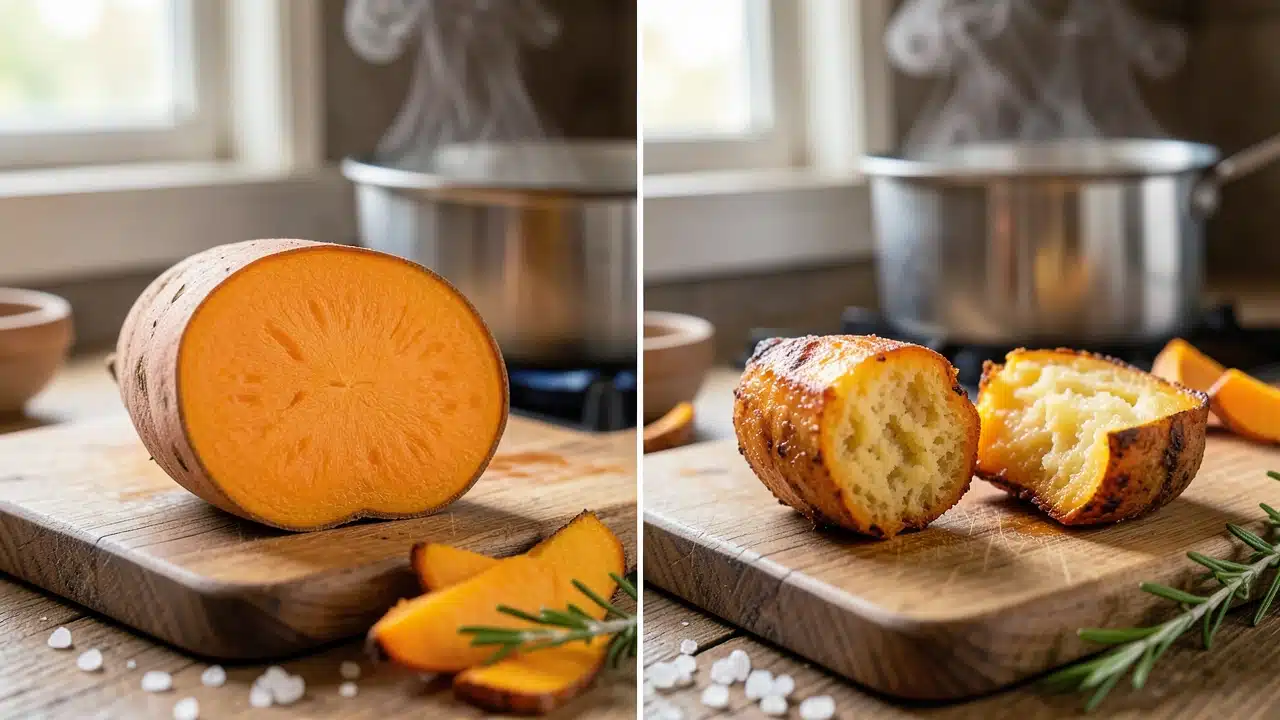
Parboiling sweet potatoes before roasting changes texture because hot water partially softens cell walls and starts starch conversion before dry heat begins.
The surfaces roughen slightly after draining, so they brown better, while the centres turn creamier. Over-parboiling pushes them past structure, causing broken edges, mushiness, and less caramelised roasting texture.
Want to make your roasted sweet potatoes even better? Sometimes, a little extra step can make a big difference.
If you’ve ever wondered about Why Parboiling Sweet Potatoes Before Roasting Changes Texture, you’re in the right place.
This simple technique helps your sweet potatoes cook more evenly and achieve a wonderfully tender, slightly creamy inside without getting mushy.
You’ll get delicious results faster, making meal prep a breeze and impressing everyone with your perfectly roasted veggies.
Key Takeaways
- Parboiling sweet potatoes before roasting helps them cook faster and more evenly.
- This process leads to a creamier, more tender interior while keeping the outside from burning.
- Parboiling makes sweet potatoes easier to cut and handle before roasting.
- The starch in sweet potatoes gelatinizes during parboiling, affecting their final texture.
- You can control the exact texture by adjusting parboiling and roasting times.
Understanding Why Parboiling Sweet Potatoes Before Roasting Changes Texture
Many home cooks aim for that perfect roasted sweet potato: a caramelized, slightly crispy exterior and a soft, melt-in-your-mouth interior.
Achieving this balance can sometimes be tricky. Raw sweet potatoes, especially larger ones, can take a long time to roast.
This often leads to the outside getting too dark or even burnt before the inside is tender. This is where parboiling comes in.
Understanding Why Parboiling Sweet Potatoes Before Roasting Changes Texture is the key to unlocking consistently great results.
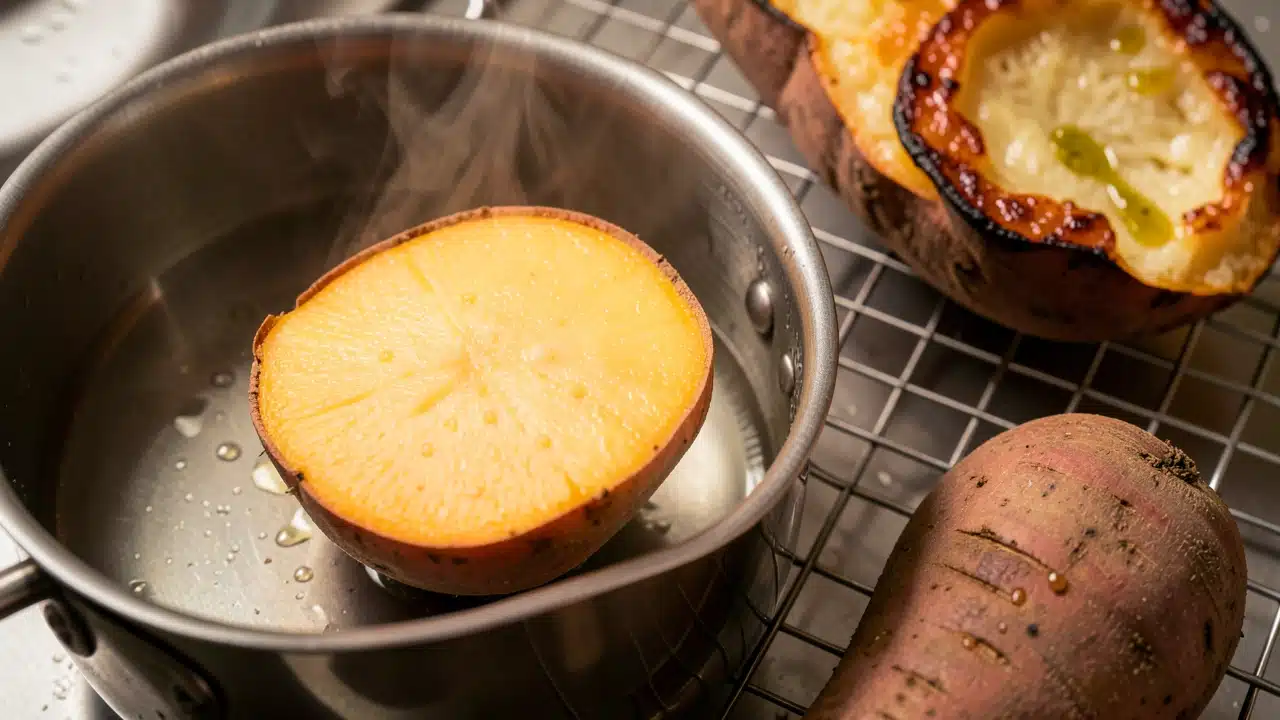
Parboiling, which is a partial cooking in boiling water, starts the cooking process for the sweet potato. It softens the cell walls and begins to break down the starches.
When these parboiled sweet potatoes then go into the oven, they don’t need as much time to cook through.
This means the oven’s dry heat can focus on creating that desirable caramelization and crispiness on the outside without overcooking the inside. It’s a simple method that significantly improves the final outcome.
The Science Behind the Texture Change
Sweet potatoes are full of starches. These starches are complex carbohydrates that need heat and moisture to break down into simpler sugars. When you boil a sweet potato, even for a short time, you’re introducing heat and water.
This causes the starch granules within the potato cells to swell and absorb water. This process is called gelatinization.
When the starch gelatinizes, it softens the structure of the potato. Think of it like softening dry pasta. The individual starch grains become plump and less rigid.
For Why Parboiling Sweet Potatoes Before Roasting Changes Texture, this gelatinization is crucial. It makes the potato more tender on the inside from the start. It also makes the potato more permeable, allowing heat to penetrate more quickly during roasting.
During roasting, the heat continues to cook the potato. Because the starches are already partially broken down and the cell walls are softened from parboiling, the inside of the sweet potato becomes very tender and almost creamy. The roasting process then works its magic on the outside.
The sugars on the surface caramelize, creating that sweet, slightly browned, and sometimes crispy finish. Without parboiling, the inside might remain too firm when the outside is perfectly roasted.
How Parboiling Affects Cooking Time and Evenness
One of the most practical benefits of understanding Why Parboiling Sweet Potatoes Before Roasting Changes Texture is the impact on cooking time.
Raw sweet potatoes can take anywhere from 45 minutes to over an hour to roast, depending on their size and the oven temperature. Parboiling cuts this time significantly.
By giving the sweet potatoes a head start in boiling water, you reduce the amount of cooking time needed in the oven.
This is especially helpful for larger sweet potatoes or when you need to cook a lot of them at once. Instead of waiting an hour or more, you might only need 20 to 30 minutes of roasting time after parboiling.
This saves energy and is a lifesaver on busy weeknights.
Parboiling also promotes more even cooking. When a whole raw sweet potato goes into the oven, the heat has to work its way from the outside in. The parts closer to the heat source will cook faster than the center.
This can lead to uneven textures, where the edges are soft and the middle is still a bit hard, or vice versa.
Parboiling partially cooks the entire potato. This means that when it goes into the oven, all parts of the potato are already on their way to being tender. The oven’s dry heat then finishes the job, ensuring that the entire sweet potato cooks through evenly.
This leads to a more consistent and pleasing texture from the first bite to the last. You get a uniformly tender interior every time.
Achieving the Perfect Sweet Potato Texture: Step-by-Step
Let’s walk through how to parboil sweet potatoes before roasting to get that ideal texture. It’s a straightforward process that yields impressive results.
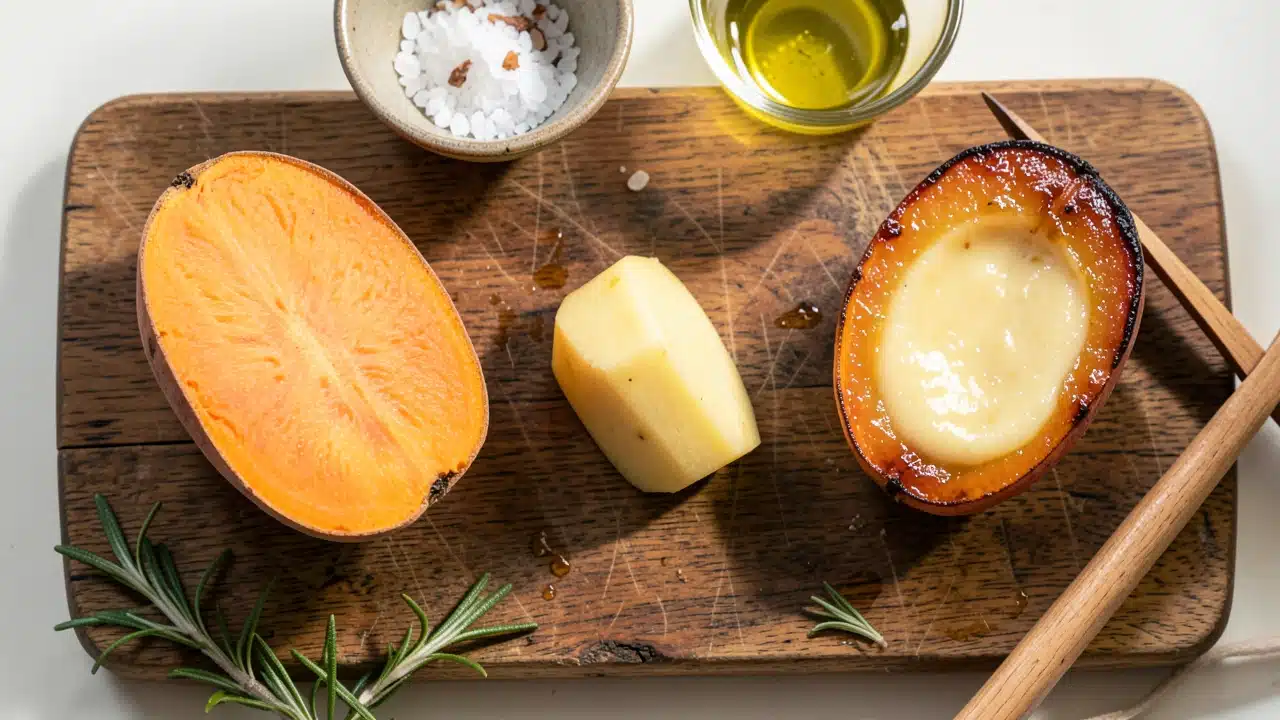
- Prepare the Sweet Potatoes: Wash your sweet potatoes thoroughly. You can peel them if you prefer, or leave the skin on for extra nutrients and a slightly chewier texture. Cut them into uniform pieces, such as cubes or wedges. Uniformity is key for even cooking, both in the parboiling and roasting stages. Aim for pieces that are roughly the same size, about 1 to 1.5 inches.
- Parboil the Sweet Potatoes: Place the cut sweet potato pieces into a large pot. Cover them with cold water. Add a generous pinch of salt to the water. Bring the water to a boil over high heat. Once boiling, reduce the heat to medium and let the potatoes simmer. This is the parboiling step.
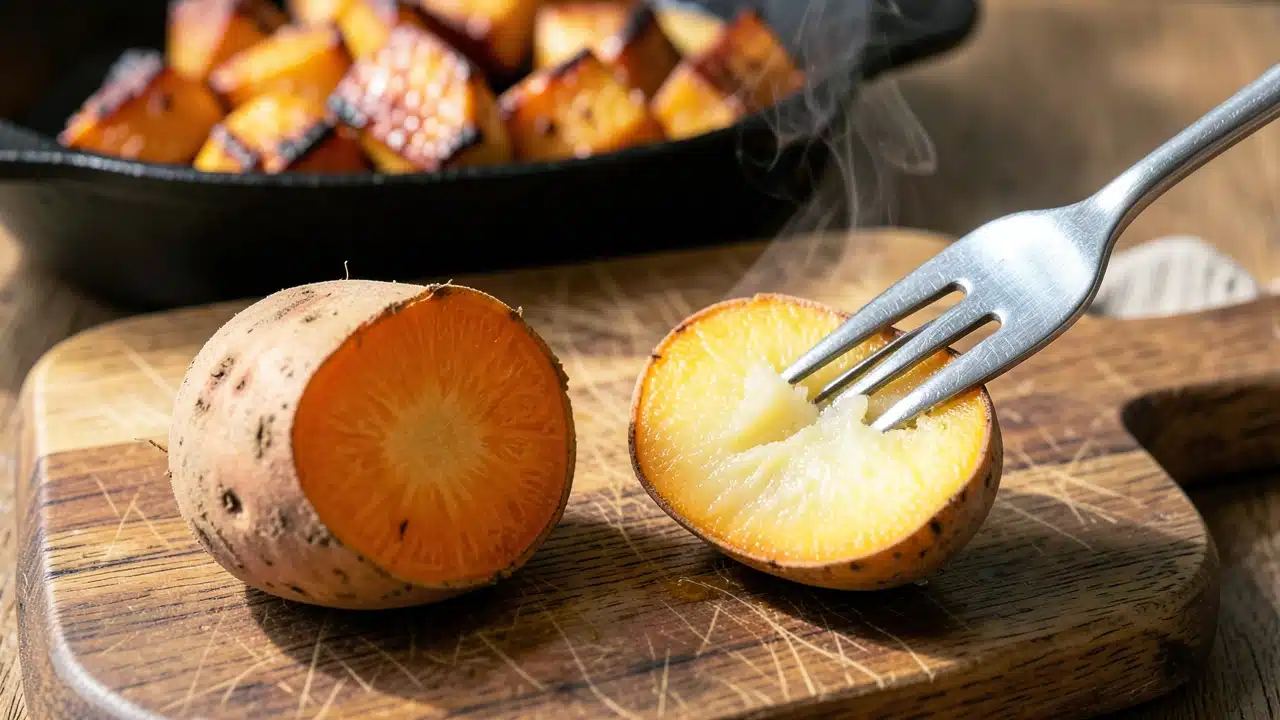
- Timing the Parboil: This is where you control the texture. You don’t want to cook them until they are fully soft. You’re just aiming to parboil them. For a tender but not mushy interior, parboil for about 5 to 10 minutes. A good test is to pierce a piece with a fork; it should feel slightly softened but still offer some resistance. The exact time depends on the size of your pieces.
- Drain and Dry: Carefully drain the hot water from the pot. Let the sweet potatoes sit in the colander for a few minutes to steam dry. You can even gently shake the colander or spread them on a clean kitchen towel. Removing excess moisture is important because water on the surface can prevent browning and crisping during roasting.
- Season and Roast: Once dry, return the sweet potatoes to the pot or a baking sheet. Toss them with your desired seasonings. Olive oil or melted butter, salt, pepper, and any herbs or spices like cinnamon, paprika, or rosemary work wonderfully. Spread them in a single layer on a baking sheet.
- Roast to Perfection: Roast in a preheated oven, typically at 400°F (200°C). The roasting time will be shorter than if you were roasting raw sweet potatoes, usually around 20 to 30 minutes. Flip them halfway through to ensure even browning. They are done when they are tender when pierced with a fork and have nicely caramelized edges.
Comparing Parboiling vs. Roasting Raw Sweet Potatoes
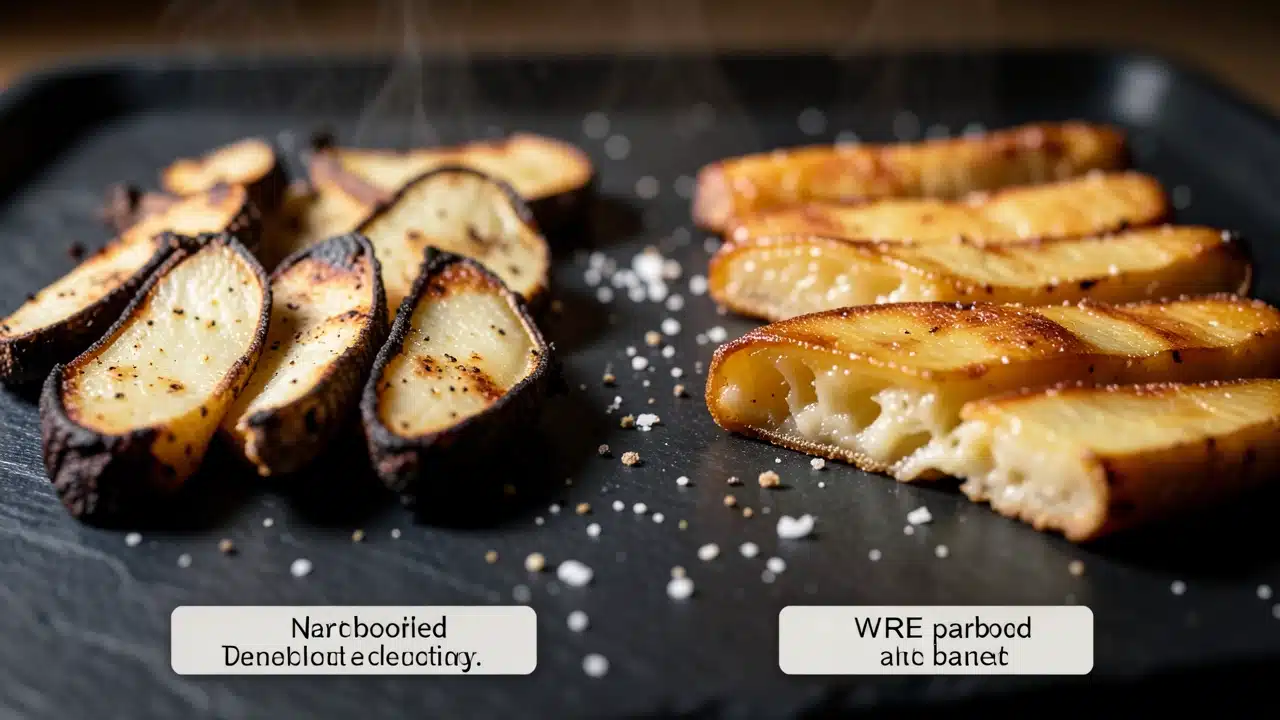
To truly appreciate Why Parboiling Sweet Potatoes Before Roasting Changes Texture, let’s look at the differences side-by-side. This comparison highlights the benefits of adding that extra step.
| Initial Cooking Stage | Partially cooked in boiling water. | Starts cooking in the oven’s dry heat. |
| Starch Gelatinization | Begins in boiling water, softening structure. | Occurs slowly as potato heats in the oven. |
| Cooking Time (Oven) | Shorter (approx. 20-30 minutes). | Longer (approx. 45-60+ minutes). |
| Interior Texture | Tender, creamy, uniformly cooked. | Can be uneven; center might be firm when edges are done. |
| Exterior Texture | Easier to achieve caramelization and crispiness without burning the inside. | Risk of burning exterior before interior is tender. |
| Evenness of Cooking | More consistent cooking throughout. | Potential for uneven cooking, especially with larger potatoes. |
| Moisture Content | Excess moisture removed after draining to aid browning. | Starts with raw moisture; can steam if not handled well. |
Common Mistakes to Avoid
While parboiling sweet potatoes is simple, there are a few common pitfalls that can prevent you from achieving the best texture. Being aware of these will help ensure your efforts pay off.
- Over-Parboiling: This is the most frequent mistake. If you boil the sweet potatoes until they are completely soft, they will turn to mush when roasted. You want them partially cooked, just tender enough to be pierced easily. Think of it as parboiling, not fully boiling.
- Not Drying Them Well: As mentioned, excess water on the surface of the parboiled potatoes will steam them rather than roast them. This hinders browning and crisping. Take the extra minute to let them steam dry or pat them with a towel.
- Uneven Cutting: If your sweet potato pieces are drastically different sizes, they won’t cook evenly. Some pieces might be mushy from overcooking, while others remain too firm. Strive for consistent sizes.
- Overcrowding the Roasting Pan: Just like with any roasting, giving your sweet potatoes enough space on the baking sheet is crucial. If they are piled on top of each other, they will steam instead of roast. This prevents that desirable caramelization and crispy texture. Ensure they are in a single layer with a little space between them.
- Not Salting the Parboiling Water: Salting the water during the parboiling stage seasons the potatoes from the inside out. This is a subtle but important step that enhances the overall flavor. Don’t skip the salt in the boiling water!
Variations and Flavor Pairings
The beauty of sweet potatoes is their versatility. Understanding Why Parboiling Sweet Potatoes Before Roasting Changes Texture allows you to experiment with different flavors and preparations. Once you have that perfect tender interior and caramelized exterior, the possibilities are endless.
For a sweet profile, try tossing your parboiled and roasted sweet potatoes with a drizzle of maple syrup, a sprinkle of cinnamon, and a pinch of nutmeg. This is fantastic as a side dish for breakfast or brunch, or even as a healthier dessert option.
If you prefer savory, go for herbs and spices. Rosemary, thyme, garlic powder, onion powder, and smoked paprika are excellent choices. A little chili powder or cayenne pepper can add a nice kick.These savory versions pair wonderfully with roasted meats, poultry, or as part of a hearty salad.
Consider adding other vegetables to the roasting pan with your sweet potatoes. Brussels sprouts, red onions, and bell peppers all roast well at similar temperatures and complement the sweetness of the potato. Just ensure they are cut to a similar size for even cooking. Experimenting with different sweet potato varieties and cooking methods can yield diverse flavor profiles.
The Impact on Sweet Potato Starches and Sugars
When we talk about Why Parboiling Sweet Potatoes Before Roasting Changes Texture, the transformation of starches into sugars is a key factor.
Sweet potatoes contain two main types of carbohydrates: starch and sugar. The ratio of these can change with cooking.
Starch is a complex carbohydrate that gives the potato its firm structure. Sugar is a simple carbohydrate that provides sweetness. For detailed composition, consult the USDA sweet potato nutrition data for starch and sugar content.
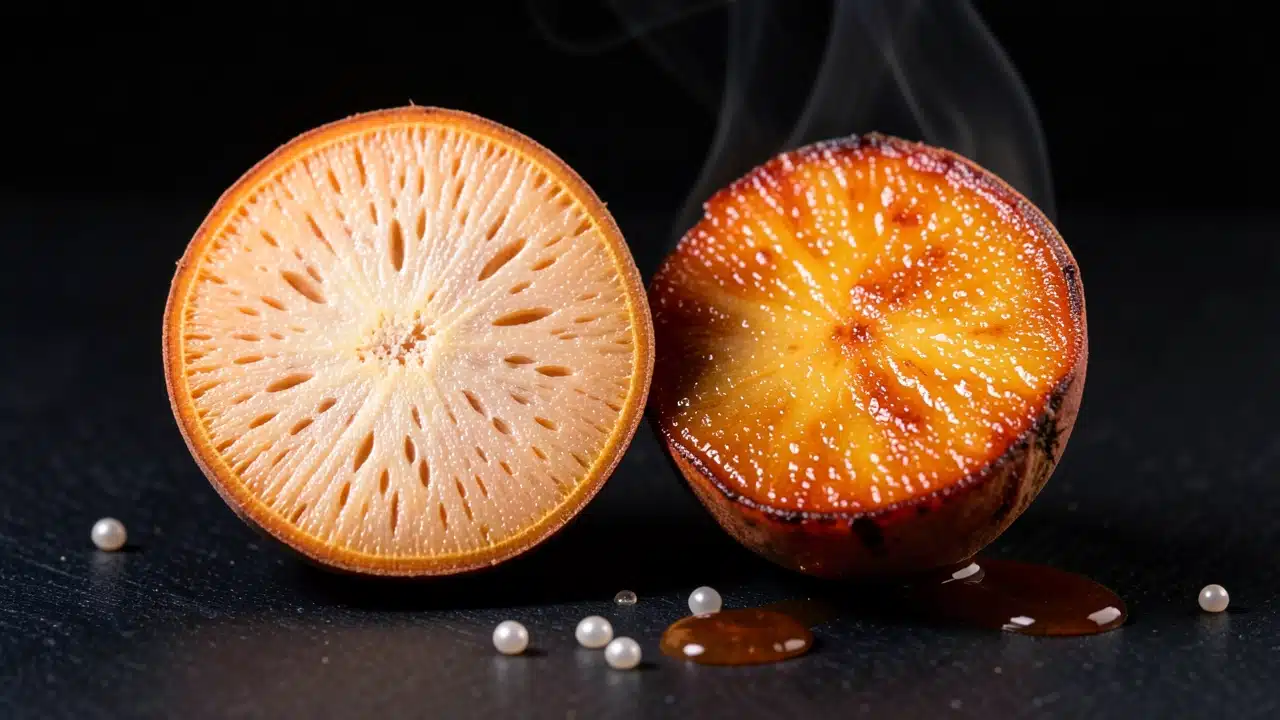
During the initial stages of cooking, like parboiling, heat and moisture start to break down the long chains of starch molecules.
This process is known as hydrolysis, and it converts some of the starch into simpler sugars.
This conversion is why parboiled and then roasted sweet potatoes often taste sweeter than raw ones. The roasting process further enhances this by caramelizing these sugars on the surface, creating those delicious brown, crispy bits. The more the starches break down into sugars, the sweeter and more tender the potato becomes. The starch gelatinization process explains how heating starches in water changes their structure.
Parboiling accelerates this process, giving you a head start on both tenderness and sweetness.
The texture change is directly related to this conversion. As starch breaks down, the potato becomes softer and more yielding.
As sugars form and caramelize, they contribute to a richer flavor and a slightly stickier, more appealing exterior.
This combination of starch-to-sugar conversion and gelatinization is the core reason behind the textural improvements achieved through parboiling.
Frequently Asked Questions Of Why Parboiling Sweet Potatoes Before Roasting Changes Texture
Question: Does parboiling make sweet potatoes mushy?
Answer: Not if done correctly. You only parboil them for a short time, about 5-10 minutes, until they are slightly tender, not fully cooked. This partial cooking prevents them from becoming mushy when roasted.
Question: How long should I parboil sweet potatoes?
Answer: For most recipes, parboiling sweet potatoes for 5 to 10 minutes is sufficient. The goal is to soften them slightly, not to cook them all the way through.
Question: Can I parboil sweet potatoes the day before roasting?
Answer: Yes, you can parboil sweet potatoes ahead of time. Drain them well, let them cool, and store them in an airtight container in the refrigerator. Before roasting, ensure they are dried thoroughly.
Question: Is it necessary to parboil sweet potatoes before roasting?
Answer: It’s not strictly necessary, but it significantly improves the texture by ensuring a tender interior and allowing for better caramelization on the outside. It also reduces roasting time.
Question: What happens if I skip parboiling sweet potatoes before roasting?
Answer: If you skip parboiling, your sweet potatoes may take longer to cook. You might also find that the outside gets too dark or burnt before the inside is fully tender, leading to uneven cooking and texture.
Question: Does parboiling change the nutritional value of sweet potatoes?
Answer: Some water-soluble nutrients might leach into the boiling water during parboiling. However, the overall nutritional impact is generally considered minor, and the benefits of improved texture and reduced cooking time often outweigh this slight loss.
Final Thoughts
Understanding Why Parboiling Sweet Potatoes Before Roasting Changes Texture is your secret to perfectly cooked sweet potatoes.
This simple step ensures a tender, creamy inside and allows the outside to caramelize beautifully without burning. You’ll save time in the oven and consistently achieve delicious results.
Give it a try for your next meal!