
Kitchen Peninsula Vs Island For Small Kitchens: Which Adds More Value?
Imagine this: you’re trying to prep dinner for your family, but your small kitchen feels like a sardine can.
Every move is a careful dance to avoid bumping into someone or knocking something over. You dream of more counter space and a place to casually chat while you cook.
This is where smart kitchen design choices can make a huge difference. Understanding the subtle yet significant differences between a Kitchen Peninsula vs Island for Small Kitchens: Which Adds More Value? will help you transform your cramped cooking space into a more functional and enjoyable area.
You’ll learn how to maximize utility, improve workflow, and ultimately, make your kitchen a place you love to spend time in, boosting your home’s appeal and practicality.
Key Takeaways
- A kitchen peninsula extends from an existing counter or cabinet, creating an L-shape or U-shape layout.
- A kitchen island is a freestanding unit, separate from other cabinetry, offering more flexibility in placement.
- For small kitchens, a peninsula often provides better flow and a more defined workspace without blocking pathways.
- Islands can offer more seating and storage but might feel more intrusive in very tight spaces.
- The value added depends on how well each element integrates with the existing layout and your specific needs.
- Considering traffic flow and the primary use of the space is key to deciding which is more valuable.
![Kitchen Peninsula Vs Island For Small Kitchens Which Adds More Value[1]](https://kitchentoolslab.com/wp-content/uploads/2026/05/Kitchen_Peninsula_Vs_Island_For_Small_Kitchens__Which_Adds_More_Value1.jpg)
Understanding Kitchen Layouts for Small Spaces
Small kitchens present unique challenges when it comes to maximizing space and functionality. The goal is to create an efficient workspace that doesn’t feel cramped or hinder movement. This involves careful planning of every element, from cabinet placement to appliance choices.
When considering additions like a peninsula or island, it’s vital to think about how they impact the overall flow and usability of the room. The right choice can transform a tight space into a highly practical and inviting area.
The right choice can transform a tight space into a highly practical and inviting area.
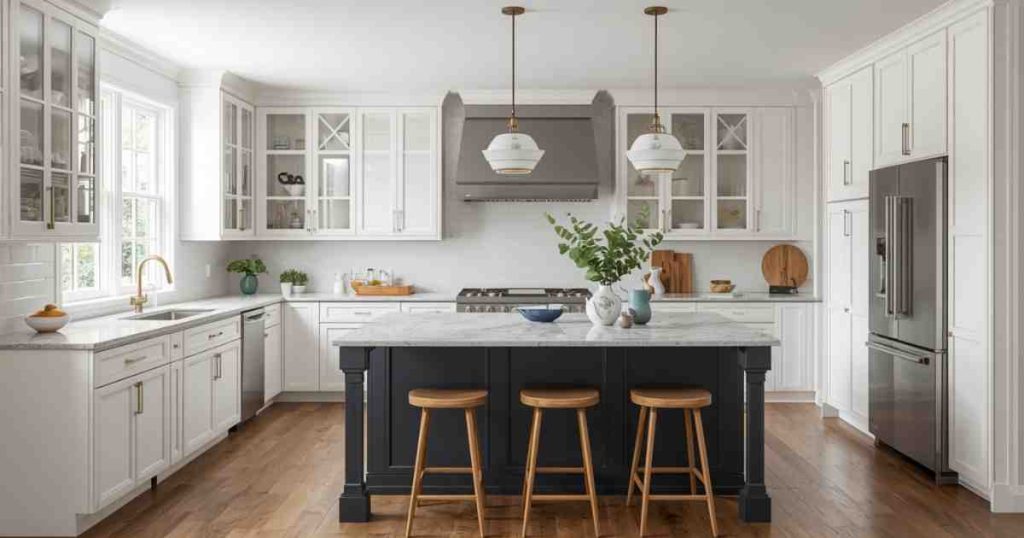
The Role of Counter Space and Storage
Counter space is the lifeblood of any kitchen. It’s where you chop vegetables, assemble meals, and place appliances. In a small kitchen, every inch of counter space is precious.
Similarly, storage is crucial for keeping a kitchen organized and clutter-free. Without adequate storage, countertops can quickly become overwhelmed, making cooking and cleaning more difficult.
Both peninsulas and islands can contribute to increased counter space and storage, but their effectiveness varies based on the kitchen’s dimensions and layout.
- Enhanced Workspace: Both a peninsula and an island can significantly expand your usable counter area. This allows for more efficient meal preparation, with separate zones for chopping, mixing, and plating.
- Additional Storage Solutions: Many designs incorporate cabinets or drawers into the base of a peninsula or island. This provides valuable extra space for storing pots, pans, small appliances, or even pantry items, helping to keep your main kitchen cabinets less cluttered.
- Improved Organization: By having dedicated areas for tasks and storage, these additions can lead to a more organized kitchen. This makes it easier to find what you need and keeps the main cooking zones clear and tidy.
For instance, a small apartment kitchen might only have a single run of cabinets along one wall. Adding a peninsula that extends from the end of this counter can immediately double the available workspace and provide a spot for a couple of bar stools.
This not only makes cooking easier but also creates a casual dining or social area, adding to the kitchen’s overall value and utility.
Without these additions, the space might feel perpetually tight and limited in its functionality.
Traffic Flow and Accessibility
Even in a small kitchen, maintaining clear pathways for movement is essential. You need to be able to move freely between the refrigerator, sink, and stove without feeling constricted.
Adding a new element like a peninsula or island requires careful consideration of the clearances needed.
Too little space can make the kitchen feel cramped and difficult to navigate, impacting your ability to cook and move around comfortably. Good traffic flow ensures that the kitchen remains functional and pleasant to use.
- Clearance Requirements: Experts recommend at least 36-42 inches of clear space around a kitchen island or peninsula. This allows for comfortable movement, opening appliance doors, and even two people passing each other.
- Impact on Existing Layout: Consider how the addition will affect the “kitchen work triangle” – the imaginary lines connecting the sink, refrigerator, and stove. The goal is to enhance, not disrupt, this efficient workflow.
- Accessibility for All: In some cases, the placement of an island or peninsula can improve accessibility, creating a more open feel and easier access to different areas of the kitchen for everyone in the household.
A common issue in small kitchens is the ” galley kitchen” layout, where cabinets and appliances are on two opposing walls.
If the gap between these walls is too narrow, adding a freestanding island becomes impossible. In such scenarios, a peninsula might be a better option, as it can extend from one wall to define a space without bisecting the main walkway, preserving crucial movement space.
The Kitchen Peninsula: A Space-Saving Solution
A kitchen peninsula is a countertop that extends from an existing cabinet or wall, creating an L-shape or U-shape layout.
It’s essentially a “connected” island, meaning it’s attached to the main cabinetry. This design is particularly well-suited for smaller kitchens because it doesn’t require as much open floor space as a freestanding island.
It can cleverly define different zones within the kitchen and add valuable counter and seating space without obstructing essential pathways.
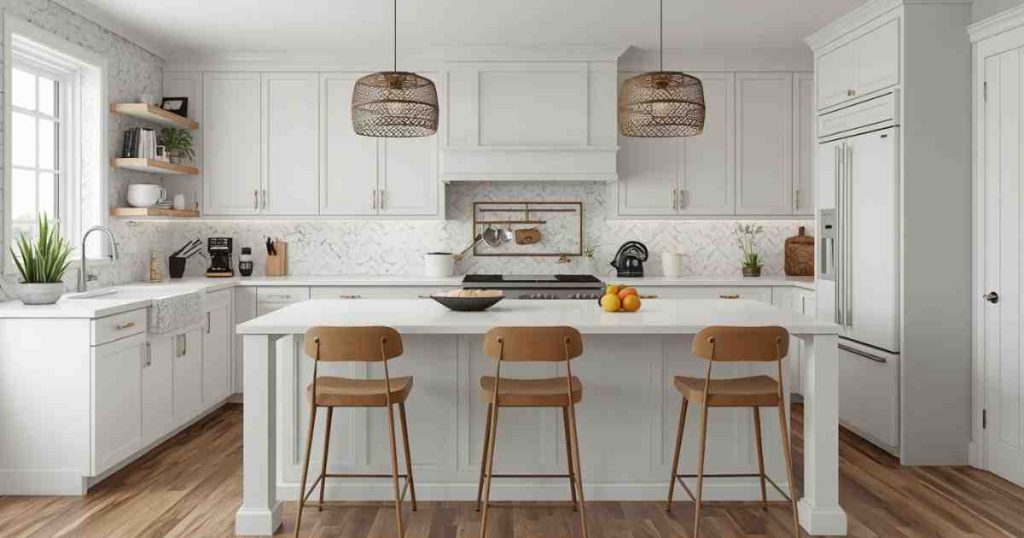
How a Peninsula Integrates with Existing Cabinets
The key advantage of a peninsula is its seamless integration with your existing kitchen cabinets. It essentially acts as an extension of your current countertops and storage.
This connection provides a stable structure and can visually flow with the rest of your kitchen’s design.
When planned correctly, it can feel like a natural addition rather than something that was shoehorned in.
- Continuous Design: Because it’s attached to existing cabinets, a peninsula can often match your current cabinet style and countertop material. This creates a cohesive and unified look throughout your kitchen, making it feel larger and more intentional.
- Structural Support: The peninsula is inherently supported by the cabinetry it’s attached to, meaning it usually doesn’t require extra leg supports, which can sometimes get in the way in tight spaces.
- Efficient Use of Space: It carves out additional workspace or seating without demanding a large central area, which is ideal for smaller or oddly shaped kitchens where a separate island might feel too imposing.
Consider a kitchen that has an open floor plan, with the kitchen area flowing into a dining or living space. A peninsula can serve as a subtle but effective divider between these zones.
It provides a visual separation without a full wall, making the kitchen feel more integrated with the rest of the home while still offering practical benefits like extra prep surface and casual seating.
Benefits for Small Kitchens
In small kitchens, space is at a premium, and every addition needs to justify its presence. A peninsula excels in these environments by offering a substantial increase in functionality without compromising movement.
It’s a smart way to gain more workspace, storage, and a potential dining spot without making the room feel overcrowded.
This makes it a highly valuable feature for compact living spaces.
- Increased Countertop Area: A peninsula can add anywhere from 2 to 6 feet of extra countertop space, depending on its size. This is a significant boost for meal prep, baking, or simply having a place to set down groceries.
- Built-in Seating Option: Many peninsulas can accommodate bar stools, transforming them into a breakfast bar or a casual dining spot. This is a fantastic way to add seating without needing a separate dining table, which can be a luxury in small kitchens.
- Improved Kitchen Flow: By extending from a wall or existing counter, a peninsula often directs traffic flow more effectively than a freestanding island might in a narrow space. It can create a natural boundary without blocking passage.
Take the example of a homeowner with a galley-style kitchen that’s only 8 feet wide. Installing a freestanding island here would leave less than 3 feet of clearance, making it difficult to move around.
However, a peninsula extending from one of the longer walls, leaving about 3.5 to 4 feet of clearance on the other side, provides ample workspace and seating while maintaining good traffic flow.
This makes the kitchen much more usable day-to-day.
Potential Drawbacks of a Peninsula
While peninsulas offer great advantages for small kitchens, they aren’t without their limitations. Their fixed nature means they are less flexible than islands, and their placement can sometimes restrict certain kitchen layouts or future modifications.
While peninsulas offer great advantages for small kitchens, they aren't without their limitations.
It’s important to weigh these potential downsides against the benefits to ensure it’s the right fit for your space.
- Limited Flexibility: Once installed, a peninsula is permanently attached to your cabinetry. This means you cannot easily reposition it or remove it if your needs or kitchen layout change in the future.
- Can Restrict Access: In some L-shaped or U-shaped kitchens, a peninsula can create a slightly more enclosed feeling or make it harder to access certain cabinets or appliances if not carefully planned.
- Less “Open Concept” Feel: Compared to a well-placed island that can act as a central hub, a peninsula can sometimes feel more like an extension of the kitchen’s walls, which might not lend itself as well to very open-plan living areas.
Imagine a situation where a homeowner installs a peninsula, and then a few years later, they decide they want to add a larger dining table in the adjacent open space. The fixed peninsula might now feel like an obstacle, blocking the desired placement of the new furniture. This is why careful planning of its dimensions and location is so important from the outset.
The Kitchen Island: A Versatile Centerpiece
A kitchen island is a freestanding unit that sits in the middle of the kitchen, separate from other cabinets and countertops.
It offers a lot of versatility in terms of design, function, and placement. While often associated with larger kitchens, a well-chosen and appropriately sized island can also be a valuable addition to smaller kitchens, provided there’s enough space to accommodate it comfortably and maintain good traffic flow.
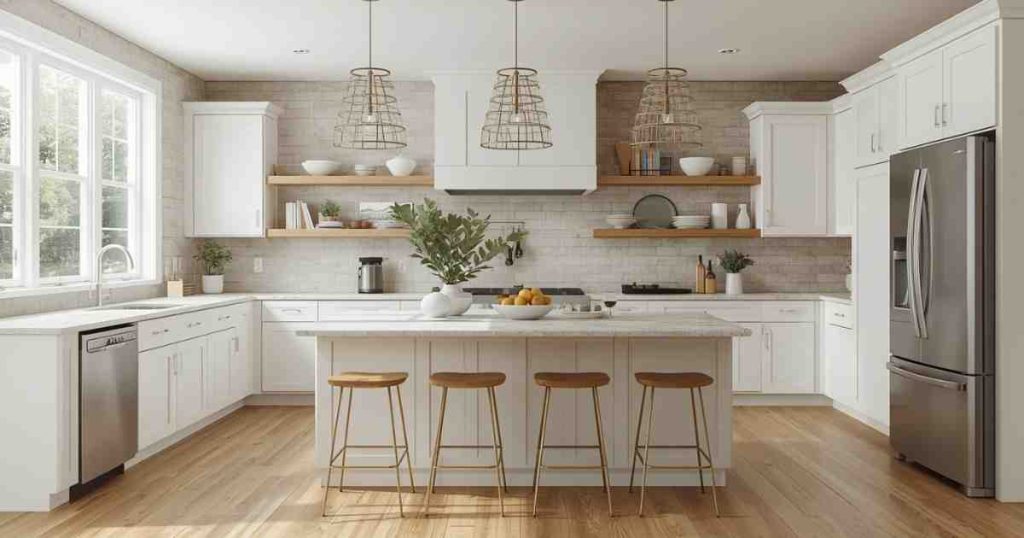
Design and Functionality of Islands
Kitchen islands come in a vast array of styles, sizes, and configurations. They can be simple workstations with just a countertop, or they can be elaborate units featuring sinks, cooktops, extensive storage, and seating areas.
Their freestanding nature allows for creative placement and can serve as a focal point in the kitchen, enhancing both its aesthetic appeal and its practical utility.
- Multiple Uses: An island can serve as a primary prep area, a casual dining spot, a place to do homework, a convenient spot for appliances, or a combination of these. The possibilities are vast.
- Customization Options: From built-in appliances like dishwashers or wine fridges to pull-out trash bins and specialized drawers, islands can be highly customized to meet specific needs and preferences.
- Aesthetic Appeal: A well-designed island can elevate the look of your kitchen, acting as a central design element that ties the room together. It can be a statement piece that reflects your personal style.
A common scenario is a family that enjoys cooking together. In a kitchen with enough space, an island can be designed with a large, durable countertop and a few stools. This allows one person to chop ingredients on one side, while another can mix or plate food on the other, all while conversing.
This enhances the communal aspect of cooking and makes the kitchen a more engaging social space.
Space Considerations for Islands in Small Kitchens
The biggest challenge for islands in small kitchens is space. If an island is too large or placed too close to other cabinets, it can make the kitchen feel cramped and difficult to move through.
However, with smart design choices and careful measurement, even smaller kitchens can benefit from an island.
The key is to choose the right size and shape and ensure adequate clearances.
- Minimum Clearance: As mentioned before, maintaining at least 36-42 inches of clearance around an island is crucial. This ensures you can open cabinet doors and move freely without feeling confined.
- Island Size and Shape: For smaller kitchens, consider narrower, rectangular islands or even “mini” islands that offer some of the benefits without taking up too much floor space. Galley kitchens, for example, might benefit from a narrower island that runs parallel to the cabinets.
- Movable Islands: Some islands come on wheels, offering the flexibility to move them out of the way when not in use or to reposition them for different tasks. This can be a great compromise for very tight spaces.
A case study might involve a homeowner who initially thought an island was impossible in their 10×12 foot kitchen.
After consulting with a designer, they opted for a 3-foot wide, 5-foot long island with shallow cabinets on one side and an overhang for seating on the other.
By carefully measuring the required clearances, they found they could still maintain a comfortable 4-foot walkway on the main traffic side, significantly improving their workspace and adding seating without making the kitchen feel like a hallway.
Potential Drawbacks of an Island
While islands offer many advantages, they also have potential drawbacks, especially in smaller living spaces.
Their freestanding nature can sometimes disrupt kitchen flow if not placed correctly, and they can be more complex to install, potentially leading to higher costs. It’s important to consider these factors before committing to an island design.
- Can Obstruct Flow: If not placed strategically, a freestanding island can act as a barrier, making it awkward to move between different work zones in the kitchen. This is particularly true in layouts that aren’t perfectly square or rectangular.
- Installation Complexity: Islands often require electrical wiring for outlets or specialized plumbing if a sink is included. This can add to installation costs and complexity compared to a fixed peninsula.
- May Require More Space: Even a small island needs significant surrounding clear space to function effectively. In very compact kitchens, this requirement can be a limiting factor, making the space feel even smaller.
Consider a situation where an island is placed too close to the refrigerator. Every time the refrigerator door is opened, it might hit the side of the island, or vice versa, forcing users to contort themselves to retrieve items.
This kind of poor placement can significantly detract from the kitchen’s usability and create daily frustrations.
Kitchen Peninsula vs Island for Small Kitchens: Which Adds More Value?
Deciding between a kitchen peninsula and a kitchen island for a small kitchen often comes down to the specific layout, the primary use of the space, and the desired outcome. Both can add value, but one might be a better fit for your particular needs.
The “value” is not just financial; it’s about how much the addition improves the kitchen’s functionality, livability, and overall appeal.
Evaluating Your Kitchen’s Layout
The shape and size of your kitchen are primary factors in determining whether a peninsula or an island is more suitable.
A peninsula is often the preferred choice for galley kitchens or those with limited floor space because it extends from existing structures. Islands, on the other hand, work best when there’s a central open area that can accommodate the unit and maintain adequate clearances all around.
- Galley Kitchens: These kitchens, with cabinets and appliances on two parallel walls, often benefit more from a peninsula. It can extend from one wall to create an L-shape or U-shape, adding counter space and seating without dividing the walkway.
- L-Shaped or U-Shaped Kitchens: In these layouts, a peninsula can further enhance the existing shape, creating a more defined workspace or a breakfast bar. An island might also work if there’s a generous open space in the center.
- Open Concept Living: If your kitchen opens into a living or dining area, a peninsula can act as a subtle room divider, while an island can serve as a more prominent central hub, especially if it incorporates seating.
Let’s look at a homeowner with a compact L-shaped kitchen. They have cabinets along one wall and a section of counter extending perpendicular to it. Installing a peninsula that continues from the end of the L adds significant counter space and can provide a comfortable spot for two people to eat breakfast, without encroaching on the main walking path.
An island here might feel too crowded, especially if it blocks access to the corner cabinets.
Considering Your Lifestyle and Needs
Think about how you use your kitchen most often. Do you do a lot of cooking and need extra prep space? Do you entertain often and want a place for guests to gather?
Or is it primarily a functional space for quick meals? Your daily habits will significantly influence which addition will provide the most value.
- Serious Cooks: If meal preparation is a priority, both can add valuable counter space. A peninsula might offer a more continuous prep surface, while an island can offer more dispersed space and potential for built-in appliances.
- Families and Entertainers: For those who like to gather in the kitchen, an island with seating is often a major draw. It creates a natural gathering spot for family and friends. A peninsula can also offer seating but might feel less central in a larger open space.
- Maximizing Storage: If storage is your primary concern, both can offer cabinet space. However, the design of the island or peninsula can be customized to include specific storage solutions like pull-out pantries or specialized drawers.
A young couple who loves to bake might find a peninsula incredibly useful. It provides a long, uninterrupted stretch of counter space perfect for rolling out dough or arranging multiple baking sheets. On the other hand, a family with young children might prefer an island with a comfortable seating overhang, allowing them to supervise homework or chat while preparing snacks.
Impact on Home Value
Both a well-designed kitchen peninsula and a kitchen island can increase the perceived value of a home.
They are desirable features for potential buyers, indicating a well-thought-out and functional kitchen. However, the specific impact can depend on the quality of the installation, the materials used, and how well the addition complements the overall style of the home. A well-planned kitchen island can enhance home value, as noted in the Wikipedia article on kitchen island design.
In smaller homes where space is at a premium, a smartly integrated peninsula might add more practical value than an island that could feel overwhelming.
Statistics often show that kitchen renovations are among the most impactful for home resale value. While a full renovation is extensive, smaller additions like improved counter space and seating can contribute positively.
For example, a report by Houzz found that kitchens with islands were frequently cited as a desirable feature, but the key was proper integration with the space.
A kitchen that feels functional and stylish, regardless of its size, will always be more appealing. If a peninsula or island helps achieve that, it’s a worthwhile investment.
For small kitchens, the decision often leans towards solutions that maximize utility without sacrificing openness.
For instance, a peninsula that incorporates a dining overhang can be seen as two features in one: expanded workspace and a dining area, making it highly valuable.
Frequently Asked Questions Of Kitchen Peninsula Vs Island For Small Kitchens: Which Adds More Value?
Can a peninsula be used as a dining area in a small kitchen?
Yes, a kitchen peninsula can be an excellent solution for creating a dining area in a small kitchen. By extending the countertop with an overhang, you can comfortably fit bar stools, turning it into a breakfast bar or casual dining spot without needing a separate table.
How much space do I really need for a kitchen island in a small kitchen?
For a small kitchen, you generally need at least 36-42 inches of clearance around all sides of the island. This allows for comfortable movement, opening appliance doors, and passing by. A narrower island (around 3 feet wide) is often best for smaller spaces.
Which is generally more expensive to install: a peninsula or an island?
Islands can sometimes be more expensive due to their freestanding nature, which may require additional structural support and electrical work for outlets. Peninsulas are often less costly as they are attached to existing cabinetry, simplifying installation.
Will a peninsula make my small kitchen feel more cramped?
If not planned correctly, a peninsula can make a kitchen feel cramped. However, when designed to extend from an existing counter or wall and maintaining adequate clearance, it can actually improve flow and create a more defined workspace without blocking pathways.
Can I add an island to a galley kitchen?
Adding a true freestanding island to a galley kitchen can be challenging because these kitchens are typically narrow, and space is limited. Often, a narrower, movable island or a peninsula extending from one of the walls is a more practical and space-efficient solution.
Final Thoughts
Choosing between a kitchen peninsula and an island for a small kitchen hinges on your specific layout and how you use your space.
A peninsula often offers better flow and integration in tighter areas, extending existing counters to add workspace and seating.
An island provides a freestanding option that can be a functional centerpiece if space allows for proper clearances.
Both add significant value by increasing counter space and improving the kitchen’s overall utility and appeal. Energy-efficient updates during an Energy Star kitchen remodeling can also boost a home's market appeal.

![Best Appliances For Small Kitchens Compact Picks That Don’T Sacrifice Performance[1]](https://kitchentoolslab.com/wp-content/uploads/2026/05/Best_Appliances_For_Small_Kitchens__Compact_Picks_That_DonT_Sacrifice_Performance1-768x403.jpg)
![Galley Vs One Wall Kitchen Which Layout Is Better For Small Spaces[1]](https://kitchentoolslab.com/wp-content/uploads/2026/05/Galley_Vs_One-Wall_Kitchen__Which_Layout_Is_Better_For_Small_Spaces1-768x403.jpg)
![How To Design A Small Kitchen With No Window Lighting And Ventilation Solutions[1]](https://kitchentoolslab.com/wp-content/uploads/2026/05/How_To_Design_A_Small_Kitchen_With_No_Window__Lighting_And_Ventilation_Solutions1-768x403.jpg)
![What Colors Make A Small Kitchen Look Larger (Designer Secrets Revealed)[1]](https://kitchentoolslab.com/wp-content/uploads/2026/05/What_Colors_Make_A_Small_Kitchen_Look_Larger__Designer_Secrets_Revealed1-768x403.jpg)
![How To Make A Small Kitchen Feel Bigger 15 Proven Design Techniques[1]](https://kitchentoolslab.com/wp-content/uploads/2026/05/How_To_Make_A_Small_Kitchen_Feel_Bigger__15_Proven_Design_Techniques1-768x403.jpg)
![Small Kitchen Mistakes That Make The Space Feel Even Smaller (And How To Fix Them)[1]](https://kitchentoolslab.com/wp-content/uploads/2026/05/Small_Kitchen_Mistakes_That_Make_The_Space_Feel_Even_Smaller_And_How_To_Fix_Them1-768x403.jpg)